Other●Mid

World Cup 2026 Sweepstake Generator with a fair-draw algorithm
Random team picker when Wheel of Names and countless alternatives already exist.
Crowd Pleaser
dongking
109d ago
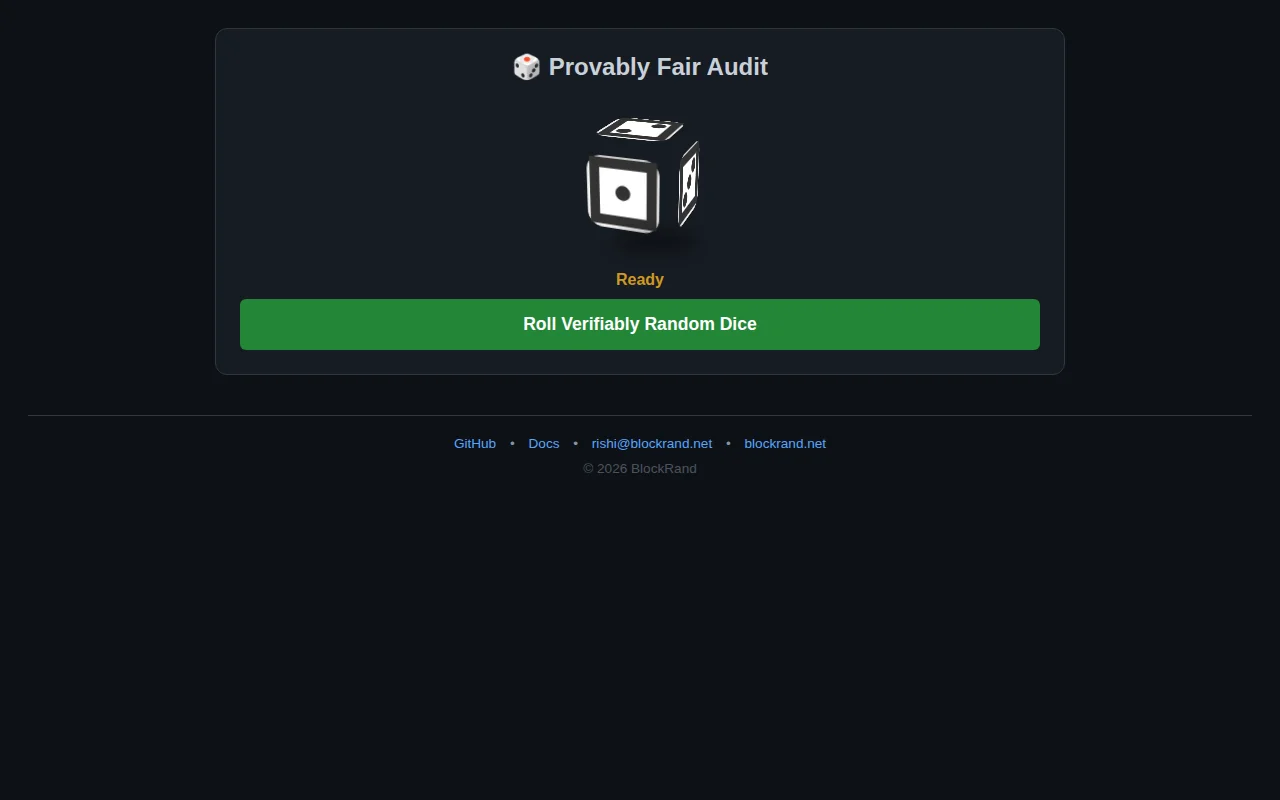
Double-blind randomness via player commit, server secret, time-locked Drand. Technically sound but niche.
Crypto/gaming developers needing provably fair randomness; blockchain applications requiring trustless randomization.
Chainlink VRF (but trustless) · Commit-reveal schemes (standard pattern) · Drand itself
In the demo above, the moment you commit (Roll-Dice) a commit with the hash of a player secret is sent to the server and the server accepts that and sends back the hash of its secret back and the "future" drand round number at which the randomness will resolve. The future used in the demo is 10 secs
When the reveal happens (after drand's particular round) all the secrets are revealed and the random number is generated using "player-seed:server-seed:drand-signature".
All the verification is in Math, so truly trust-less, so:
1. Player-Seed should matches the player-hash committed
2. Server-Seed should matches the server-hash committed
3. Drand-Signature can is publicly not available at the time of commit and is available at the time of reveal. (Time-Locked)
4. Random number generated is deterministic after the event and unknown and unpredictably before the event.
5. No party can influence the final outcome, specially no "last-look" advantange for anyone.
I think this should be used in all games, online lottery/gambling and other systems which want to be fair by design not by trust.
Random team picker when Wheel of Names and countless alternatives already exist.
Turns idle Macs into Jellyfin previews, skipping intros automatically.
Yet another Omegle clone with no differentiation in crowded space.
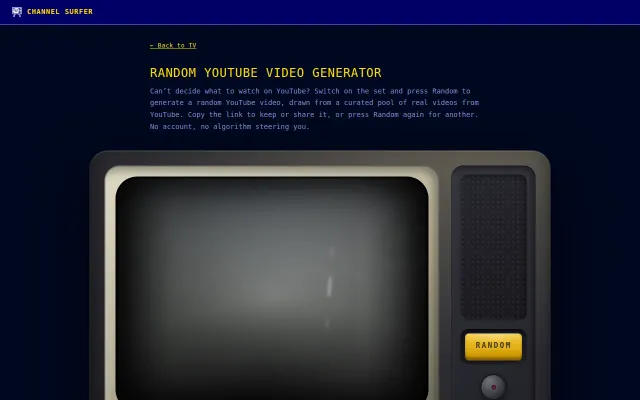
Retro TV skin on a random video picker when YouTube's own shuffle exists.
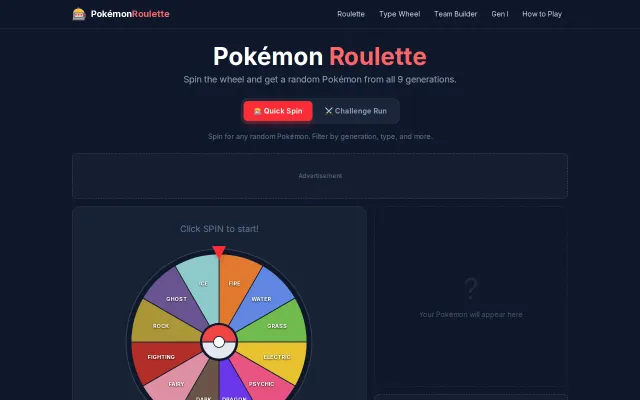
Clean wheel UI, but random Pokémon generators already exist everywhere.
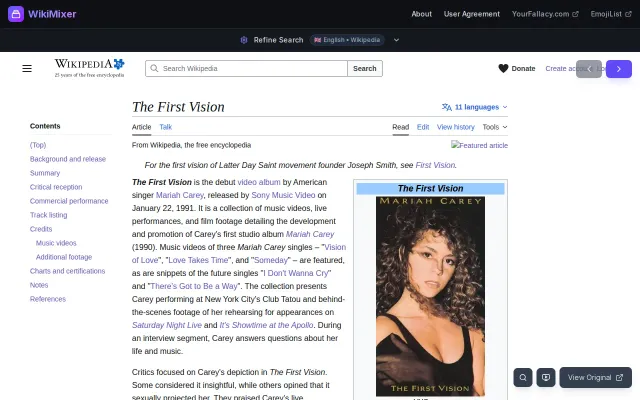
Client-side buffering makes random page jumps instant, but it's just a skin over the Wikimedia API.