Gaming●●Solid
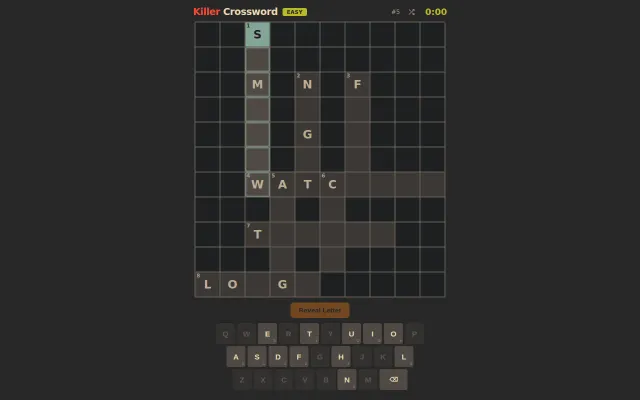
Killer Crossword
Wordle-style daily format for constraint-based crosswords—revives a dead site cleanly.
CozyCrowd Pleaser
arwt
414mo ago
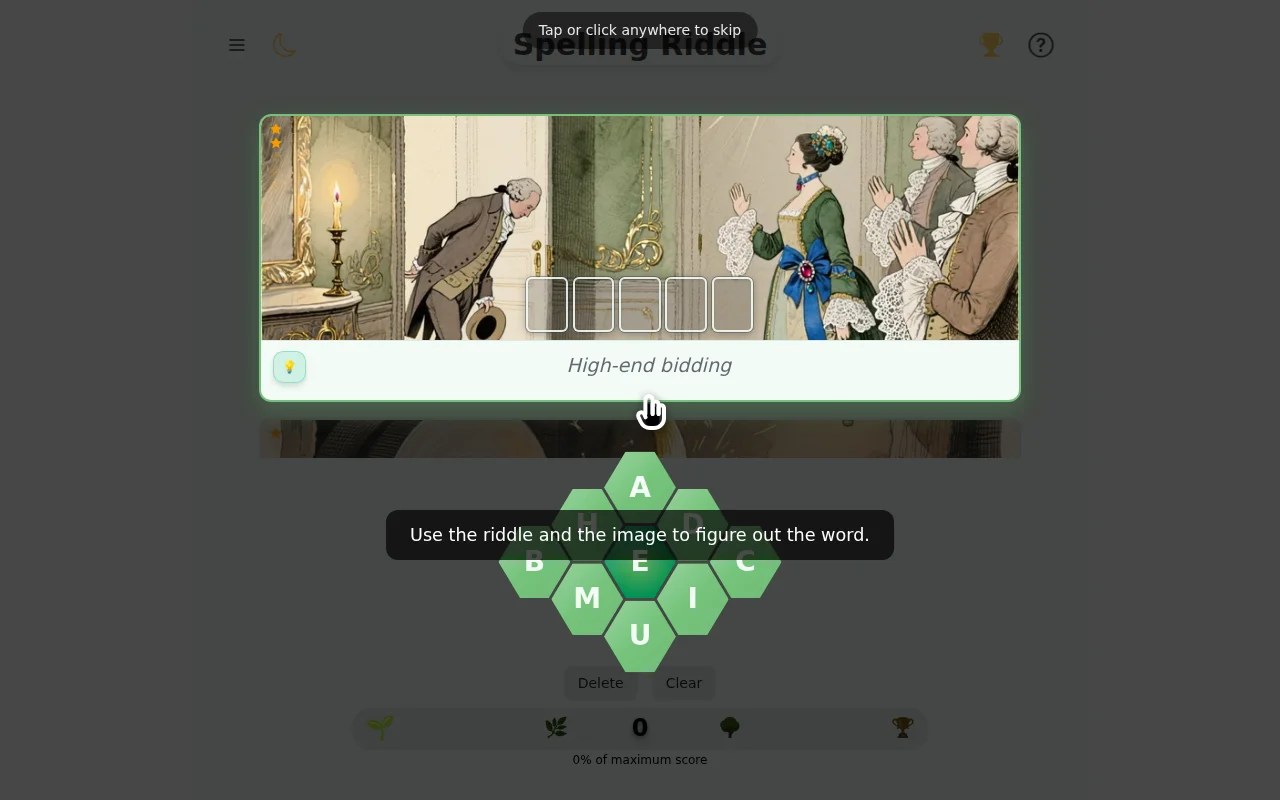
Every word pairs a crossword-style text clue with an image hint generated and linted by an LLM/image pipeline — that's a clever UX twist that forces semantic reasoning instead of guesswork. The creator also built a nontrivial quality pipeline (Swiss-style LLM matches + Wilson lower-bound scoring) to pick good puzzle words, which is an uncommon level of rigor for a hobby game. UI shows thoughtful interactions (hint taps reveal/remove letters, center-letter rule, PWA install), though clarity around image provenance and accessibility could be tighter.
Word-game enthusiasts, puzzle players, casual daily gamers, and educators interested in semantic/spelling exercises
Each day you get 9 letters and up to 15 hidden words to find. Every word has two orthogonal clues: a text hint and a image hint. The hints are crossword puzzle style — you need to figure out what the clues are pointing at, then spell it.
The site is fully static.
## How the clues get made
The pipeline has three stages:
1. Dictionary curation — Start from raw word lists, normalize, dedupe, filter plurals/profanity, and add frequency data.
2. Word quality tournament — Words are ranked for puzzle suitability using grouped LLM matches in a Swiss-style tournament. Performance is converted to a 0–100 quality rating using Wilson lower-bound scoring.
3. Hint generation — For each puzzle word set, generate multiple text + image hint candidates, lint-filter weak ones (e.g. text hints that contain the answer, image prompts that would render as text), rank the survivors, then generate the final images.
Text hints: GPT 5.2, Image hints: Qwen Image.
The clue generation is the hardest part and still not perfect (though model improvements might make it trivial soon).
Wordle-style daily format for constraint-based crosswords—revives a dead site cleanly.
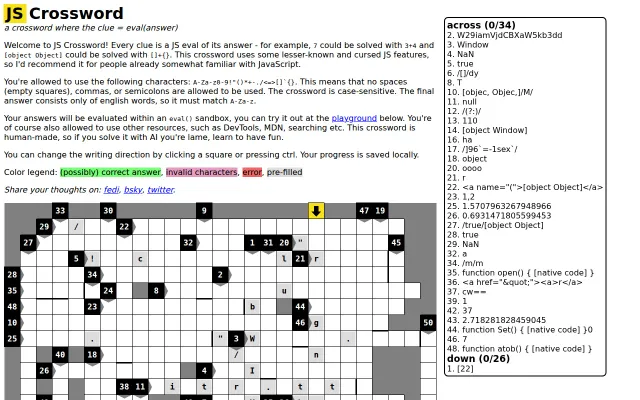
Clever use of eval() to turn JS trivia into a playable crossword grid.
Rust constraint solver generates dense grids while Claude writes and QA's clues automatically.
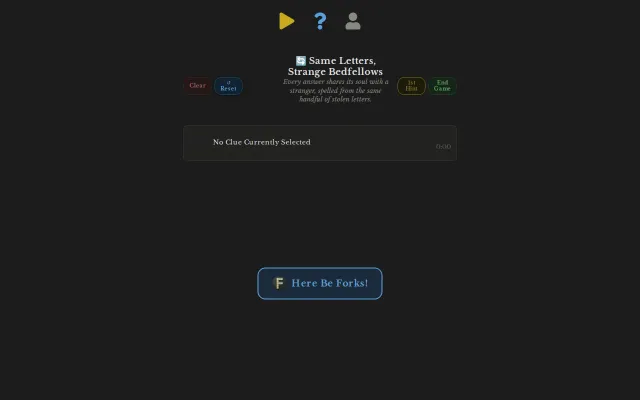
Two crosswords sharing one grid creates a clever constraint for puzzle solvers.
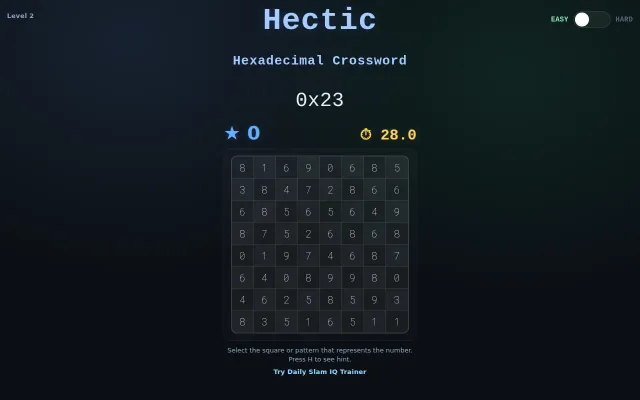
The project grafts hexadecimal arithmetic onto a tiled crossword mechanic — you pick squares or shapes that represent a target hex number, with difficulty toggles, a timer, and an on-demand hint (press H). The UI is clean and immediately playable, but the core idea is a clever niche twist rather than a broad innovation; it could use better onboarding, scoring explanation, and shareable hooks to make it stick.
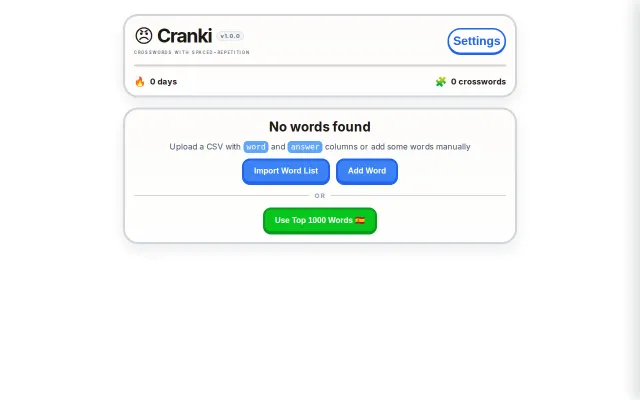
Crosswords with spaced-repetition when Anki flashcards feel like homework.