Data●●Solid
Bit-exact Elixir port of UltraLogLog (Ertl, VLDB 2024)
25% leaner than HyperLogLog with bit-exact validation against the Hash4j reference.
Big BrainNiche Gem
alessio66
101mo ago
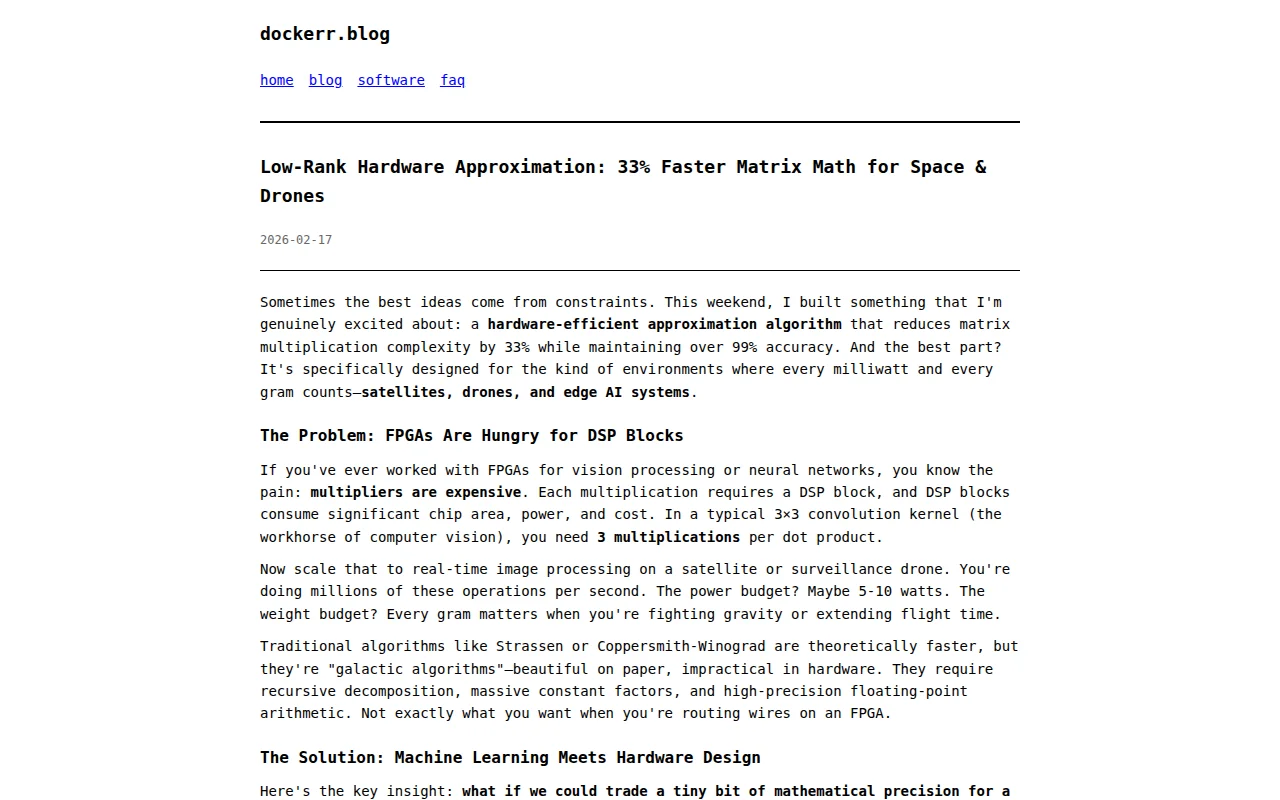
Clever ML+hardware co-design, but a blog post without open-source code, benchmarks, or deployment examples.
FPGA engineers, satellite/drone firmware developers optimizing for power and area constraints
Winograd convolutions · Low-rank matrix factorization (general technique) · FPGA kernel optimization libraries
25% leaner than HyperLogLog with bit-exact validation against the Hash4j reference.
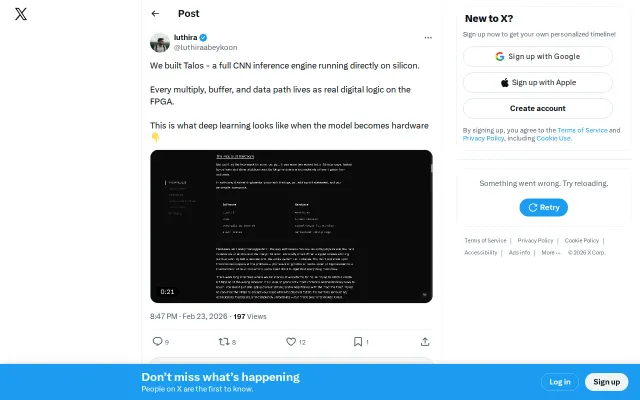
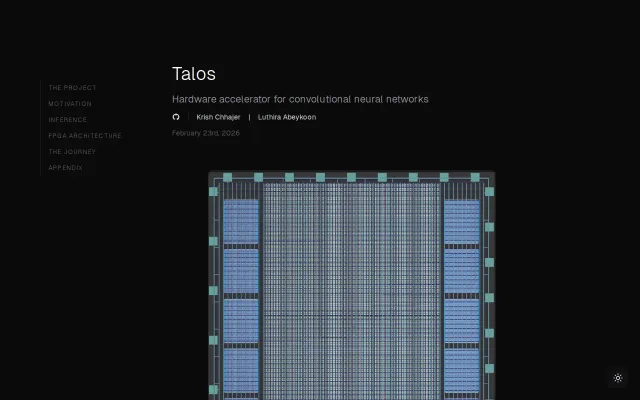
CNN inference fully hardcoded as silicon logic, not software optimized for hardware.
Strips away PyTorch flexibility entirely; full CNN inference as deterministic hardware logic in SystemVerilog.
Cuts Claude Code token costs 90% with prompt engineering, not model changes.
Leaderboard for Claude Code usage that tracks your token burn.
Anti-engagement design actually deletes the feed instead of gamifying it.