Infrastructure●●●Banger
Diom – Backend primitives (queue, rate limit, etc.) in one Rust binary
Replaces Redis, RabbitMQ, and Kafka with one self-contained Rust binary.
Big BrainSolve My Problem
tasn
501mo ago
Because i could not Ressist
Replaces screenshots with structured UI data; AI agents control Windows apps via SQL queries.
AI agent builders, RPA engineers, Windows automation developers
Anthropic Computer Use · OpenAI Operator · UiPath
The core insight: every GUI application already describes itself as structured text through the accessibility layer (built for screen readers since 1997). Every major AI lab is taking screenshots of this and running vision models on it. DirectShell just reads the text directly.
What it does: - Reads every button, field, menu item into a queryable SQLite DB (refreshed every 500ms) - Generates multiple output formats: full DB, interactive elements list, LLM-optimized snapshots (50-200 tokens vs 1,200-5,000 for a screenshot) - Controls apps via 5 action types: click by element name, set text via UIA ValuePattern, type character-by-character, send key combos, scroll - Includes an MCP server so Claude/GPT can use it directly
Day 1 demo: filled 360 Google Sheets cells in 90 seconds, read and replied to a Claude.ai conversation cross-app, wrote to Notepad instantly. No screenshots, no vision model, no coordinate guessing.
Limitations (honest): built in 8.5 hours, single-app scope, Chromium apps need a 4-phase activation hack to expose their tree, accessibility quality varies by app. AGPL-3.0.
Demo: https://youtu.be/nvZobyt0KBg Full technical paper: in the repo under Dokumentation/ and on https://dev.to/tlrag/i-built-a-new-software-primitive-in-85-...
Replaces Redis, RabbitMQ, and Kafka with one self-contained Rust binary.
Replaces Redis and Kafka with one Rust binary using embedded fjall storage.
Impressive Rust substrate layer, but crate collection without proof of integration or adoption.
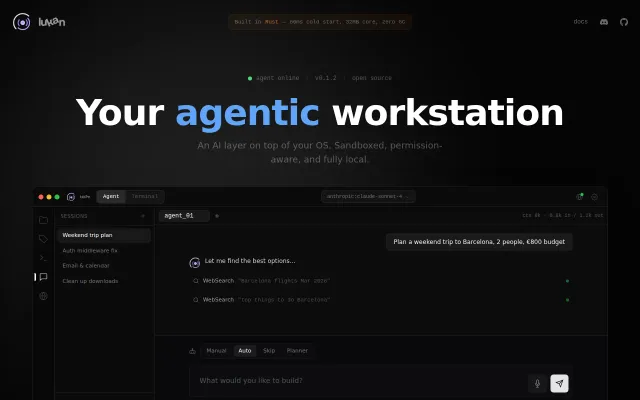
Single Rust binary embedding tmux and multi-agent sessions challenges Electron AI IDEs.
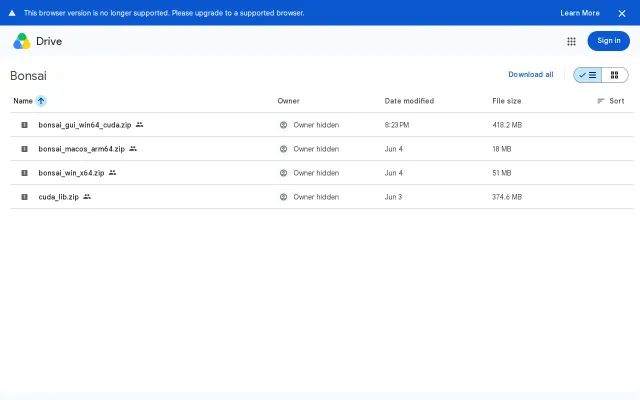
Just a Drive folder with zip files—no docs, no code, no demo.
Agents manage their own context window through a transparent local proxy.