Developer Tools●●Solid
Dis: Dev environments but without Node.js
Dockerfile-based dev environments without VS Code or Node.js runtime baggage.
Ship ItNiche Gem
kaashmonee
502mo ago
An agentic tool to configure Dockerfiles for any repo
Claude inside a Modal sandbox auto-generates devcontainer configs, but needs wider adoption.
Backend engineers, DevOps, teams managing monorepos or inconsistent dev environments
Devbox · Nix flakes · Daytona
We build on the dev container standard, so the output works with VS Code and GitHub Codespaces out of the box.
Main use cases: reproducible dev/CI environments, self-describing repos, and safely sandboxed coding agents.
Our goal is to encourage all repos to self-describe their runtime environment.
Why the sandbox? Running Claude directly against your Docker daemon is risky. We've watched it clear Docker config and tweak kernel settings when iterating on containers. Containerization matters most when your agent is acting like a sysadmin.
To use it: get a Modal account and an Anthropic API key, run Keystone on your repo, check in the .devcontainer/ directory. See the project README for more details.
Dockerfile-based dev environments without VS Code or Node.js runtime baggage.
Buildpack auto-detection for 14 languages, but Heroku Buildpacks and Paketo already own this space.
It uses an LLM not just for scaffolding but as an active repair agent: Claude generates Dockerfiles, diagnoses crashes (diagnoseCrash) and can trigger redeploys or memory scaling. The architecture ties BullMQ, Fly Machines and a 30s health loop into a real feedback loop — clever and ambitious, but it also leans heavily on Claude + Fly/Supabase so expect nontrivial setup and vendor/LLM dependency.
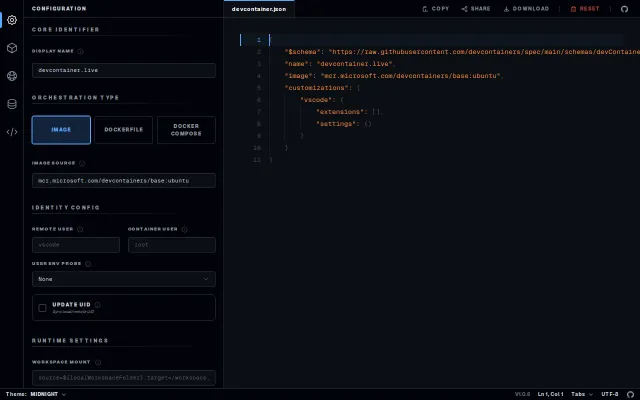
Clean form UI for devcontainer.json when VS Code already has templates built in.
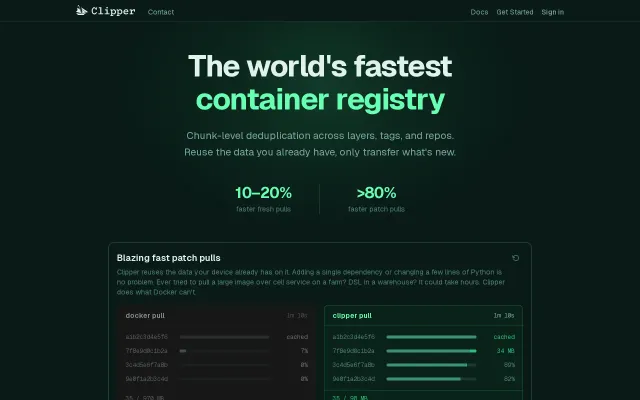
Chunk-level dedup beats Docker Hub's layer-based approach by 80% on patch pulls.
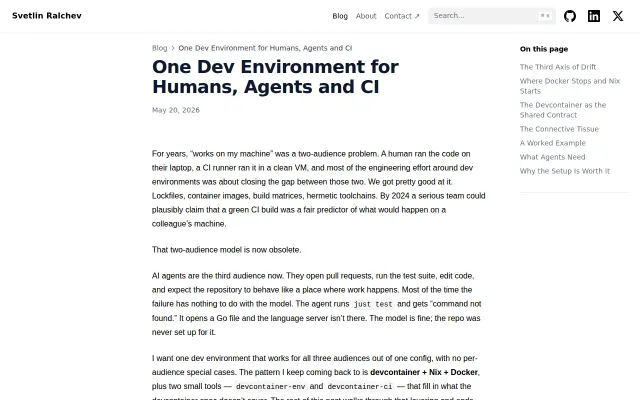
Thoughtful essay on agent drift, but just a blog post with no shipped tool or code.