Developer Tools●●●Banger
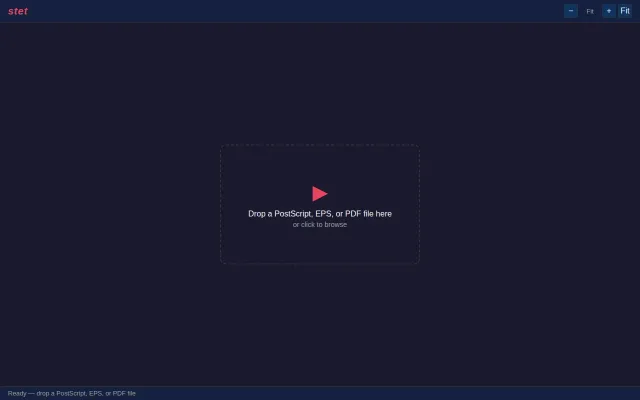
Stet – PostScript Level 3 interpreter and PDF toolkit in Rust
Pure Rust PostScript interpreter fills gap left by AGPL GhostScript and bloated pdfium.
WizardryBig BrainNiche Gem
AndyCappDev
501mo ago
A full level 3 PostScript interpreter that renders PS and EPS files to PNG, TIFF, PDF, and SVG
Readable PostScript interpreter alternative to GhostScript, but GhostScript still faster.
PostScript developers, print engineers, document processing workflows, education
GhostScript · Poppler
PostForge implements the full PostScript Level 2 specification — operators, graphics model, font system, save/restore VM, the works. It reads .ps and .eps files and outputs PNG, PDF, SVG, or renders to an interactive Qt window.
Why build this? GhostScript is the only real game in town for PostScript interpretation, and it's a 35-year-old C codebase. I wanted something where you could actually read the code, step through execution, and understand what's happening. PostForge is modular and approachable — each operator category lives in its own file, the type system is clean, and there's an interactive prompt where you can poke at the interpreter state.
Some technical highlights:
- Full Level 2 compliance with selected Level 3 features - PDF output with Type 1 font reconstruction/subsetting and TrueType/CID embedding - ICC color management (sRGB, CMYK, Gray profiles via lcms2) - Optional Cython-compiled execution loop (15-40% speedup) - 2,500+ unit tests written in PostScript itself using a custom assertion framework - Interactive executive mode with live Qt display — useful for debugging PS programs
What it's not: A GhostScript replacement for production/printer use. It's interpreted Python, so it's slower. But it handles complex real-world PostScript files well and the output quality is solid.
I'd love feedback, especially from anyone who's worked with PostScript or built language interpreters. The architecture docs are at docs/developer/architecture-overview.md if you want to dig in.
Pure Rust PostScript interpreter fills gap left by AGPL GhostScript and bloated pdfium.
Free AI coloring worksheets for teachers, but AI image generators already do this.
It skips headless Chromium entirely and implements an HTML/CSS-to-PDF pipeline in Rust, exposing a Python wheel and CLI that releases the GIL and uses Rayon for parallel batch renders. The deterministic bits — fixed-point base unit, --repro-record/--repro-check, SHA256 outputs and vendored assets — are a clear, practical play for audited VDP/transactional workflows; what's still unknown is CSS spec coverage and whether subtle print-layout quirks will require hand-holding.
Pure Python interpreter with C FFI, but performance caps at Python speeds.
Extracts exact vector paths from private macOS APIs instead of tracing rasters.
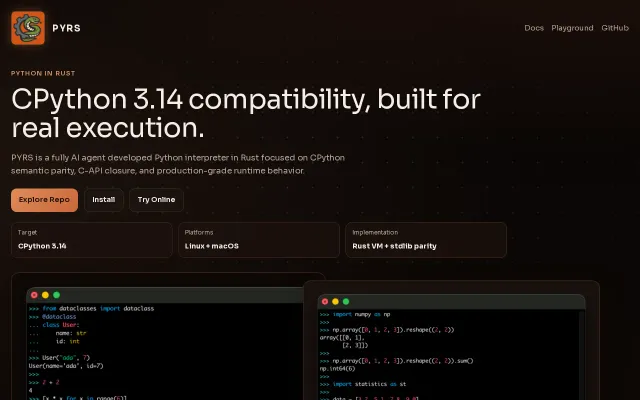
AI-coded Python interpreter is impressive, but mostly novelty without real use case.