Security●Mid
1time – Zero-knowledge secret sharing with E2E encryption
Eight years of maintenance but privnote and 1Password already solve this.
Cozy
shingrus
102mo ago
Client-side AES-256-GCM for .env sharing, but Wire, OnePassword, and Bitwarden vaults already solve this.
Software developers and small teams needing secure credential sharing without vault complexity
Bitwarden Send · 1Password Vaults · Vaultwarden
Small disclaimer upfront: English is not my native language. This post was translated/polished with the help of AI, but the words and meaning are 100% mine.
I run a small software development agency in Germany. Every week, the same thing happens: >A client needs to send us database credentials >A freelancer needs API keys >Someone new joins and needs the .env file
And every time, the same pattern:
>Pasted into Slack
>Sent via email
>Dropped into a Google Doc called “keys for dev”
>Shared with “anyone with the link” enabled
Not because people are careless. Because there was no easy alternative.
Proper vault setups take time. Enterprise secret managers are overkill for many small projects. CLI tools are powerful, but nobody installs them unless forced to.
What I needed was simple:
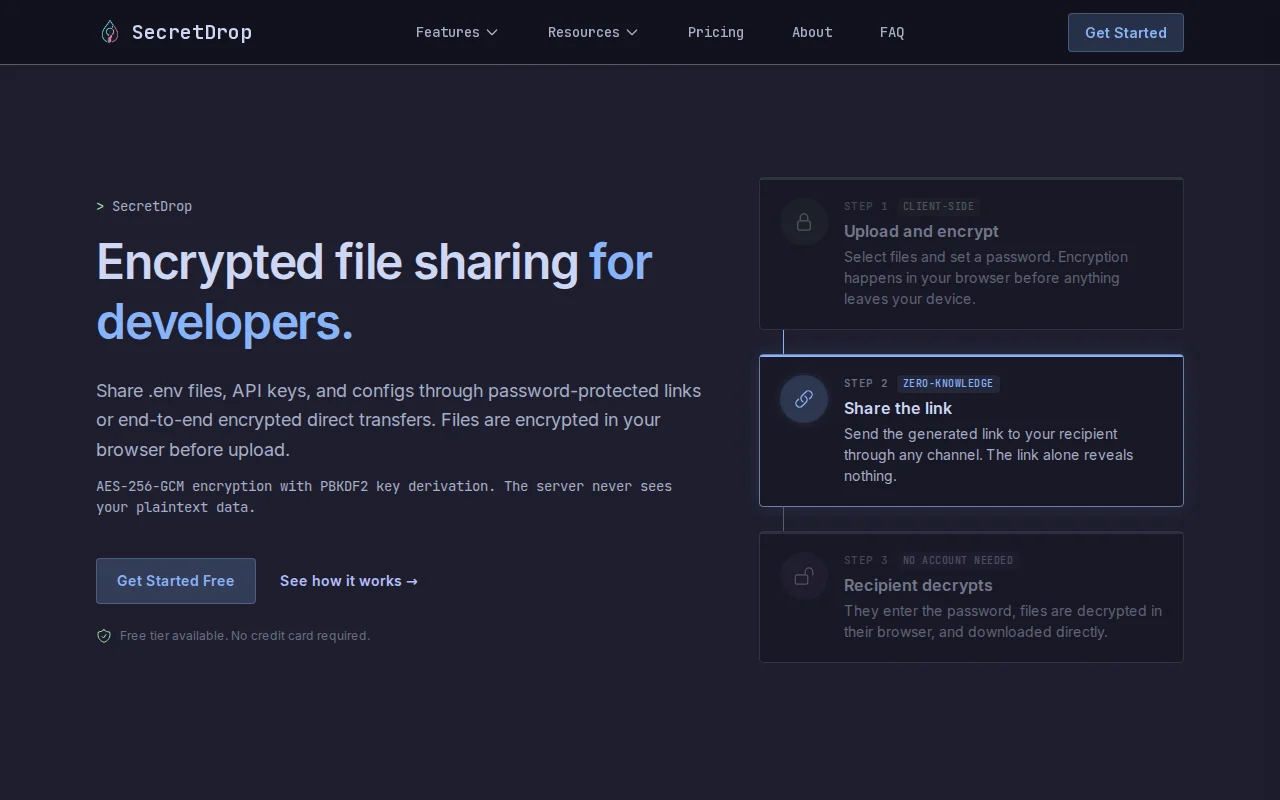
Upload a file → share a link → done. But encrypted before it ever leaves the browser.
So I built SecretDrop.dev.
What it does
1. Client-side encrypted file sharing
Files are encrypted in the browser using AES-256-GCM Key derived via PBKDF2 (600k iterations) Encryption happens before any data touches the server Recipient enters the password → file decrypted in their browser
The server never sees:
>The file contents
>The password
>The decrypted file
>The filename
Everything runs on WebCrypto. No third-party crypto libraries.
2. Zero-knowledge architecture
The server stores only encrypted blobs and minimal metadata required for routing.
It cannot read:
>File content
>Passwords
>Decrypted filenames
The threat model is simple: If the server is compromised, attackers still cannot decrypt the files without the password.
3. Direct end-to-end transfer (Premium)
For workflows where passwords are annoying:
>Select recipients by email
>Files encrypted with their public key (ECIES)
>No shared password required
>Only the intended recipient can decrypt
>Sender identity verified via digital signature
This removes the “send password via Signal” step entirely.
4. Auto-expiry & access analytics
Expiration after time or download count Basic access visibility (without breaking zero-knowledge model)
Why I made the free tier free
Password-protected encrypted sharing is free. No credit card. No trial. No artificial limits.
Because securely sharing a .env file shouldn’t be a paid feature. Security in code should be normal, not enterprise-priced.
Why not just use XYZ Tool or Vault?
Good question.
There are great tools out there. But in many small dev teams:
>Nobody wants to set up a full Vault instance
>Secret managers are too heavy for quick one-off sharing
>People default to Slack because it's frictionless
The real competitor isn’t a vault.
It’s “paste in Slack.”
So I optimized for:
>Zero setup
>No account required (for password mode)
>One link, done
What’s next
I’m exploring two things:
VSCode extension Right-click .env → “Share via SecretDrop” → get link.
CLI tool secretdrop share .env --expires 24h
Both are early ideas. I want to integrate into real dev workflows instead of forcing a new one.
If either would be useful for you, I’d love to understand how you’d use it.
Questions for the HN crowd
>What would make this useful in your workflow?
>Any concerns about the security model?
>Would you prefer Argon2 over PBKDF2 in the browser?
>What attack vectors am I overlooking?
>What would make you trust this enough to use it in production?
I built this because I was tired of seeing secrets floating around in Slack threads. I use it daily inside my own agency.
If you want to rip apart the crypto model, architecture, or UX decisions — please do.
Curious to hear what you think.
Cheers Aleks
Eight years of maintenance but privnote and 1Password already solve this.
Drop-in Slack alternative with verifiable crypto, but one-time secret sharing exists.
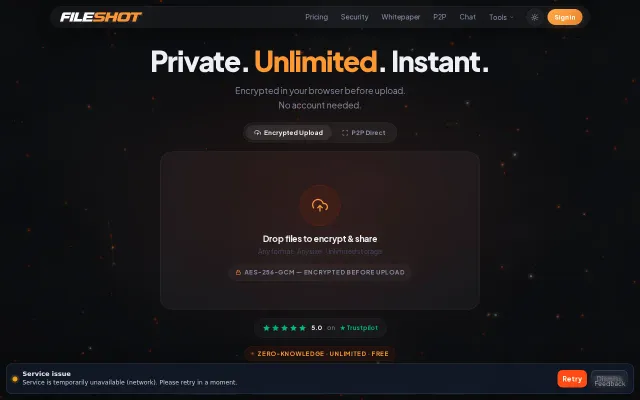
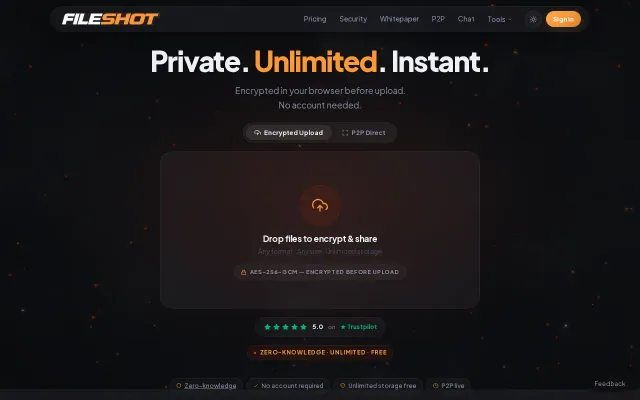
True zero-knowledge file sharing: keys in URL fragment, server literally cannot decrypt even with access.
Real zero-knowledge (key in URL fragment), 50GB free files, no signup dark patterns.
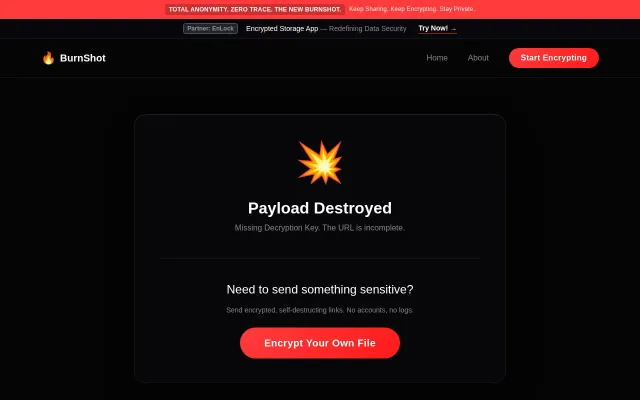
Keys in URL hash means server literally cannot decrypt — crypto challenge proves it.
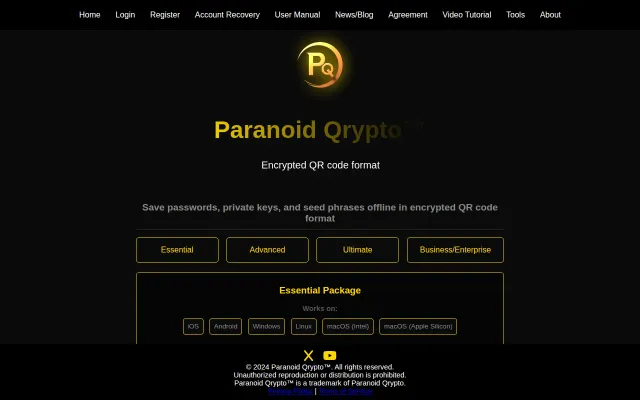
Air-gapped QR-code encryption, but paid tiers ($99+) for basic features existing tools offer.