Infrastructure●●●Banger
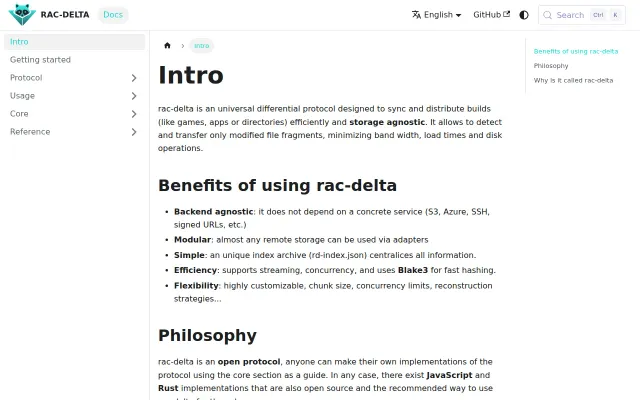
Rac-delta – open protocol for differential dir sync (Rust/Node SDKs)
Directory-level differential sync that rsync and xdelta never solved for cloud storage.
Big BrainSolve My Problem
Raccreative
202mo ago
A Rust CLI tool for documentation ↔ code mapping verification
Hash-based doc-code sync detection in Rust; solves real drift but narrow audience.
Technical writers, library maintainers, documentation-heavy projects
Doctest (Rust) · mdBook testing · Literate programming tools
I built doksnet, a small Rust CLI that lets you link a documentation section to a code snippet and verify that both sides stay in sync using Blake3 hashes.
You define mappings like:
• README.md:15-25
• src/lib.rs:40-65
doksnet stores the ranges + their hashes in a compact .doks file. doksnet test re-extracts the content and fails (exit code 1) if anything changed — including whitespace.
Basic flow:
• doksnet new – initialize
• doksnet add – create doc ↔ code mapping (interactive)
• doksnet test – CI-safe verification
• doksnet test-interactive – review/fix mismatches
It’s repo-local, no external service, no parsing/AST magic — just deterministic text extraction + hashing.
There’s also a GitHub Action if you want to enforce sync in CI.
Repo: https://github.com/Pulko/doksnet Install: cargo install doksnet Web: https://doksnet.pulko-app.com
Interested in feedback on the approach — especially whether this tool could be more useful then “Rewrite all the readme based on new changes. Make no mistakes”, for instance, in environments where AI usage is restricted
Directory-level differential sync that rsync and xdelta never solved for cloud storage.
Hash chaining before write beats S3 Object Lock for pre-write tampering protection.
Hash-verified edits cut Claude editing tokens by 44%—measurable, specific, real win.
SHA-256 hashing raw API responses lets auditors verify evidence without trusting the tool.
BLAKE3 speeds file verification 10x over SHA-256; beats SFV/shasum with signatures.
Implements 2025 hashing research with arena layout optimization hashbrown never tried.