AI/ML●●Solid
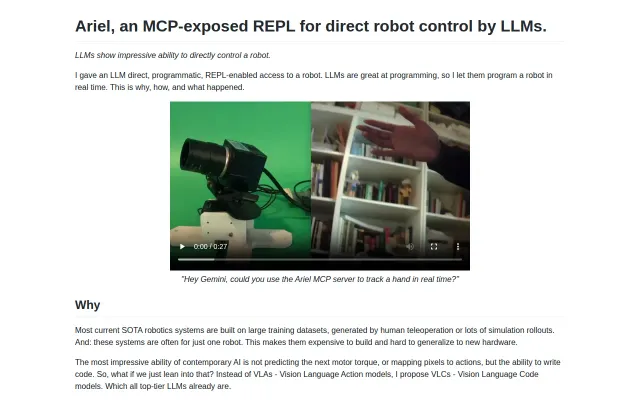
Ariel gives LLMs direct control over live robots
VLCs over VLAs: LLMs write Python code against live robots instead of predicting actions.
Big BrainWizardry
colinator
202mo ago
Universal ROS1/ROS2 bridge for AI agents to control robots and embodied intelligence systems.
Decorators + auto-typed ROS messages cut AI-to-robot boilerplate by 80%.
Roboticists, AI/ML engineers, autonomous systems developers
ros-bridge-suite · Rasa · OpenAI gym + ROS adapters
ROS is powerful but has a steep learning curve for AI/ML folks. Writing custom bridges for every integration wastes time. This gives you a universal solution.
What it does: • Single decorator turns Python functions into ROS actions/services/topics • Auto-generates type-safe message classes from .msg/.srv files • Built-in gRPC + WebSocket APIs for remote control • Works with ROS1 and ROS2 (tested on Humble/Jazzy) • Zero boilerplate — focus on robot logic, not middleware
4 Dockerized examples included: • Talking Garden — LLM monitors IoT plants • Mars Colony — Multi-robot coordination • Theater Bots — AI director + robot actors • Art Studio — Human/robot collaborative painting
pip install agent-ros-bridge
VLCs over VLAs: LLMs write Python code against live robots instead of predicting actions.
Skips fragile MCP servers to hit Photoshop and Blender scripting APIs directly.
Machine-parseable traces for LLM agents when pdb and breakpoint() are useless.
Python FFI bridge via PyO3 is clever, but tool-calling frameworks are crowded.
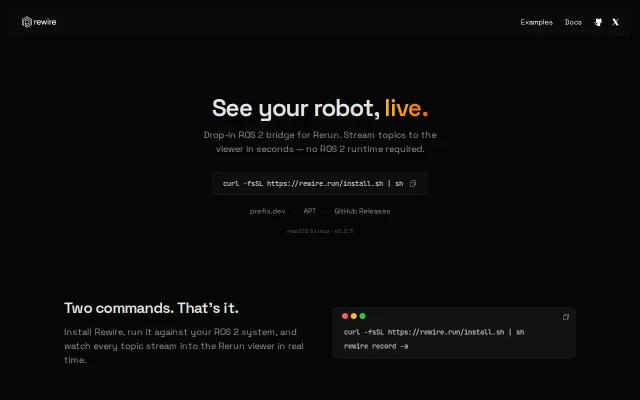
Bypasses ROS 2 runtime entirely to stream topics directly into Rerun viewer.
Iterator-first design beats black-box frameworks like LangChain for debugging.