Developer Tools●●●Banger
I forked Python's Requests to add HTTP/3, async, and multiplexing
Requests is frozen—this adds HTTP/3 and async without breaking your code.
Solve My ProblemSlick
mesahm
523mo ago
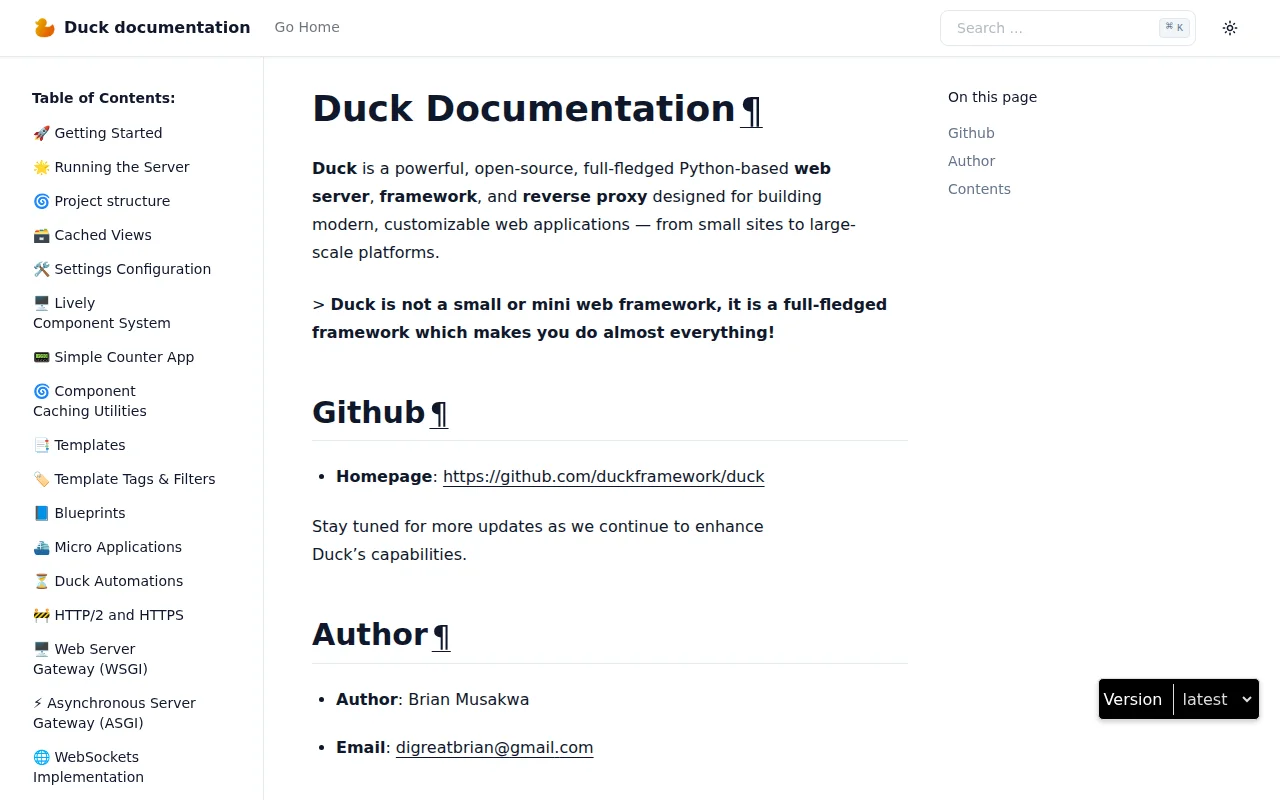
Django-compatible with native WebSockets, but markets itself as a full rewrite.
Python backend developers building real-time web applications
FastAPI · Django Channels · Phoenix (Elixir)
Key Features:
- Native HTTP/2 & HTTPS: No need for a reverse proxy just to get modern protocol support; Duck handles multiplexing out of the box.
- Lively Components: Think Phoenix LiveView but for Python. Build reactive, stateful UIs that update over WebSockets without writing a single line of JavaScript.
- Django Compatibility: You can keep your existing Django models and logic. Duck acts as a high-performance transport layer.
- Zero-Dependency Automation: A built-in task system that replaces Cron/Celery for 90% of use cases.
- Real-time Observability: A built-in terminal monitor (duck monitor) to watch your app's hardware impact in real-time.
Why build this?
I love the Python ecosystem, but I felt we were falling behind frameworks like Elixir’s Phoenix or Go’s Fiber in terms of "out-of-the-box" performance and developer velocity. Duck is my attempt to bridge that gap.
Docs: https://docs.duckframework.xyz GitHub: github.com/duckframework/duck
I’d love to hear your thoughts on the architecture, especially regarding the Lively component implementation!
Requests is frozen—this adds HTTP/3 and async without breaking your code.
Pusher clone on Cloudflare Workers charging per broadcast instead of per connection.
Django-style Redis ORM with timely Valkey support and AI agent memory primitives.
Strips DOM attributes after binding for zero footprint, unlike Alpine.js or Petite-Vue.
Rust acceleration + zero-GIL JWT tokens, but Socket.io and Pusher already solve this tier.
Server-first Python framework replaces WebSocket/React bloat with SSE and CQRS patterns.