Health●●Solid
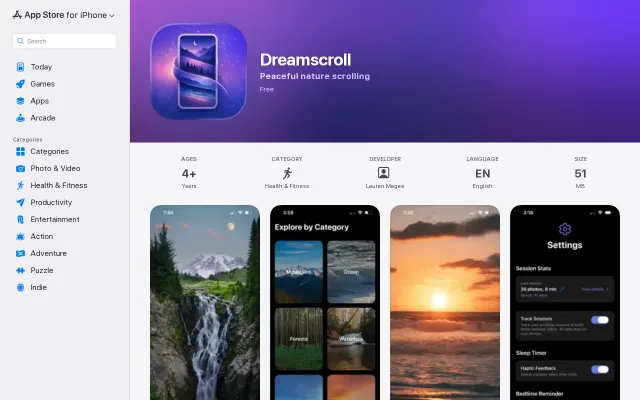
Dreamscroll – Replace bedtime doomscrolling with nature photos
Wellness app with zero data collection, but 'calm scrolling' is crowded territory.
CozySolve My Problem
lemagee
113mo ago
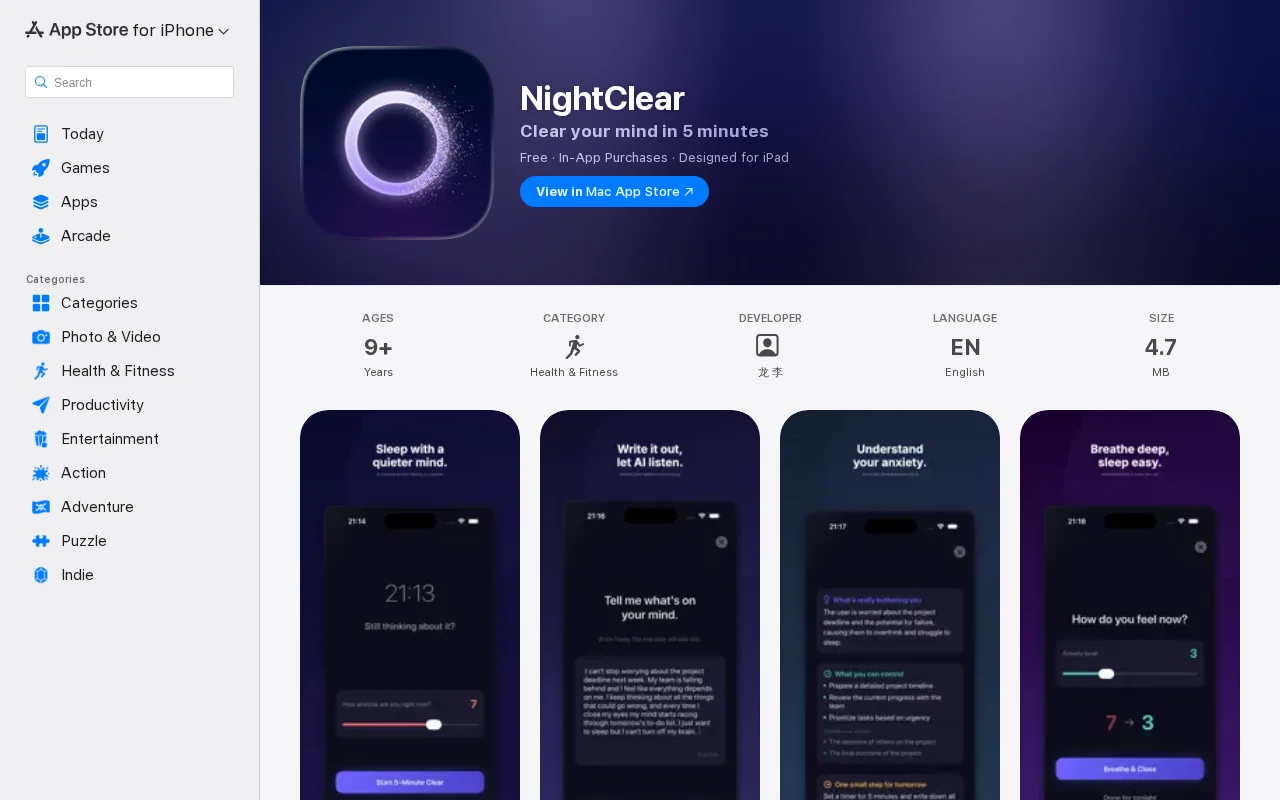
CBT-grounded anxiety container, but meditation app category already flooded.
People with bedtime anxiety seeking CBT-based sleep tools
Calm · Headspace · Insight Timer
I built NightClear because during the day I'm productive. At night, my brain becomes a worst-case-scenario simulator.
Based on CBT's "structured worry time" — instead of suppressing anxious thoughts, you give them a container:
1. Type what's on your mind (free-form, private) 2. LLM analyzes: core issue, controllable vs not 3. Generates one micro-action for tomorrow 4. Breathing exercise
SwiftUI, SwiftData (local), LLM API. Dark mode only. No account needed. No social/gamification.
Free: 3/week. Pro: $4.99/mo or $29.99/yr (7-day trial).
iOS only. Would love feedback on the AI analysis quality.
Wellness app with zero data collection, but 'calm scrolling' is crowded territory.
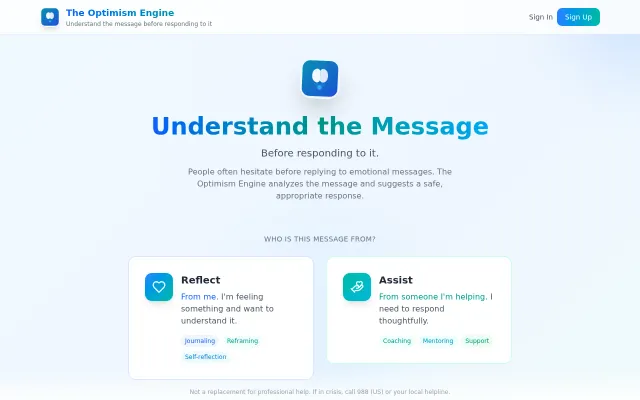
This forces LLMs to play inside a deterministic CBT pipeline — it extracts distortion signals, calibrates emotional intensity, applies rule-based risk tiers, then generates tone-locked replies with word caps. The split between deterministic detection and constrained drafting is smart and makes outputs more auditable; Reflect vs Assist modes show sensible product framing. Promising concept for safety-minded builders, but the real value hinges on the model tuning and risk-handling under real conversations, not the attractive landing UI.
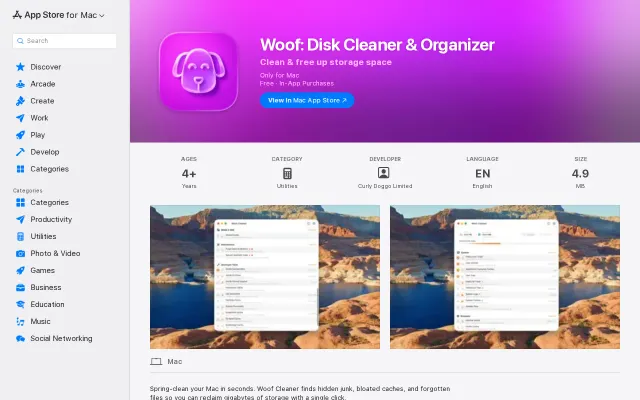
Developer cache targeting is smart, but CleanMyMac already dominates this space.
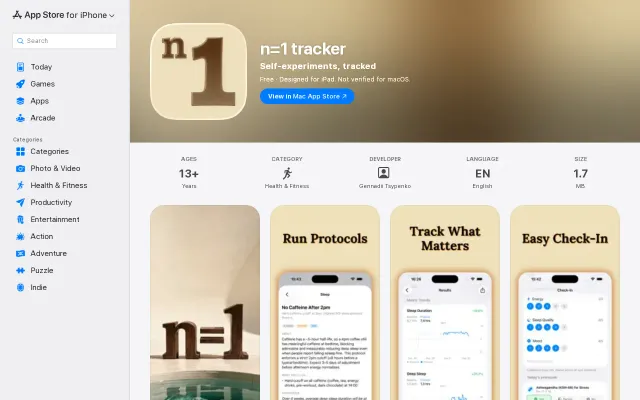
Curated protocol library with falsifiable hypotheses beats generic habit trackers.
Daily snake puzzle with color-matching twists on iOS and Mac.
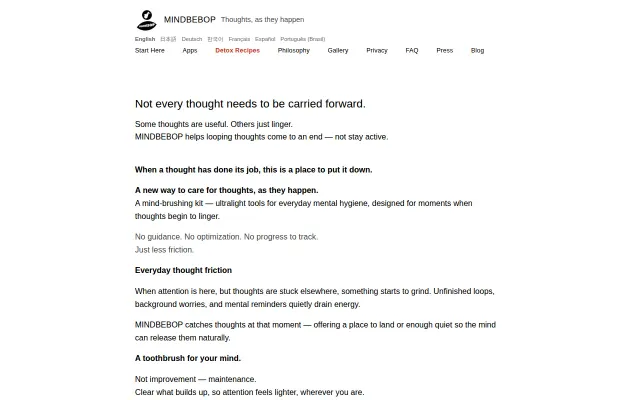
This ships thought-management as tiny, single-purpose 1MB apps — MindFlipOut for quick reframes, MindShoutOut to defer thoughts, MindZoneOut for a blank stillness screen, plus a time-based 'ease out' feature. The product's thesis is smart: reduce friction by making the tool vanish into the moment, not add another coaching layer. It's delightfully minimal and likely very usable for people who dislike bulky wellness apps, though the deliberately sparse approach will feel too thin for users wanting guidance or analytics.
![PluriSnake, a new kind of snake puzzle game [iOS/iPadOS/macOS]](/screenshots/47350661_thumb.webp)