Developer Tools●●Solid
The Oct Programming Language for scientific programming
Type-level SI units catch physics errors at compile time before runtime.
Big BrainBold Bet
YuechenLi
108h ago
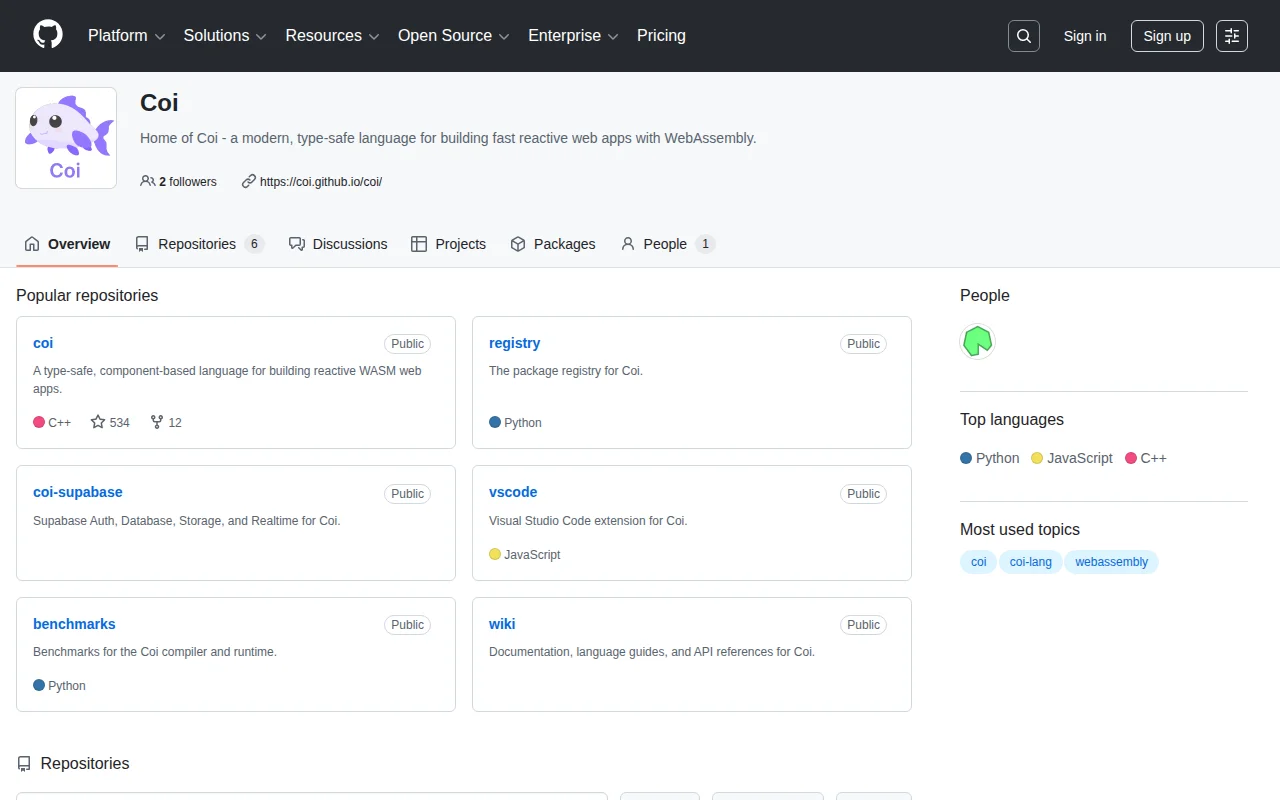
WASM-first language avoiding bloated canvas binaries, but multi-platform vision still speculative.
Frontend developers, framework builders, developers seeking web app alternatives to Flutter
Flutter · Dart · ReScript
The plan is to use C++ as the intermediate layer. For desktop and mobile, I want to use Skia combined with a layout library to translate HTML/CSS sizing and transformations into something Skia can draw. This ensures the UI stays pixel-perfect across platforms.
However, the "Flutter approach" to the web has always bothered me. Shipping a 2MB+ Skia binary just to render a basic landing page feels redundant when the browser already has a world-class rendering engine. It results in massive bundles and a canvas-only UI that breaks basic browser expectations like SEO, text selection, and accessibility.
With Coi, I want to split the strategy: on the web, it stays lean by using the browser’s native HTML/CSS and JS glue. On native platforms, it uses the C++/Skia stack. You get the same codebase and the same visual output, but the web build doesn't suffer from "canvas bloat".
Right now, I’m still focused on the web target and refining the core language specs, but the server target is next on the roadmap. I'm curious if this "hybrid rendering" approach, native elements for web, Skia for desktop/mobile, is something others have found success with, or if I'm underestimating the difficulty of keeping the layout engines perfectly synced.
I'd love some feedback on the language design or the architectural plan.
Type-level SI units catch physics errors at compile time before runtime.
Embedding bytecode, a VM, and static assets into one binary — plus a switch to drop back into an interpreter — is a clever distribution pattern that removes runtime dependencies. The Go-package binding via funxy.yaml and BusyBox-style multi-script bundling show attention to real-world tooling needs; the main question is ecosystem maturity and whether the lib surface grows fast enough to matter.
JavaScript compiler emitting native x86-64 without LLVM is genuinely clever.
Scripting language with native Go interop, compiles to standalone binaries.
Convenient cross-platform builds of Alula's decomp, but just a Drive folder with no installer.
Empty landing page with no demo, docs, or GitHub link to evaluate.