Developer Tools●●Solid
Two tools to make Claude Code more autonomous
Phone-based approval for Claude Code permission prompts; plan review via rival AI models.
Solve My ProblemDark Horse
yuu1ch13
633mo ago
Automatically review Claude Code plans using external AI CLIs
Adversarial plan review via hook injection—clever constraint on existing tools.
Claude Code power users seeking second-opinion code review before implementation
Claude Code · Codex CLI · Gemini CLI
When Claude calls `ExitPlanMode`, a `PreToolUse` hook fires, sends the plan to the reviewer, and returns `{ permissionDecision: "deny", permissionDecisionReason: "<feedback>" }`. Claude receives the denial with the feedback, revises the plan, and tries again. After a configurable number of rounds (default: 2), it passes through. At the end you get a diff of the original vs. final plan.
Different models have different blind spots. The value is in the second perspective, not in one model being "better."
``` npm install -g claude-plan-reviewer claude-plan-reviewer setup ```
Requires Node.js 18+ and Codex CLI or Gemini CLI. ~400 lines of JS, zero dependencies. MIT licensed.
Phone-based approval for Claude Code permission prompts; plan review via rival AI models.
Multi-model consensus for code review, but orchestrating existing Claude Code team system—table stakes.
Claude plan review UI, but only works inside Claude Code's closed ecosystem.
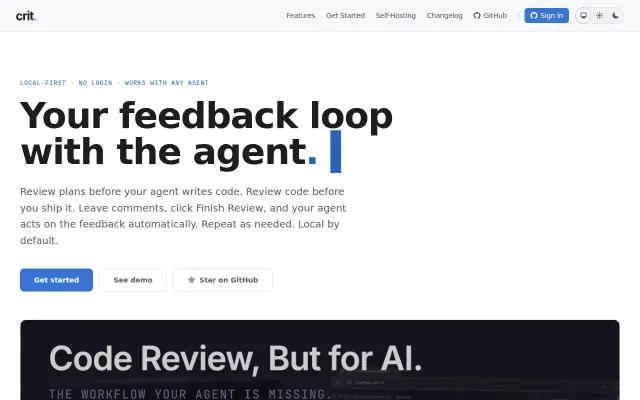
Finally, a proper diff viewer for AI output that isn't just a terminal scroll.
Splitting thinking and typing by having Claude plan and judge while Cursor 'types' is a neat, pragmatic trade-off — you keep expensive reasoning where it matters and push bulk work to cheap, fast agents. The repo actually enforces safety: destructive command gates, scoped file access, install and preflight scripts, and a PLAN→BUILD→JUDGE contract rather than a toy demo. The downside is obvious: it's niche (requires Claude + Cursor CLIs and accounts) and adds orchestration complexity compared with single-model flows.
Inline terminal comments beat describing line numbers to your AI agent.