AI/ML○Pass
Abject: the first self-aware object runtime
Manifesto-heavy blog post claiming self-aware objects without visible code or demo.
Bold Bet
mempko
1042mo ago
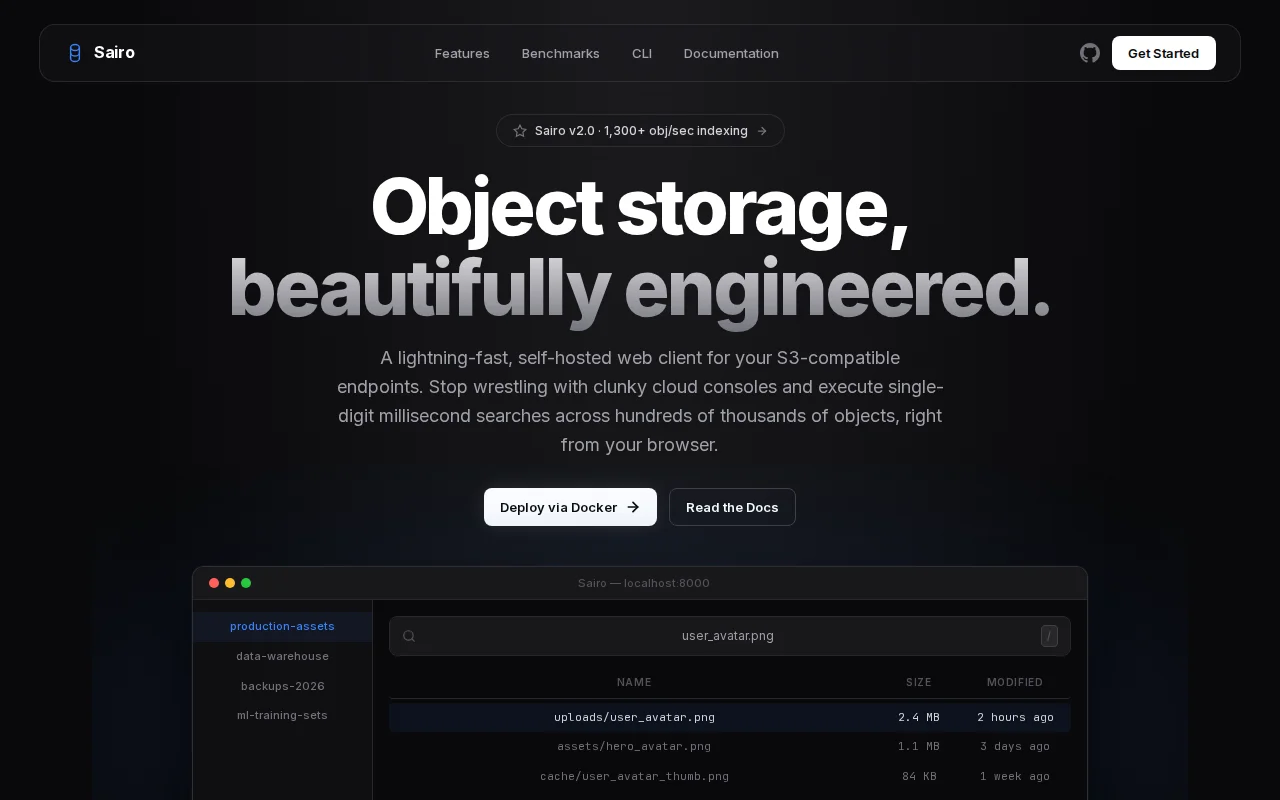
SQLite FTS5 replaces AWS console's 14-second search with 2.4ms queries, single Docker.
DevOps engineers, data teams managing large S3 buckets
MinIO web UI · s3fs · CloudBeaver
Sairo is a single Docker container that indexes your bucket into SQLite FTS5 and gives you full-text search in 2.4ms (p50) across 134K objects / 38 TB. No external databases, no microservices, no message queues.
What it does: - Instant search across all your objects (SQLite FTS5, 1,300 objects/sec indexing) - File preview for 45+ formats — Parquet schemas, CSV tables, PDFs, images, code - Password-protected share links with expiration - Version management — browse, restore, purge versions and delete markers - Storage analytics with growth trend charts - RBAC, 2FA, OAuth, LDAP, audit logging - CLI with 24 commands (brew install ashwathstephen/sairo/sairo)
Works with AWS S3, MinIO, Cloudflare R2, Wasabi, Backblaze B2, Ceph, and any S3-compatible endpoint.
docker run -d -p 8000:8000 \ -e S3_ENDPOINT=https://your-endpoint.com \ -e S3_ACCESS_KEY=xxx -e S3_SECRET_KEY=xxx \ stephenjr002/sairo
Site: https://sairo.dev GitHub: https://github.com/AshwathStephen/sairoI'd love honest feedback — what's missing, what would make you actually switch to this?
Manifesto-heavy blog post claiming self-aware objects without visible code or demo.
Upstash-compatible Redis on Cloudflare's free tier with 5GB storage.
Turbopuffer-inspired vector DB with RaBitQ quantization running on plain S3.
SQLite beats PostgreSQL for single-tenant analytics—simpler stack, same results.
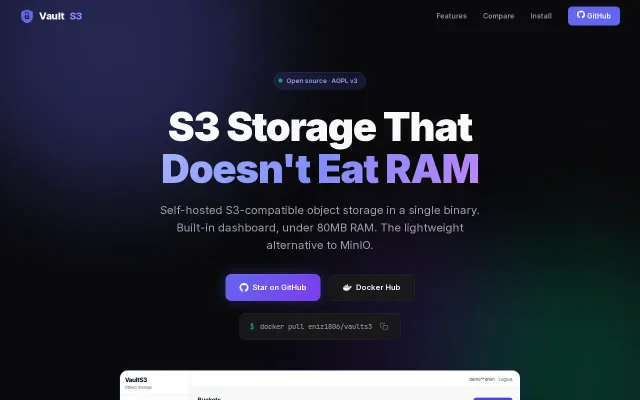
Under 80MB RAM beats MinIO's 512MB+, but S3 storage is a crowded, well-funded category.
S3 + Parquet + DuckDB for logs—known pattern, but well-executed and cheap.