Developer Tools●●●●Gem
WebAssembly Interpreter in a Header
Single-header WebAssembly 3.0 interpreter beats Wasmtime on embed complexity.
WizardryNiche GemZero to One
lifthrasiir
201mo ago
dependency-free single-header AI library in pure C
Drop-in C23 neural network engine with zero BLAS, Python, or build-system dependency. Genuinely rare.
Systems programmers, embedded engineers, constraint-heavy environments requiring minimal dependency footprint.
Llama.c · Tinygrad
I wanted to train and run Transformers, but I was exhausted by gigabyte-sized Python environments, opaque C++ build systems, and deep BLAS dependency trees. I wanted to see what it actually takes to execute a forward and backward pass from absolute scratch.
The result is a single-header, stb-style C library written in strict C23.
Architectural decisions I made: - *Zero dependencies:* It requires nothing but a C compiler and the standard math library. - *Strict memory control:* You instantiate a `RaiArena` at boot. The engine operates entirely within that perimeter. There are zero hidden `malloc` or `free` calls during execution. - *The Full Stack:* It natively implements Scaled Dot-Product Attention, RoPE, RMSNorm, and SwiGLU. I also built the backprop routines, Cross-Entropy loss, AdamW optimizer, and a BPE tokenizer directly into the structs.
It is currently public domain (or MIT, your choice). The foundation is stable and deterministic, but it is currently pure C math. I built this architecture to scale, so if anyone wants to tear apart my C23 implementation, audit the memory alignment, or submit SIMD/hardware-specific optimizations for the matmul operations, I'm actively reviewing PRs.
Single-header WebAssembly 3.0 interpreter beats Wasmtime on embed complexity.
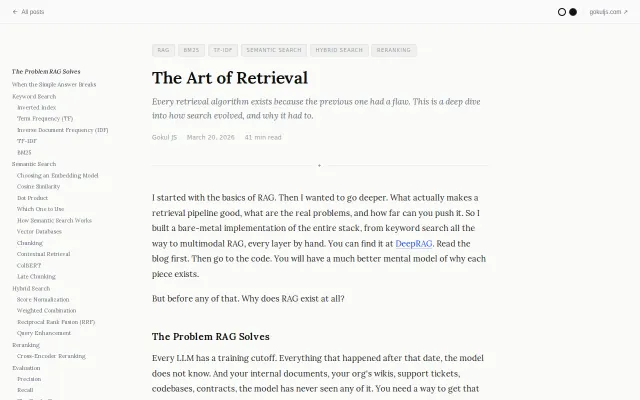
41-minute RAG deep dive when countless tutorials already cover this.
XDP drops packets before the kernel stack while nftables handles stateful logic.
Freestanding C++23 libc replacement with zero external dependencies—genuinely rare engineering.
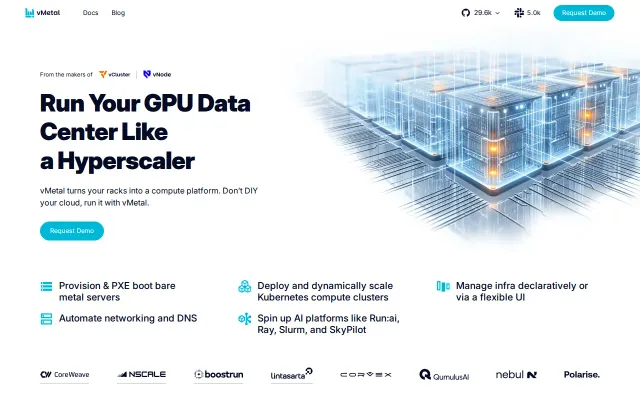
Saves neoclouds months of engineering by turning bare metal racks into managed Kubernetes clusters.
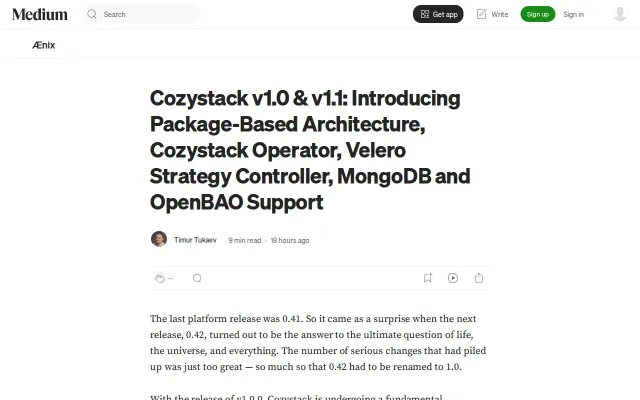
Package-based platform architecture using OCI artifacts — OpenStack for the Kubernetes era with CNCF backing.