Infrastructure●Mid
SignalCend – API that resolves conflicting IoT device state in 47ms
47ms latency for state conflict resolution is measurable, but lack of pricing or detailed API docs kills credibility.
Niche Gem
TylerArrows
503mo ago
Multi-signal arbitration engine solves out-of-order IoT state with 47ms latency and confidence scoring.
IoT platforms and edge systems managing devices with unreliable network conditions and clock drift
Temporal.io · AWS IoT Core state management
The naive fix is a timestamp check. But timestamps lie — clock drift, late-arriving packets, firmware bugs. So I built a multi-signal arbitration engine that weighs event arrival time, signal strength, sequence continuity, and timestamp plausibility together before committing to a resolved state.
You POST your raw device payload to /v1/sign, then /v1/resolve. You get back a single authoritative state, a confidence score (0.50–1.0), a recommended_action enum (ACT / CONFIRM / LOG_ONLY), and a full arbitration trace showing exactly why it resolved the way it did.
The demo works right now with no signup — just grab the demo key from the landing page and fire a request. Happy to answer any questions about the arbitration logic.
47ms latency for state conflict resolution is measurable, but lack of pricing or detailed API docs kills credibility.
Terminal-native 3-way merge TUI when meld and vimdiff already dominate.
Solves IoT infrastructure friction, but Firebase IoT Core and AWS IoT already own this space.
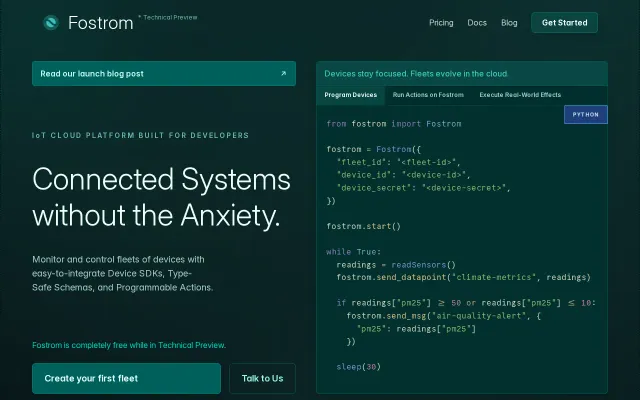
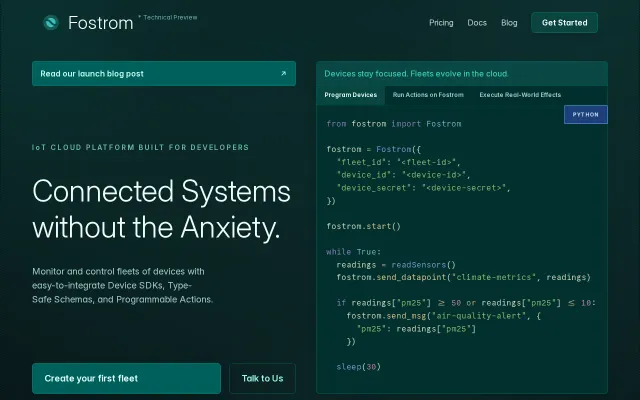
They combined typed payload validation, per-device sequential mailboxes and JS Actions running inside a WASM sandbox — a practical feature set that actually improves predictability for fleet code. The tiny Rust agent plus Python/JS/Elixir SDKs and an Elixir+DuckDB backend signal thoughtful infra choices rather than vaporware. Nice UX on the landing page, but the space is crowded; integrations and real-world scale will determine whether this stands out.
On-device breath detection from microphone audio with state machine, no wearables or cloud needed.
Turns any Linux laptop into a curl-able IoT pentest lab with per-query DNS logging.