Developer Tools●●Solid
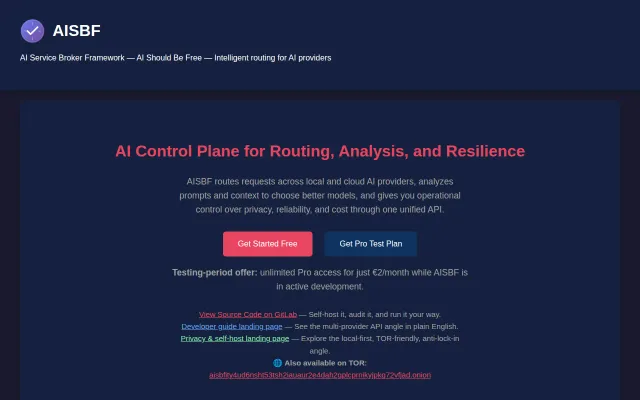
Aisbf, a self-hostable OpenAI-compatible AI proxy/router
LiteLLM and OpenRouter already solve multi-provider routing better and have production users.
Big BrainNiche Gem
nextime
241mo ago
Multi-backend S3-compatible proxy with quota management, replication, and rebalancing
Stacks free tiers from AWS, OCI, B2, R2 into one bucket—zero client changes.
DevOps engineers, backup administrators, cost-conscious developers managing multi-cloud storage.
MinIO federation · Ceph Object Gateway · CloudFront with multiple origins
What makes it useful:
- Combine free tiers — set per-backend quotas to match each provider's free limit and the proxy fills them in order (pack mode) or evenly (spread mode). 10GB + 10GB + 10GB = 30GB of free offsite storage
- Multi-cloud replication — set replication.factor: 2 and every object automatically lands on two different providers. Instant redundancy, zero client-side changes
- Full S3 API — works with aws cli, rclone, boto3, any S3 SDK. SigV4 auth, multipart uploads, range reads, batch deletes, the works
- Virtual buckets — multiple apps can share the orchestrator with isolated namespaces and independent credentials
- Monthly usage limits — cap API requests, egress, and ingress per backend so you never blow past a free tier
- Write safety — all metadata and quota updates happen inside PostgreSQL transactions. Object location inserts and quota counter changes are atomic — if anything fails, the whole operation rolls back. Orphaned objects from partial failures get caught by a persistent cleanup queue with exponential backoff retry instead of silently leaking storage
- TLS and mTLS — native TLS termination with configurable min version (1.2/1.3), plus mutual TLS support for environments where you want to restrict access to clients with a valid certificate. Certificate reload on SIGHUP for zero-downtime rotation
- Multi-instance / split-mode deployment — run with -mode all (default), -mode api (request serving only), or -mode worker (background tasks only). Scale API instances independently from workers behind a load balancer.
- Trusted proxy awareness — configure trusted CIDR ranges so rate limiting targets real client IPs from X-Forwarded-For, not your load balancer (rebalancer, replicator, cleanup queue, lifecycle) use PostgreSQL advisory locks so only one worker runs each task at a time — no duplicate work, no coordination needed
- Circuit breaker — if the metadata DB goes down, reads keep working via broadcast to all backends. Writes fail cleanly
- Automatic rebalancing — if you add a new backend, the rebalancer redistributes objects across all of them
- Backend draining — need to remove a provider? s3-orchestrator admin drain <backend> live-migrates all objects off that backend to the remaining pool with progress tracking. Once drained, admin remove-backend cleans up the database records (optionally purging the S3 objects too). No downtime, no manual file shuffling — swap providers without your clients noticing
- Web dashboard — storage summary, backend status, file browser, upload/delete, log viewer
- Production observability — Prometheus metrics (60+ gauges/counters), OpenTelemetry tracing, structured audit logging with request ID correlation
- Lifecycle rules — auto-expire objects by prefix and age
- Config hot-reload — update credentials, quotas, rate limits, replication, and rebalance settings without restarting via SIGHUP
- Comes with production ready Kubernetes and Nomad manifests/jobs that can be run with, a custom grafana dashboard utilizing the exported metrics
A bit nervous to share this but I think it is ready to be seen and maybe somebody else would find it useful.
LiteLLM and OpenRouter already solve multi-provider routing better and have production users.
Another everything-app when Notion AI and Slack already dominate this space.
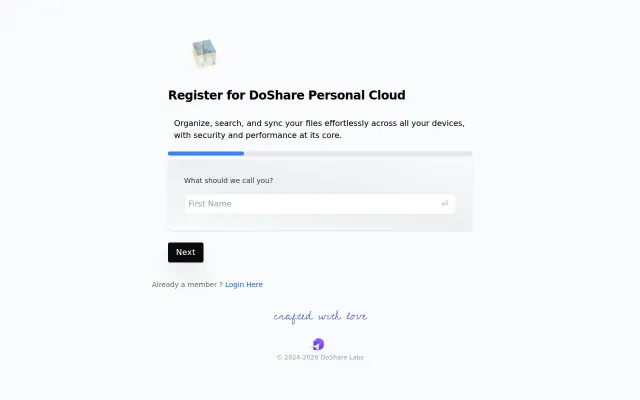
Just a signup page with zero product details in a saturated cloud storage market.
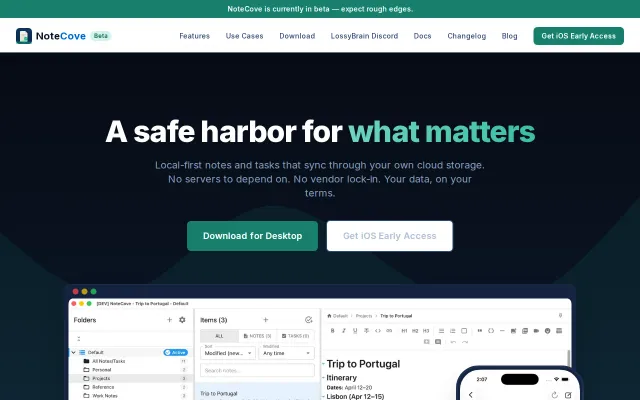
Syncs via your own Dropbox without servers, using CRDTs to handle offline conflicts.
YAML-defined specs drive parsers across JS, Go, Python, Rust, and Java.
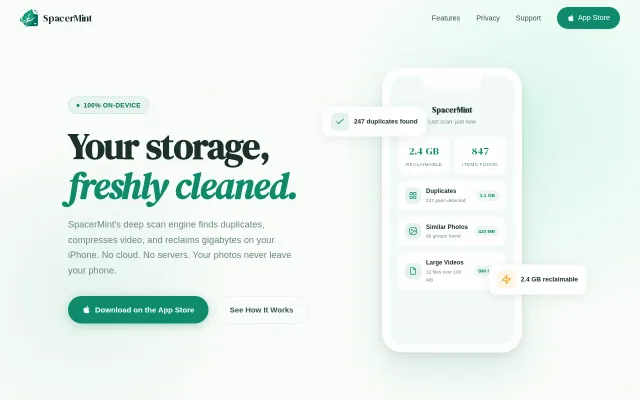
On-device duplicate detection, but Gemini Photos and PhoneClean already do this free.