Education●Mid
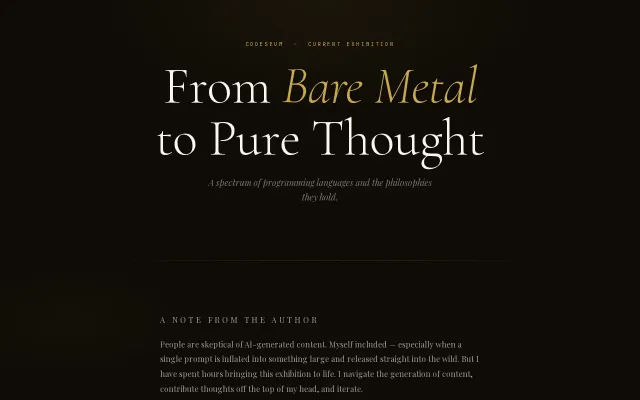
Codeseum – From Bare Metal to Pure Thought
Beautiful language museum, but curated content without novel technical contribution.
Eye CandyCozy
posiunas
202mo ago
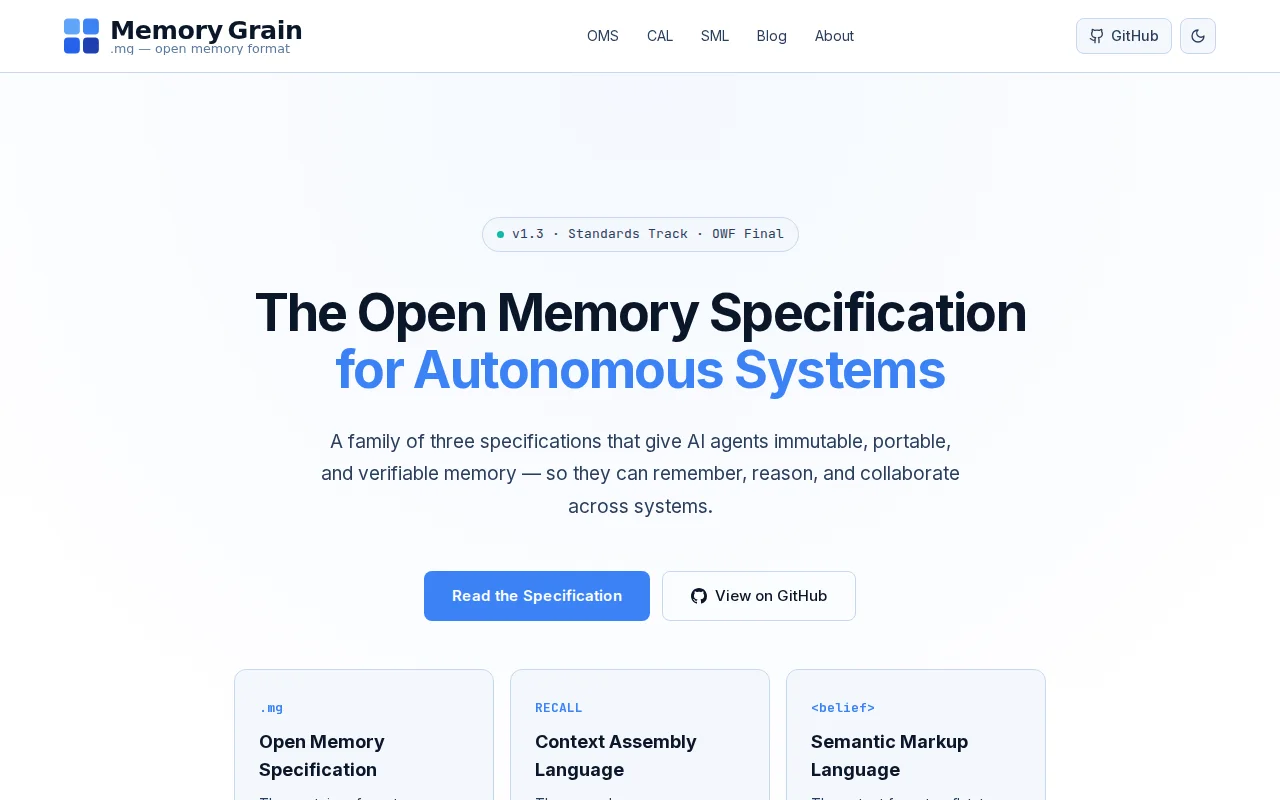
Content-addressed agent memory with append-only CAL—delete structural impossibility, not policy.
AI/LLM framework authors, enterprise AI teams, regulatory compliance officers
LLM memory layers in LangChain · Kafka event sourcing patterns · Git object model
The problem: every agent framework (LangChain, CrewAI, AutoGen) has its own memory format. There's no standard way to port memory between systems, verify it hasn't been tampered with, or prove to a regulator that you deleted it.
OMS defines three things:
1. *A binary container format (.mg)* — memory grains are content-addressed (SHA-256), immutable, deterministically serialized (MessagePack). Think .git objects for agent knowledge. 10 grain types: Belief, Event, State, Workflow, Action, Observation, Goal, Reasoning, Consensus, Consent.
2. *CAL (Context Assembly Language)* — a query language for assembling LLM context. The notable design choice: delete is a structural impossibility. Not a policy — the grammar has no production rules for destructive operations. Append-only writes, bounded execution, token-budget-aware assembly.
3. *SML (Semantic Markup Language)* — flat output format for LLM consumption. Tag names are grain types (`<belief>`, `<reasoning>`, `<consent>`). No XML processor needed.
The whole thing is CC0 (public domain). OWFa 1.0 licensed.
GitHub: https://github.com/openmemoryspec/oms
Happy to answer questions about the design decisions.
Beautiful language museum, but curated content without novel technical contribution.
Event sourcing for LLM context—clever approach to agent memory sharing.
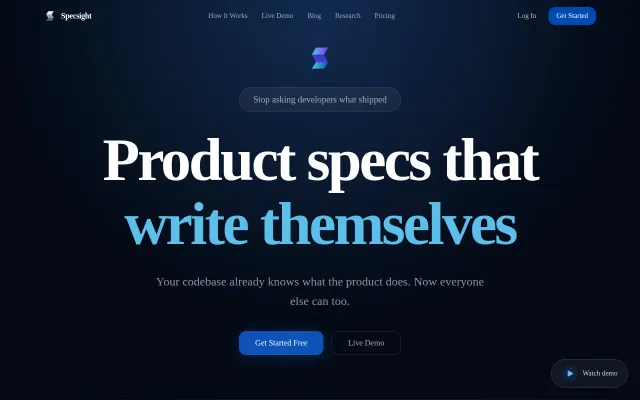
Continuous spec sync detects changes from every release automatically.
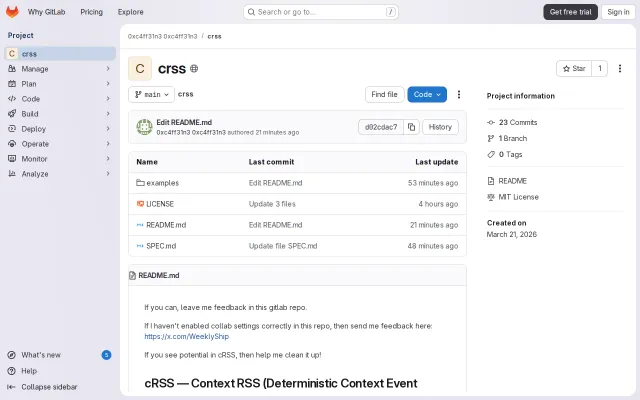
This repo turns agent loops into tiny, explicit instructions (LF, LI, APP, INF, INT, BGT, OUT) so you can compose reasoning as discrete micro-prompts instead of one huge monolith. The example VIBE_CONTROLLER shows concrete ops for cognition, safety checks and branching — a neat way to formalize ReAct-style loops. It’s a clever, researchy DSL with a Rust interpreter, but it’s early-stage and sits in a crowded space of agent frameworks (needs runtime benchmarks, integrations and real-world demos to move beyond an interesting experiment).
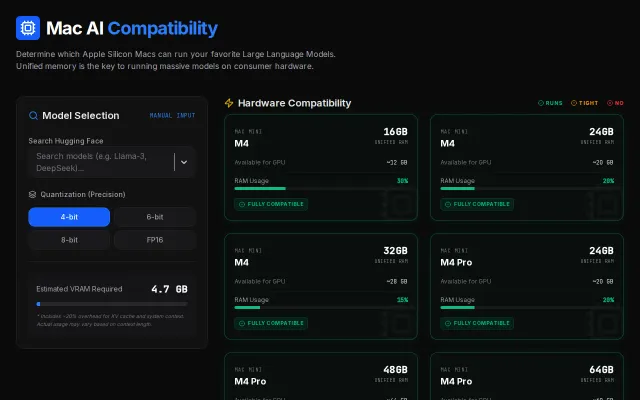
Clean hardware-model compatibility checker, but solves a narrow, one-time lookup problem.
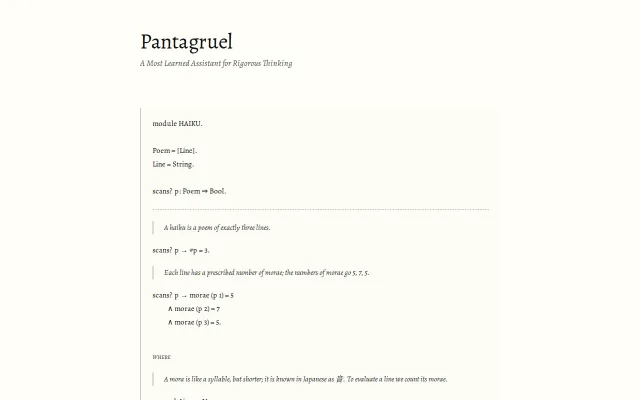
TLA+ or Alloy for people who aren't PhDs, but adoption depends entirely on community.