SaaS●Mid
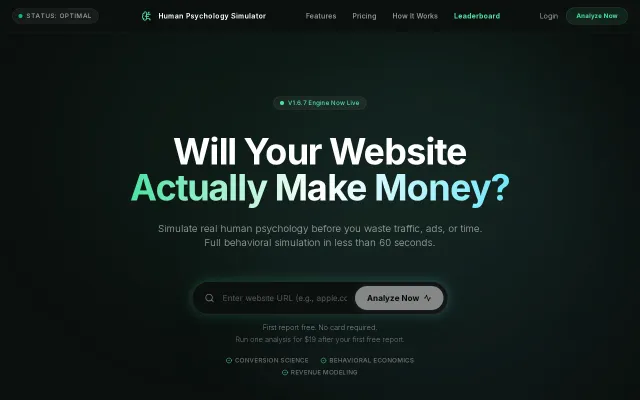
Human Psychology Simulator – AI website conversion psychology
Simulates 1M human interactions per report, but 'trust score' and 'conversion momentum' are unvalidated AI theater.
HPSimulator
103mo ago
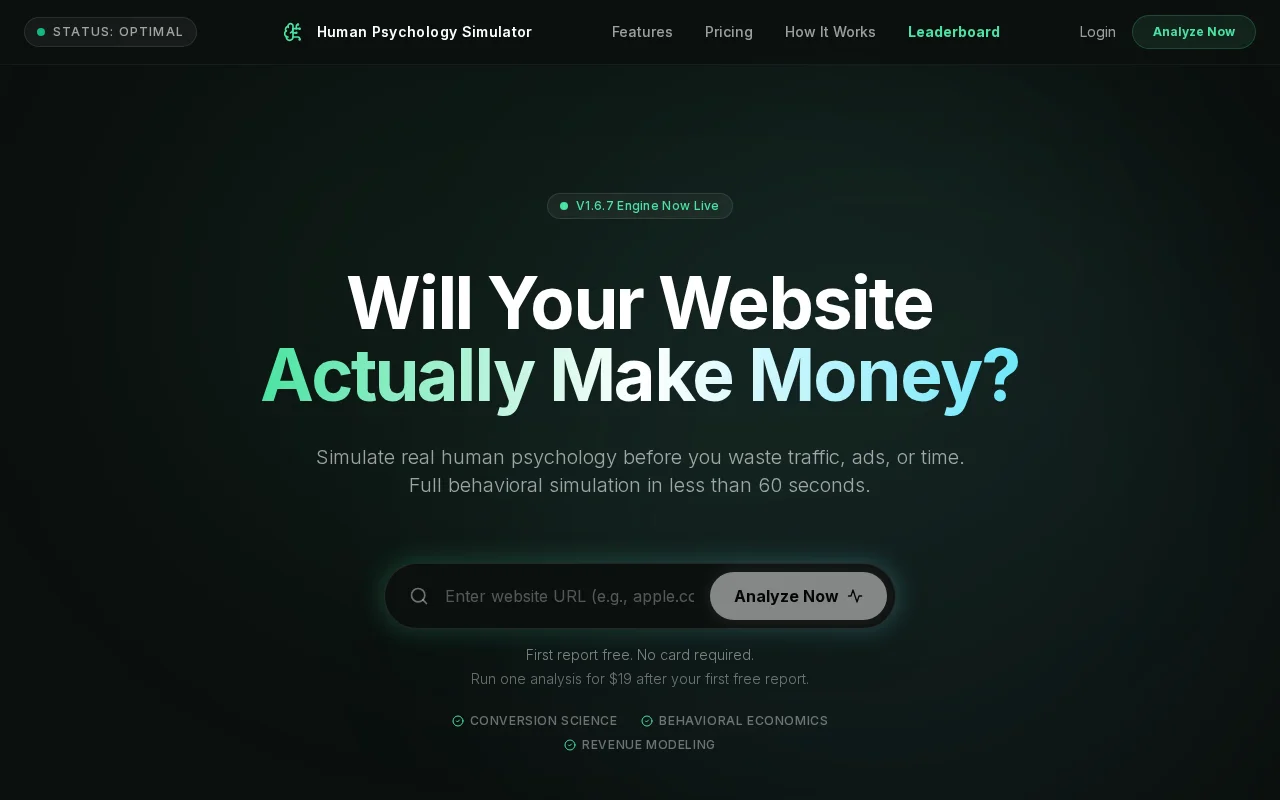
Simulates 1M visitor interactions to rate trust and conversion—but no methodological transparency or validation studies.
SaaS founders, e-commerce brands, landing page builders, conversion optimization teams
Hotjar · Contentsquare · Google Analytics
I built Human Psychology Simulator to explore an idea: can we approximate how visitors psychologically experience a website before running real traffic?
Most founders rely on analytics, A/B testing, or heatmaps after users arrive. But I wanted to experiment with predicting behavioral friction earlier.
The tool runs a simulation and generates a report including:
• Trust score • Conversion probability • Hesitation zones • Persuasion signals • Priority fixes
To make it interesting, I also generated reports for ~100 well-known websites to create a public leaderboard.
Curious to hear feedback from the HN community:
Does the concept make sense? What signals would you expect a system like this to evaluate?
Simulates 1M human interactions per report, but 'trust score' and 'conversion momentum' are unvalidated AI theater.
The pitch — spotting high-intent visitors while avoiding invasive tracking — is a neat, timely angle given privacy pressure, but the landing page gives you almost nothing to evaluate: no features, no screenshots, no privacy model, just a company name and an email. If the product truly matches the claim (server-side signal processing, clear opt-out/consent flows, real-time lead output), it could be useful; right now it needs a demo and concrete technical details to move out of idea territory.
Collaborative art chain where strangers build on each other's changes.
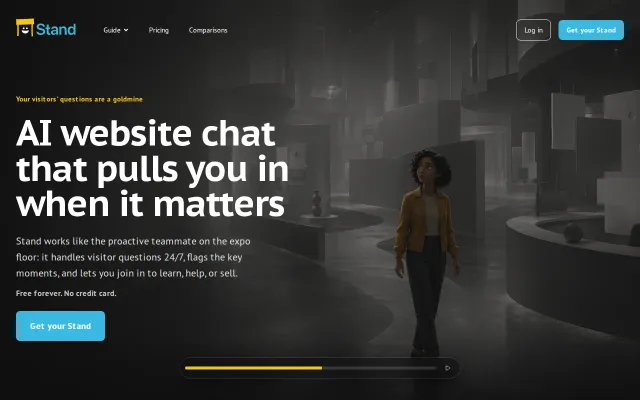
Ask-before-handoff flow is thoughtful UX, but Intercom and Drift already dominate website chat.
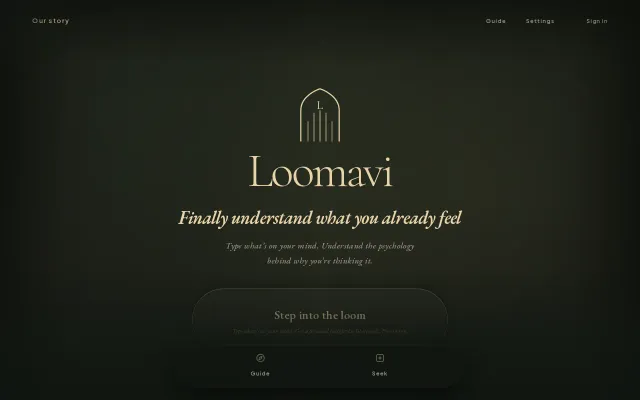
AI-generated insight letters when BetterHelp and journaling apps exist.
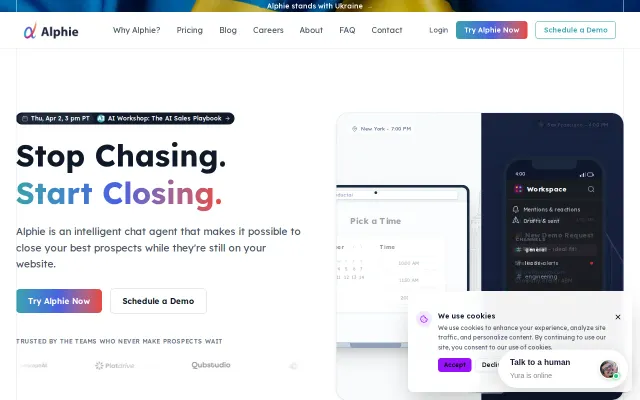
Another AI sales chatbot competing with Intercom and Drift in a saturated market.