Productivity●●Solid
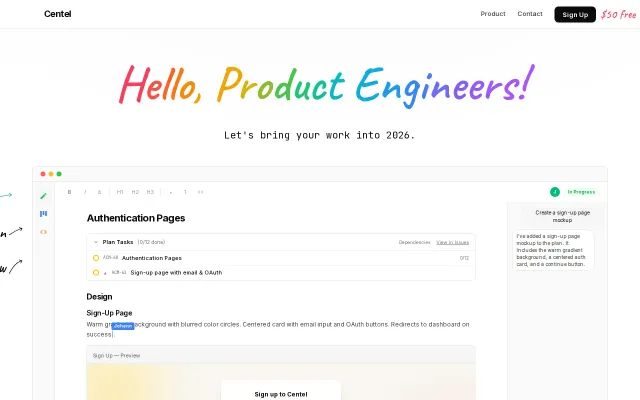
Hey PMs, let's give you a fighting chance!
Structured technical specs that sync directly to engineering issues.
Solve My ProblemSlick
marcel-felix
412mo ago
Documentation hub for my SRA software architecture
Well-reasoned three-tier architecture, but lacks reference implementations and adoption proof.
Generalist engineers building multi-platform applications; teams evaluating architectural frameworks.
Clean Architecture · Domain-Driven Design · Hexagonal Architecture
Background:
Whenever I would learn a new architecture, the initial ideas seemed interesting but the implementation almost always ended up with my autistic sense of detail screaming loudly about one or more shortcomings and even inconsistencies.
For example, a lot of architectures rely on human discipline, give certain aspects of the software - such as the UI - an unproportional amount of power, or promote coupling despite claiming otherwise.
As a programming generalist, I also found certain architectures hard to transfer between platforms and project types, especially in multiplatform code bases.
In the end I started from the basics; What is good code? What principles are common regardless of language? How can we make good code easier to write than bad code? What makes code adaptable to evolving technology and changing requirements?
The result: SRA. Enjoy!
Structured technical specs that sync directly to engineering issues.
The repo shines by focusing on the rarely-curated, code-level side of architecture: 14 real ADR examples (Kubernetes KEPs, Rust RFCs, Spotify/Flutter docs) and a neat shortlist of architecture-verification tools (ArchUnit, Arkitect, Konsist, arch-go). It's a pragmatic, opinionated filter of 106 resources that will save time for teams hunting implementable patterns, but it remains a static list — no ranking, tagging, or runnable examples to speed adoption.
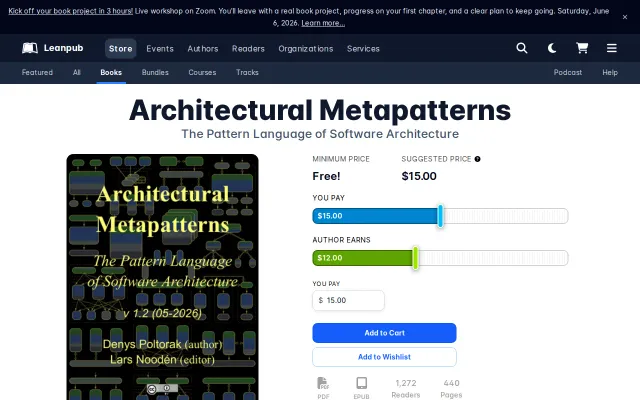
440-page architecture book with real testimonials, but Show HN favors shipped code over content.
This is an architecture-first manifesto that treats diagrams and schemas as the true source of code and then uses LLMs to align implementations. The author backs the theory with a concrete solo-built stack (Cloudflare Workers edge, Fly.io core, LLM agents and a large AI-maintained MDX knowledge base), which makes the 60/40 rule feel actionable. Good as a strategic playbook; it needs more reusable infra templates or scripts to move from clever idea to something you'd copy into a new project.
Handwritten assembly tokenizer claiming 20x speedup over HuggingFace on SSE2.
Architecture review agents catch design debt before coding agents compound it.