Developer Tools●●Solid
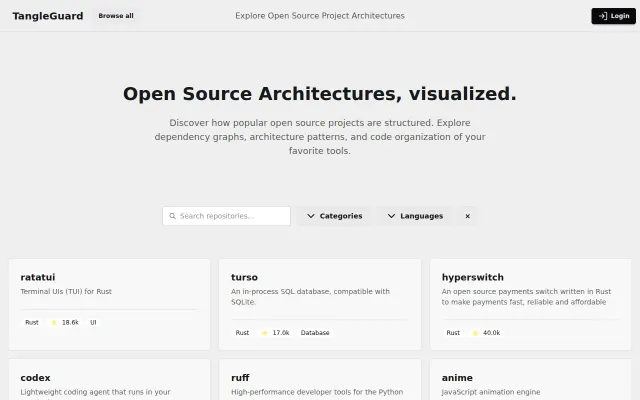
Code Architecture Visualization
Visualizes real project internals (ruff, turso, ripgrep), but static codebase analysis is well-trodden.
Niche GemWizardry
jaads
103mo ago
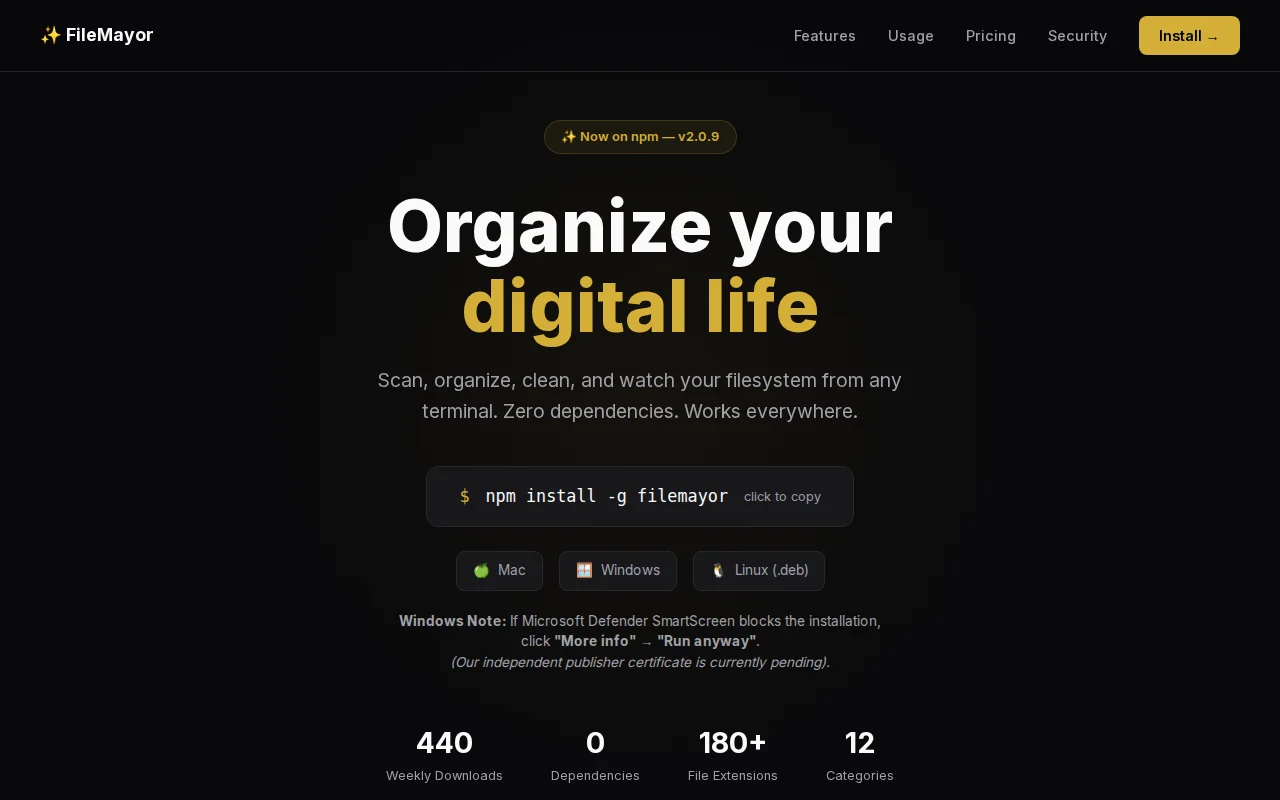
Local file organizer with rollback journal, but competes with existing tools like Hazel and AutoSorter.
Users with messy local filesystems who want privacy-first organization; developers managing build artifacts and logs.
Hazel · AutoSorter · Belvedere
My documents folder recently became an absolute disaster—thousands of unsorted PDFs, raw images, scattered .csv files, and code snippets from the last three years.
I looked for automated categorization tools, but every modern solution seemed to require uploading my local file metadata to a cloud UI or running an overly heavy background service. I explicitly wanted an offline, privacy-first engine.
So I built FileMayor. It’s a 100% local-first data organization engine built on Node.
A few technical properties I focused on:
Zero Runtime Dependencies: The core Node engine is pure. No vulnerabilities, no bloat, and minimal memory footprint. Deterministic Fallbacks: By default, files are sorted instantly into 12 hardcoded extensions/mime-type categories (Documents, Media, Archives, Code, etc.) using offline pattern matching. The Rollback Journal: Every file mutation is logged to a local .filemayor-journal.json. If an organization run ruins your directory structure, a single undo command reverses the entire batch operation instantly. AI SOPs (Opt-in): If you need complex directory trees, it parses .md or .txt Standard Operating Procedures, securely queries the Gemini API to transpile the intent into a locked YAML schema, and executes the file moves. I packaged versions for Windows, macOS (arm64), and Linux (.deb).
I'd really appreciate any feedback on the rollback journal architecture or the regex pattern matching approach!
Visualizes real project internals (ruff, turso, ripgrep), but static codebase analysis is well-trodden.
208 projects listed, zero depth—rename your fork and call it a collection.
File auto-organizer by extension—rm/mv already do this, just less convenient.
Curated prompt library for data roles instead of generic collections.
Searchable OSINT directory with cleaner UX than the decade-old OSINT Framework.
Yet another awesome list when AI extension directories already exist.