Developer Tools●●●Banger
OpenBrowser MCP: Give your AI agent a real efficient browser
3.2x–6x fewer tokens than Playwright/Chrome DevTools MCP via code-first architecture.
WizardrySolve My ProblemZero to One
billy-enrizky-1
204mo ago
Anti-defaults concept stops AI from generating generic rounded-card blue-button UI.
Frontend developers using Cursor, Claude Code, and Copilot
Supernova · Figma Tokens · Style Dictionary
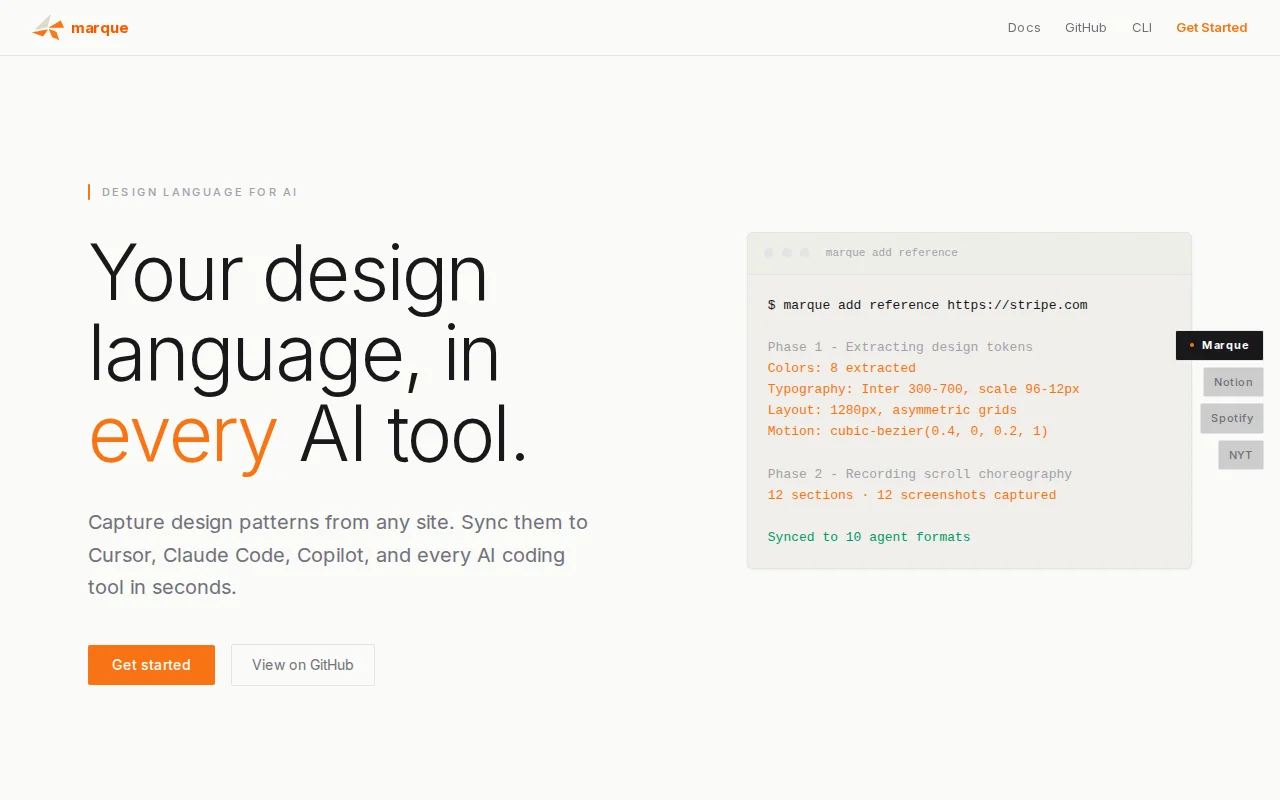
That is what Marque is.
npm install -g marque-cli marque stamp stripe.com marque synthesize --apply marque mcp setup
marque synthesize turns that into an actionable mark: a concept philosophy with a core metaphor, a pattern vocabulary with JSX blueprints, anti-defaults telling the agent exactly what not to build, and section guidance per page type.
marque mcp setup writes config files for Claude Code, Cursor, Copilot, Windsurf, Codex, and Antigravity simultaneously. The agent calls get_design_context_for() before it writes a single line.
Real design taste is never singular though. Kirby Ferguson's Everything is a Remix maps directly here: the best design is copy, transform, combine. marque blend lets you pass multiple references with weights, scrapes them in parallel, interpolates the typography scale numerically, resolves color dominance by weight, and synthesizes a concept philosophy describing the creative tension between the references as a named design identity. Not averaging two sites. Creating something original from the intersection of what you admire.
marque blend lusion.co vercel.com 0.6 0.4
And once the agent starts building, marque improve keeps it honest. Agents drift. By the third component they are back to generic defaults. The improve loop screenshots your running dev server, diffs it against your mark using a vision model, writes element level violations by severity to a corrections file, and re-scores on every file change until the output actually matches.
marque improve --url localhost:3000 --target 85
The goal is simple: vibe-coded products should look as good as they build fast. Everything is free and open source.
Demo: https://www.youtube.com/watch?v=DB8VvzUxtvY
GitHub: https://github.com/parthsharma234/marque-cli
Looking for some feedback and any comments/concerns.
3.2x–6x fewer tokens than Playwright/Chrome DevTools MCP via code-first architecture.
Playwright-driven crawling + deterministic token extraction plus an LLM for semantic labeling is a clever pipeline — it doesn’t just scrape CSS, it produces an AI-optimized .design-memory folder with tokens, component recipes, and multi-page merge/diff capabilities. Expect variable fidelity on highly dynamic or framework-heavy sites since the approach depends on selector heuristics and an API key, but the CLI commands (learn, install, diff) and docs show this is more than a research sketch.
First open standard for agent identity—solves a real security gap Cisco documented.
No-login design audit tool when Frontify and Zeroheight require accounts.
5-level lazy-loaded memory hierarchy solves AI session amnesia better than flat RAG.
Tree-sitter + SQLite graph reduces agent context 74% while staying entirely local.