Other○Pass
We wrote a custom microkernel for XR because Android felt too bloated
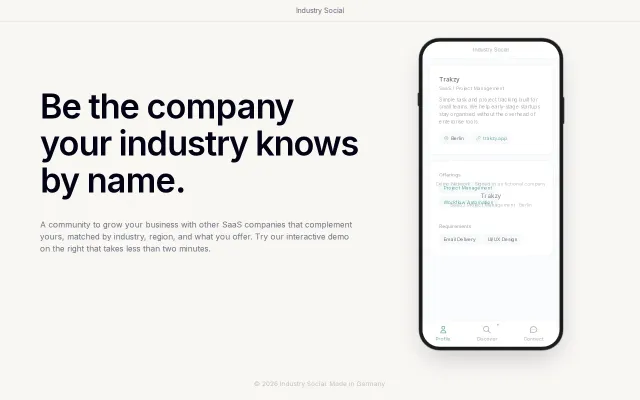
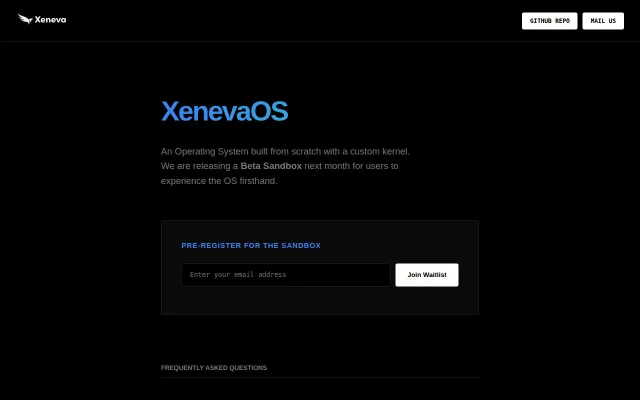
Waitlist landing page with no code, demo, or technical details visible.
Bold Bet
ayush_xeneva
333mo ago
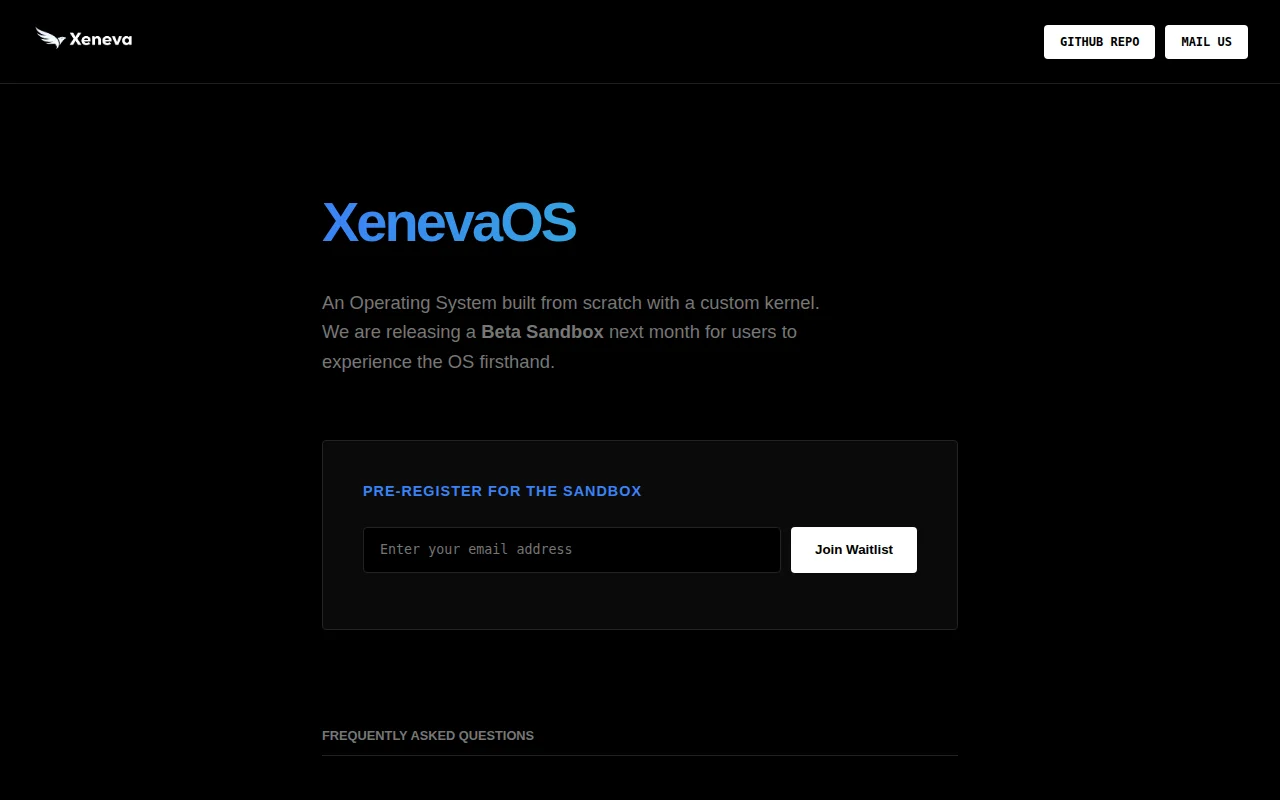
Waitlist page with no code, no demo, no accessible beta — just promises.
XR developers and early adopters
The finished version of the Operating System is targeted to run on XR (AR/VR/MR) devices natively in a standalone manner. The main advantage of our OS is the fact that since it has a custom kernel specifically written for XR, it is able to achieve very low latency and is optimized for target hardware. It will be able to run efficiently on minimal hardware resources.
One of the ways we're making this possible is by minimizing abstraction layers.
Due to limited server access, user slots are also limited in the initial rollout. Register through the following link to be among the first to test the Beta next month - https://explore.getxeneva.com/
If you want to look at the codebase, you can also go through our GitHub Repository - https://github.com/manaskamal/XenevaOS
Waitlist landing page with no code, demo, or technical details visible.
Full OS kernel in JavaScript running WebAssembly programs with real I/O.
Waitlist-only landing page with no actual product to evaluate.
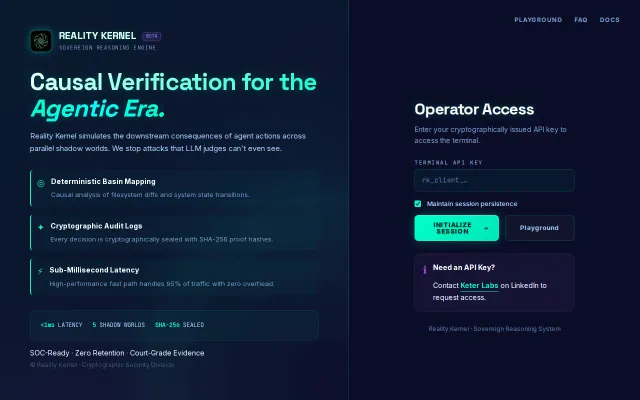
Spec and manifesto with LinkedIn contact form instead of working code or demo.
NixOS profiles for Claude Code autonomy, but it's a personal config repo, not a reusable product.
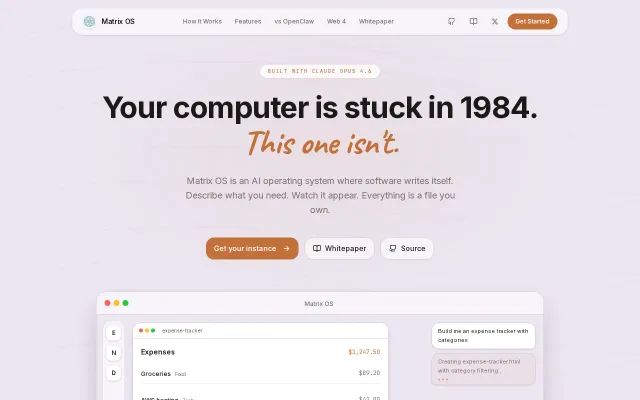
Claude-powered OS kernel with multi-agent architecture, but execution is early and architectural novelty is limited.