Education○Pass
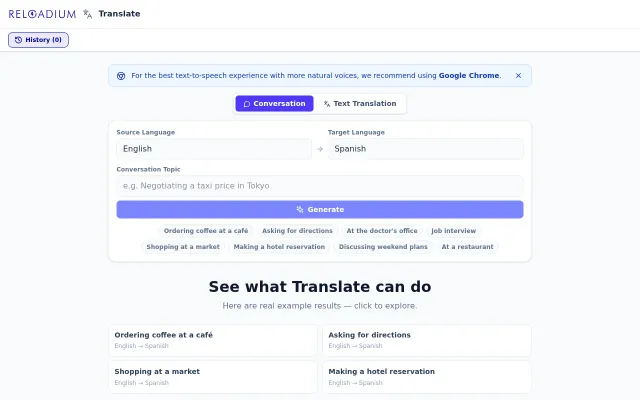
![Practicing foreign language generating conversation on topic [video]](/screenshots/48472833_thumb.webp)
Practicing foreign language generating conversation on topic [video]
Video demo of a personal workflow, not a tool others can actually use.
julienreszka
3011d ago
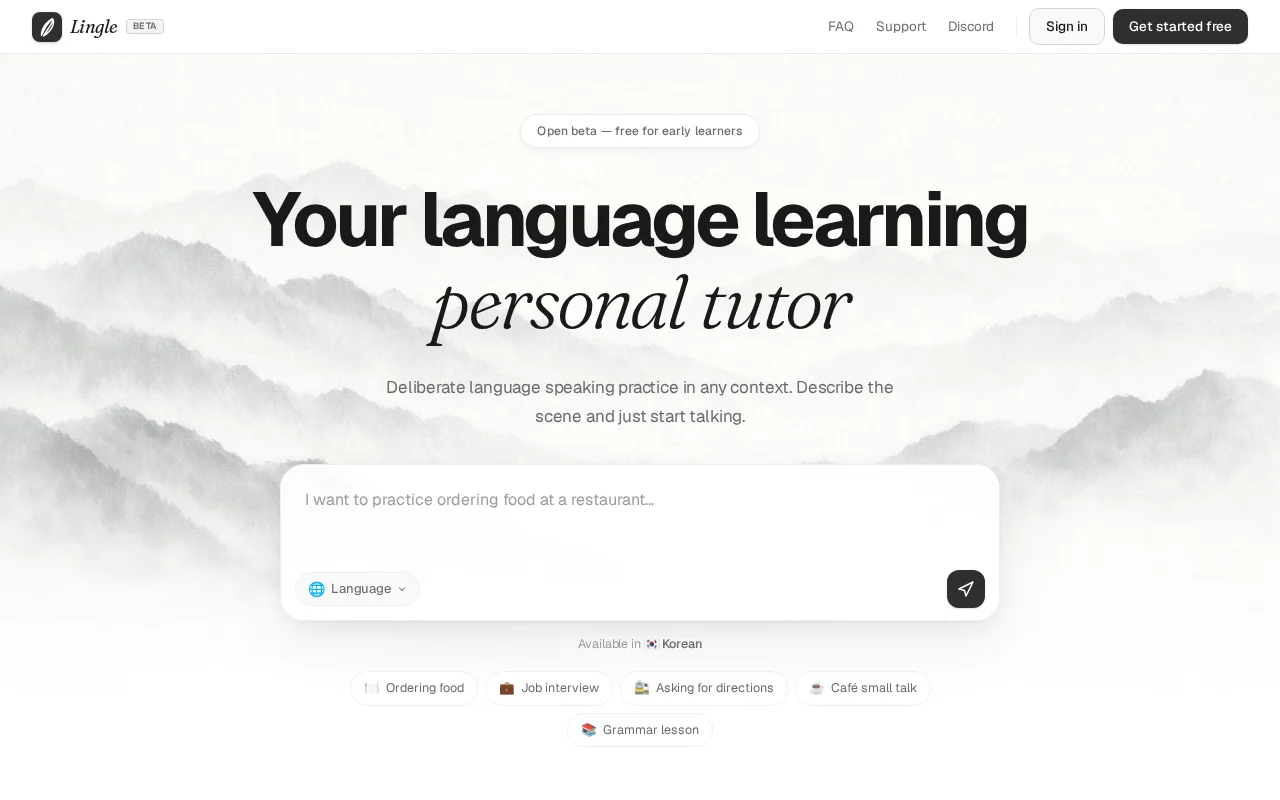
Desktop-first AI tutor for deliberate language practice without mobile gamification.
Serious language learners
Speak · Talkpal · Duolingo Max
I’m pretty bearish on most other apps, they seem mostly for casual learners with streaks/gamifications and canned scenarios with shallow feedback, even the recent stuff using AI. I for one hate using mobile apps to study (small screen, notification driven, gamified, etc) and I really wished I could deep dive/rabbit hole into my mistakes and drill them specifically.
I built Lingle as a desktop-first tool explicitly for learners who already have a serious study routine and want to work on deliberate practice for speaking with rigorous feedback and detailed explanations and more pedantic feedback to bridge the gap between understandable and natural.
Details:
-Voice input with real-time transcription fed into a conversation model prompted to behave as a native speaker in a user-defined context -A second pass evaluates utterances for naturalness, register, and pragmatic appropriateness, not just grammatical correctness -Corrections surface inline without interrupting conversation flow, allows you to retry if you made a suboptimal response Users define their own contexts entirely — no preset scenarios, you tell it what you're watching, reading, or which grammar structures you want to drill watching, reading, or which grammar structures you want to drill
The hardest problem has been calibrating correction sensitivity - getting the model to catch subtle pragmatic errors without overcorrecting or flagging legitimate stylistic variation. Still actively working on this and would genuinely love input from anyone who's thought about this problem. Also thinking about adding longer term memory and integrating with other study tools (Anki, etc) to make it more fullstack. Maybe one day replacing my italki tutor entirely with AI + memory and textbook integration or something.
Currently Supports Japanese, Spanish, French, Mandarin, German, Korean, and Portuguese. Free to try while I validate whether this is a real problem worth building further. Happy to get into the technical architecture or prompting approach in the comments.
– Andrew
Video demo of a personal workflow, not a tool others can actually use.
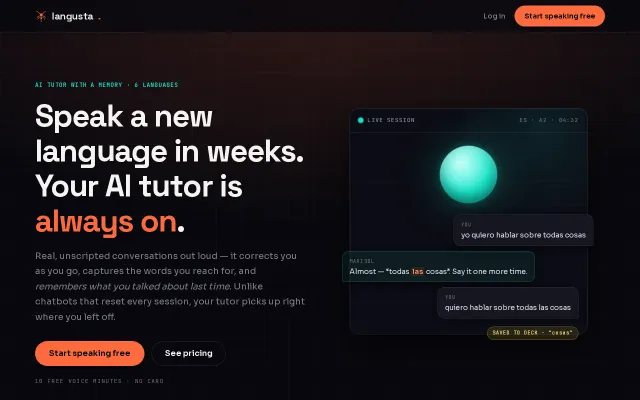
Session memory and auto-vocab capture beat stateless chatbots, but Duolingo Max and Speak exist.
Topic-based conversation generator when Talkpal and Lingodeer already do this.
Zoom for language exchange with a built-in timer to enforce equal speaking time.
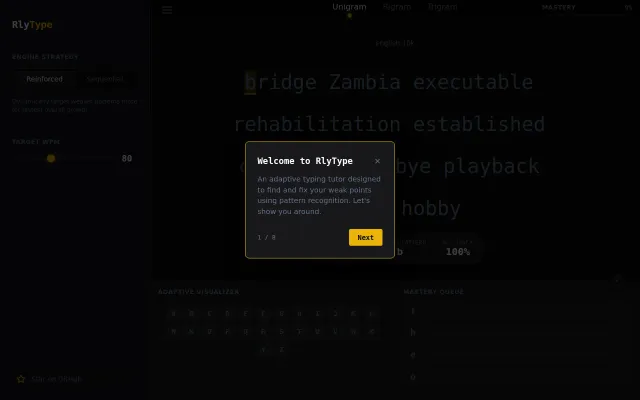
This is a typing tutor that treats your habits like telemetry: it breaks input into n‑grams, highlights the weakest patterns, and queues those fragments for focused practice (reinforced or sequential). The site shows a target WPM slider, mastery queue, keyboard visualizer and huge multilingual/code wordlists — practical features that suggest real UX thinking. I'd like persistent progress graphs and custom text import, but the pattern-first approach is a neat, non-trivial twist on a crowded space.
Yet another AI speech coach, but focused on ESL professionals instead of general language learning.