Productivity●●●●Gem
Cc-md – Zero-cost Obsidian sync across iPhone, Mac, and GitHub
400-line bash replaces $48/year Obsidian Sync; AI-native plain markdown beats proprietary APIs entirely.
Zero to OneBig BrainNiche Gem
YuukiJyoudai
843mo ago
A zero-terminal, real-time sync engine powered by your own Cloudflare Worker.
Real-time CRDT sync beats Obsidian Sync without the monthly fee or Docker hassle.
Obsidian power users who want private sync without paying monthly fees
Obsidian Sync · Self-hosted LiveSync · Syncthing
I'm a heavy Obsidian user.
I recently got tired of the two usual sync tradeoffs:
1. File-based sync (iCloud/Dropbox/Syncthing) that leaves you waiting for changes to propagate, or hands you a "conflicted copy." 2. Self-hosted setups (like CouchDB) that need touching VMs and dockerized databases to sync markdown.
So I built YAOS: a local-first, real-time sync engine for Obsidian.
Self-hosting OSS should have better UX.
You can deploy the backend to your own Cloudflare account in one click. It fits comfortably in Cloudflare's free tier (costing $0/month for normal personal use), and requires absolutely no terminal interaction, no SSH, and no env files.
You can try it out right now: https://github.com/kavinsood/yaos
How it works under the hood:
- Text sync uses Yjs CRDTs. It syncs real-time keystrokes and cursors rather than treating the vault as a pile of files to push around later. - Each vault maps to a Cloudflare Durable Object, giving you a low-latency, single-threaded coordinator at the edge. - The backend uses a chunked Checkpoint + Delta-Journal MVCC storage engine on top of the DO's SQLite storage. - Attachments sync separately via R2 (which is optional—text sync works fine without it).
The hardest part of this project was bridging Obsidian's synchronous UI and noisy OS file-watchers with the in-memory CRDT graph. I had to build a trailing-edge snapshot drain that coalesces rapid-fire IO bursts (like running a find-and-replace-all) into atomic CRDT transactions to prevent infinite write-loops.
The current design keeps a monolithic CRDT per vault. This is great for normal personal notes, but has a hard memory ceiling (~50MB of raw text). I chose this tradeoff because I cared more about fast, boringly reliable real-time ergonomics than unbounded enterprise scale.
I also wrote up engineering notes on the tricky parts (like handling offline folder rename collisions without resurrecting dead files) on GitHub.
I've spent the last three weeks doing brutal QA passes to harden mobile reconnects, IndexedDB quota failures, and offline split-brain directory renames.
I'd love feedback on the architecture, the code, or the trade-offs I made. I'll be hanging out in the thread to answer questions!
400-line bash replaces $48/year Obsidian Sync; AI-native plain markdown beats proprietary APIs entirely.
Obsidian vault as MCP server for Claude; clever bridge but requires Obsidian Sync subscription and is unofficial.
Obsidian vaults as persistent agent memory is clever, but Cursor's native context is smoother.
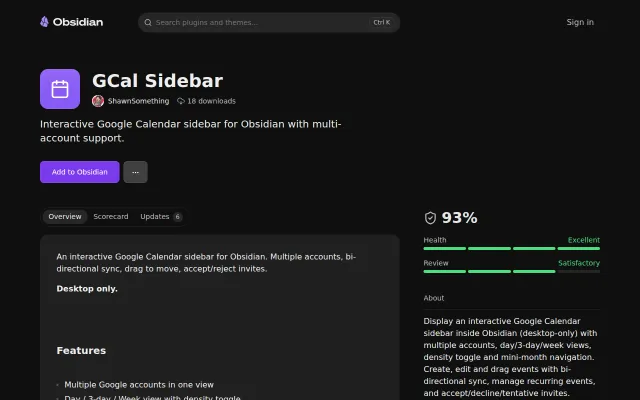
Bi-directional sync inside Obsidian without third-party servers.
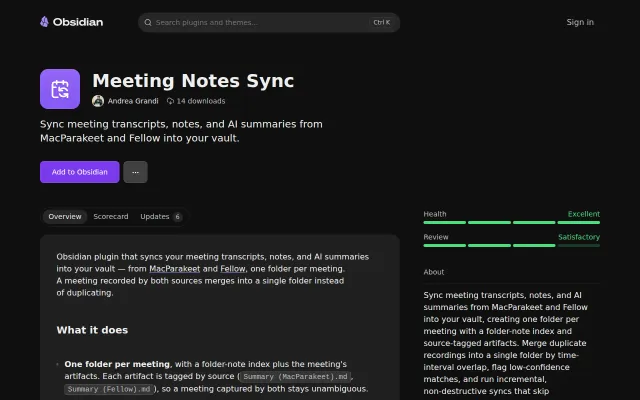
Merges MacParakeet and Fellow transcripts by time overlap, flags uncertain matches.
Serverless inventory sync using YJS CRDTs instead of a central database backend.