Infrastructure●●Solid
SiClaw – an open-source agent for debugging infrastructure incidents
Built by SREs who actually live through CrashLoopBackOff investigations.
Niche GemSolve My Problem
SherryWong
103mo ago
Unified ops schema is useful but Backstage already does this with more adoption.
Platform engineers and SRE teams
Backstage · PagerDuty · Opsgenie
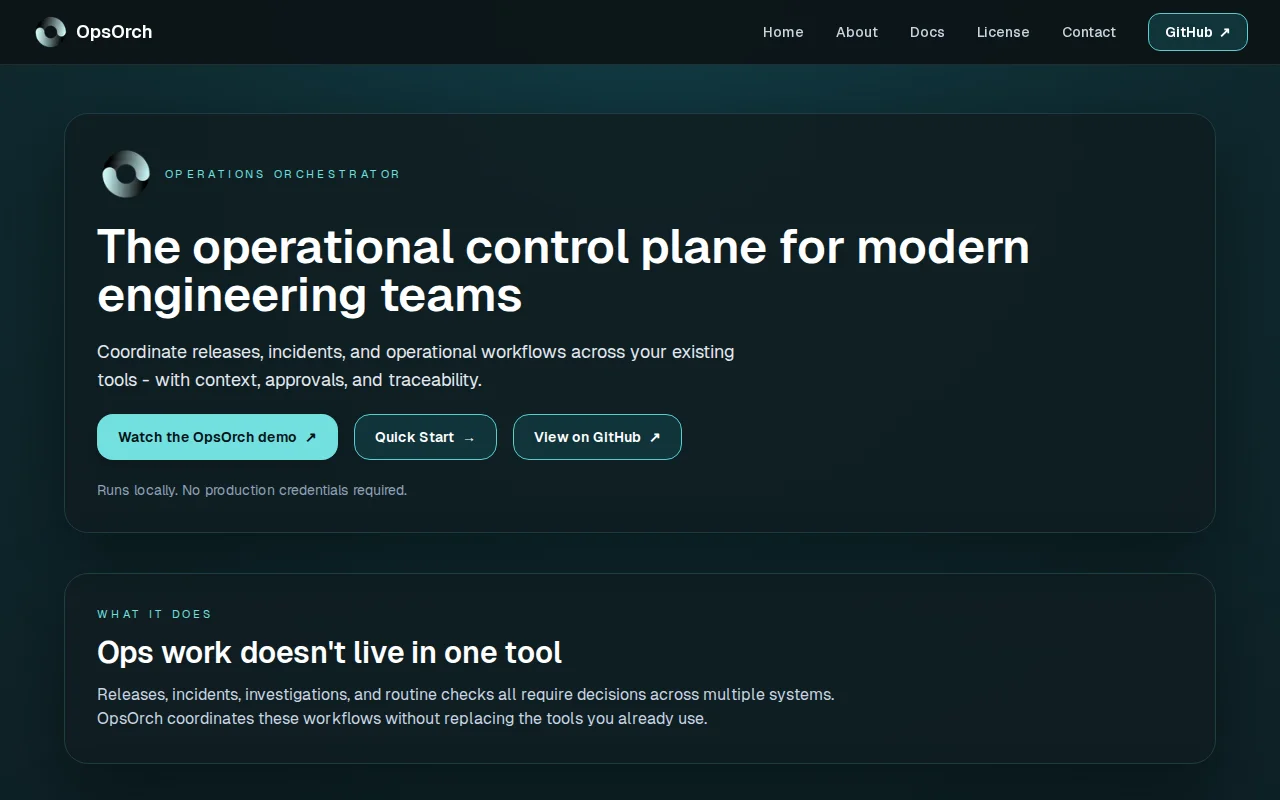
I built OpsOrch because operational work is spread across too many tools.
Incidents might be in PagerDuty, logs in Datadog, metrics in Prometheus, and runbooks somewhere else. Each system has its own API and data model, so cross-tool workflows usually turn into glue code.
OpsOrch is my attempt to standardize that.
It defines a common schema for things like incidents, logs, metrics, alerts, services, and runbooks, then uses adapters to connect different providers behind one interface.
The goal is simple: instead of writing vendor-specific logic, a client can ask for:
- incidents affecting a service
- related logs and metrics
- associated runbook context
I am especially interested in feedback on whether this abstraction is actually useful, or whether it becomes too generic in practice.
Happy to answer questions about the schema, adapter model, and tradeoffs.
Built by SREs who actually live through CrashLoopBackOff investigations.
Another code review tool claiming to catch slop, competing with CodeRabbit and Cursor.
Incident response training game that's actually addictive—beats PowerPoint.
Deterministic agent benchmarking with strict validation—unlike SWE-Bench, measures whether agents actually operate.
Android SSH client with built-in runbooks and resource monitoring for on-call triage.
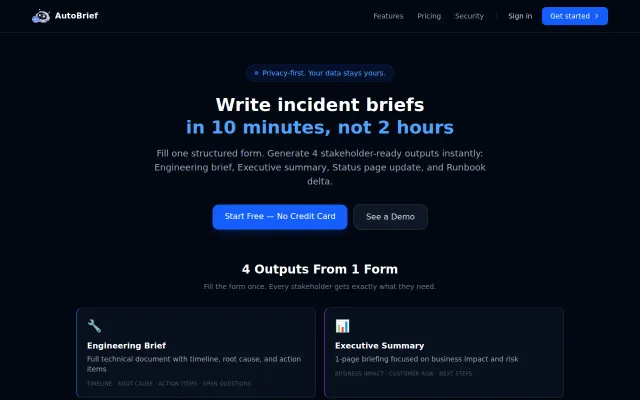
One form, four outputs—replaces messy Slack threads with audience-specific incident docs.