AI/ML●●Solid
ABES – a memory architecture for belief revision in AI agents
15-phase belief scheduler with decay mechanics, but unproven in production agent pipelines.
Big BrainWizardry
bradkinnard
103mo ago
Thermodynamic memory decay beats passive vector search—90% token reduction claimed.
AI agent developers, LLM application builders
Mem0 · LangChain Memory · Zep
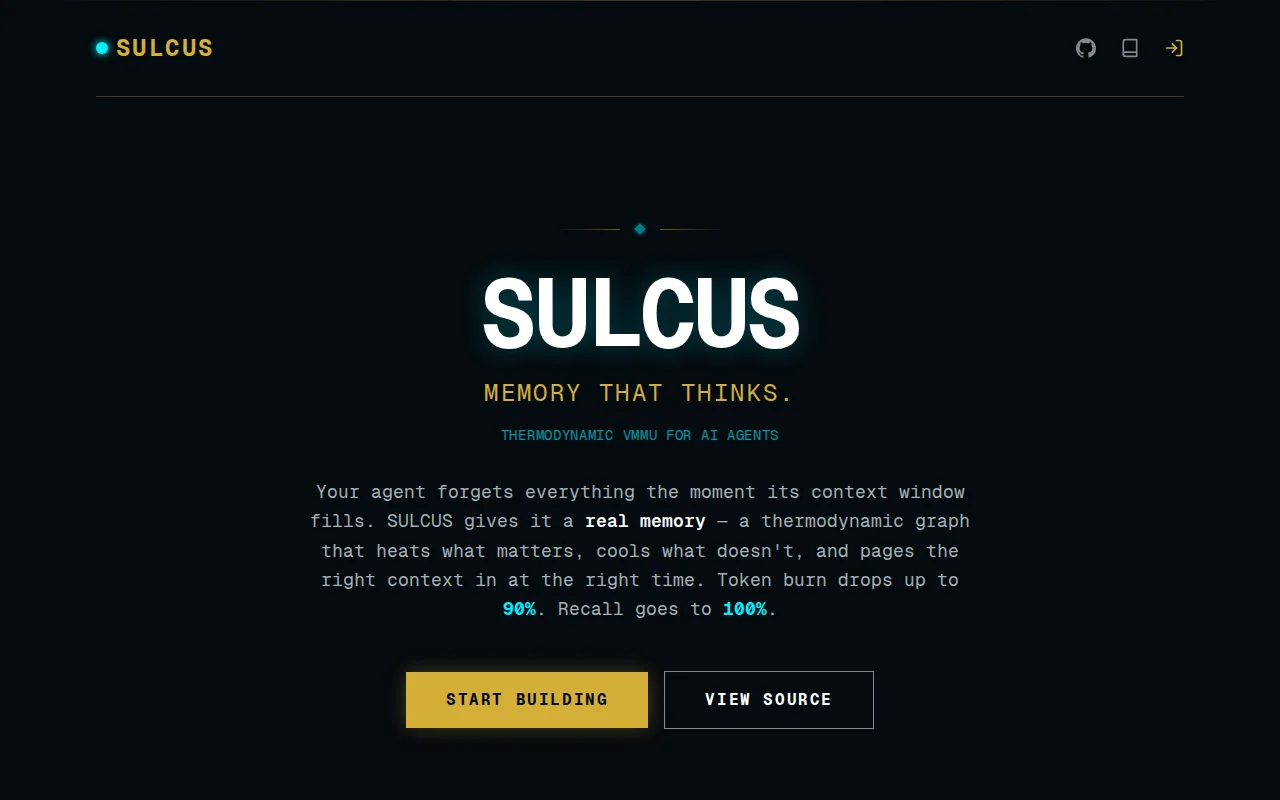
Sulcus moves AI memory from a passive database (search only) to an active operating system (automated management).
The Core Shift Current memory (Vector DBs) is static. Sulcus treats memory like a Virtual Memory Management Unit (VMMU) for LLMs, using "thermodynamic" properties to automate what the agent remembers or forgets.
Key Features Reactive Triggers: Instead of the agent manually searching, the memory system "talks back" based on rules (e.g., auto-pinning preferences, notifying the agent when a memory is about to "decay").
Thermodynamic Decay: Memories have "heat" (relevance) and "half-lives." Frequent recall reinforces them; neglect leads to deletion or archival.
Token Efficiency: Claims a 90% reduction in token burn by using intelligent paging—only feeding the LLM what is currently "hot."
The Tech: Built in Rust with PostgreSQL; runs as an MCP (Model Context Protocol) sidecar.
15-phase belief scheduler with decay mechanics, but unproven in production agent pipelines.
ACT-R decay and Hebbian learning as native primitives, not vector hacks.
Explainable retrieval with decision traces beats Mem0 and Zep on transparency.
Single-file energy modeling with phase-by-phase heat economics.
Temporal memory with contradiction detection—Claude finally remembers job changes.
Bundled 7MB embedder means zero network calls or model downloads for agent memory.