AI/ML●●Solid
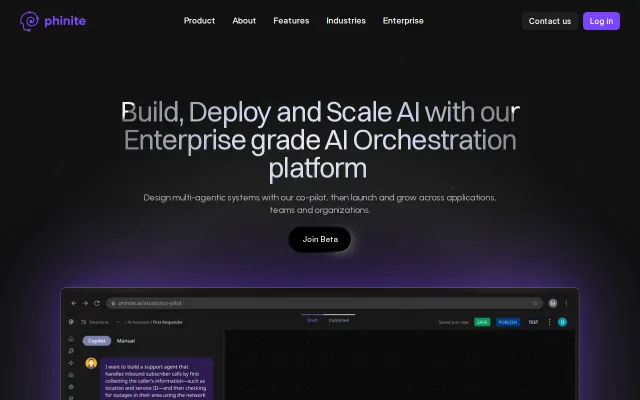
Describe a workflow in plain English and builds the multi-agent system
Workflow-to-agents translator, but visual multi-agent builders already exist (Langflow, Zapier AI).
Eye CandySlick
PhiniteAI
233mo ago
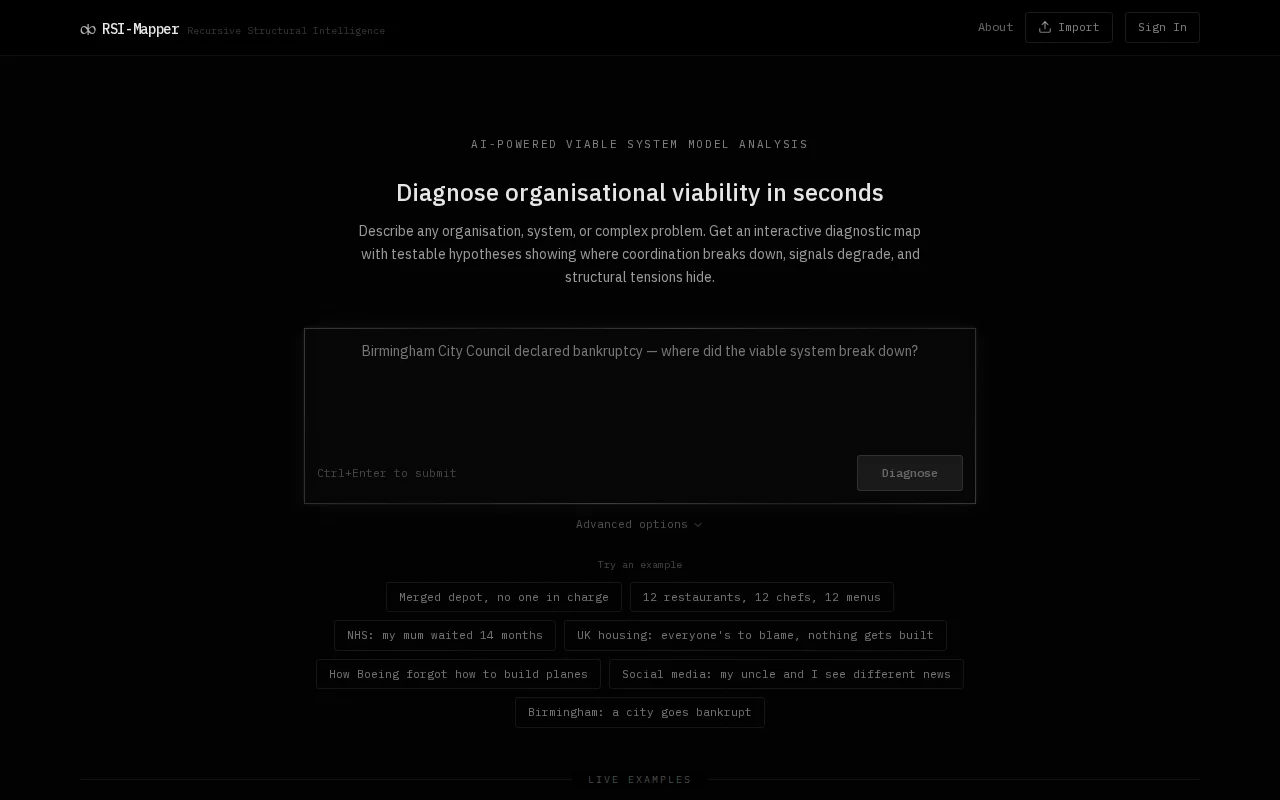
Turns vague org complaints into structured Viable System Model diagrams instantly.
Management consultants, systems thinkers, organizational analysts
Miro · Kumu · Lucidchart
I built a tool that turns plain language into interactive system maps based on Stafford Beer's Viable System Model.
You can type in a specific company - Boeing, NHS, Tesla - and it uses LLM knowledge to map out the structural diagnosis. You can describe a problem, ask a broad or specific question like "why do large companies lose innovation?" or "what makes a hospital function?" , or just name something you're curious about. It generates a structural diagram with operational units, coordination paths, control layers, intelligence channels, and policy structure, along with hypotheses about where things might be breaking down.
No signup. Desktop only. Click an example prompt or type your own.
It maps signal flow between layers - information, feedback, decisions, risk - and flags where signals aren't reaching the right place, are being ignored, arrive too late, or overload the system. Systems usually fail not because the structure is wrong but because the flows of information between teams and functions are broken. That's the tool tries to surface. It then uses those to generate hypotheses based on the incoming and outgoing flows.
The mapping is recursive. A company is a system, but so is each team inside it, and each product inside that. The tool treats each level as its own viable system with its own operations, coordination, control, adaptation, and identity. You can expand each operational unit into its components.
Works on more than you'd expect - companies, products, supply chains, universities, public agencies, biological systems, personal workflows. Anything that has to regulate itself and stay coherent under pressure.
I've spent a long time with Beer's original work and Ashby's Law of Requisite Variety. VSM is one of the few frameworks that actually helps when something feels structurally wrong but it's hard to put into words why. The problem is that using it properly takes ages - too much manual interpretation before you get to anything you can inspect. So I built a tool to collapse that step.
Still early and still have a lot more to change and add. At the moment experimenting with prompt structure, map logic, and how deep the recursive hierarchy should go. Keen to know where it messes up as much as where it works.
Things I'd appreciate feedback on: - Is the generated structure actually useful, or does it just look useful? - Are the hypotheses better than generic LLM - Where does it fail hardest? - What kinds of systems is - Does it help if you don't already know VSM, or only existing systems thinkers?
Would love feedback Also on LinkedIn: https://www.linkedin.com/in/guntherr/
Workflow-to-agents translator, but visual multi-agent builders already exist (Langflow, Zapier AI).
Natural language to algo trading, but Tradier, TradingView, and QuantConnect already do this.
Pandoc alternative for TROFF that guesses layout from plain text conventions.
Natural language to cloud spec with compliance + cost, but cost accuracy needs work.
Zapier alternative with AI generation, but Zapier (with AI) and Make already own this space.
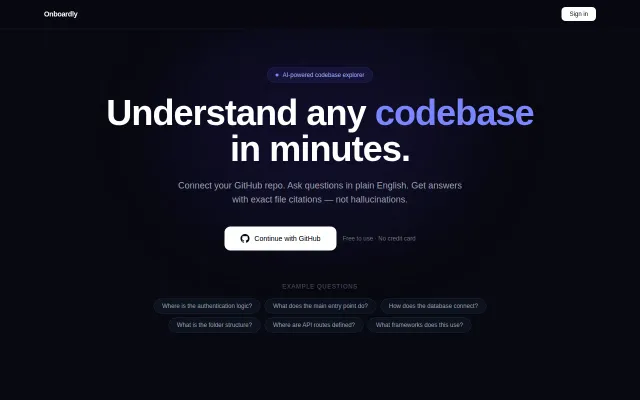
Yet another codebase Q&A tool when Cursor and Continue already do this.