Productivity●Mid
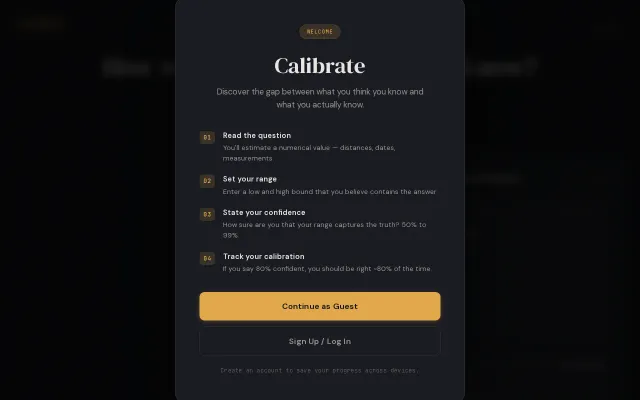
A Confidence Calibration Game
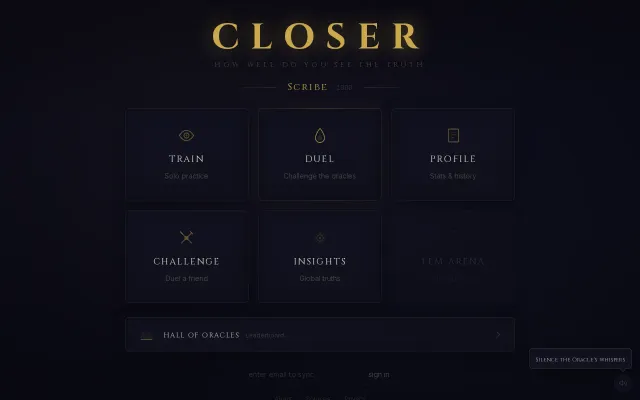
Trivia game measuring confidence calibration, but calibration training already exists (Metaculus, Good Judgment).
Cozy
SleepyJack
103mo ago
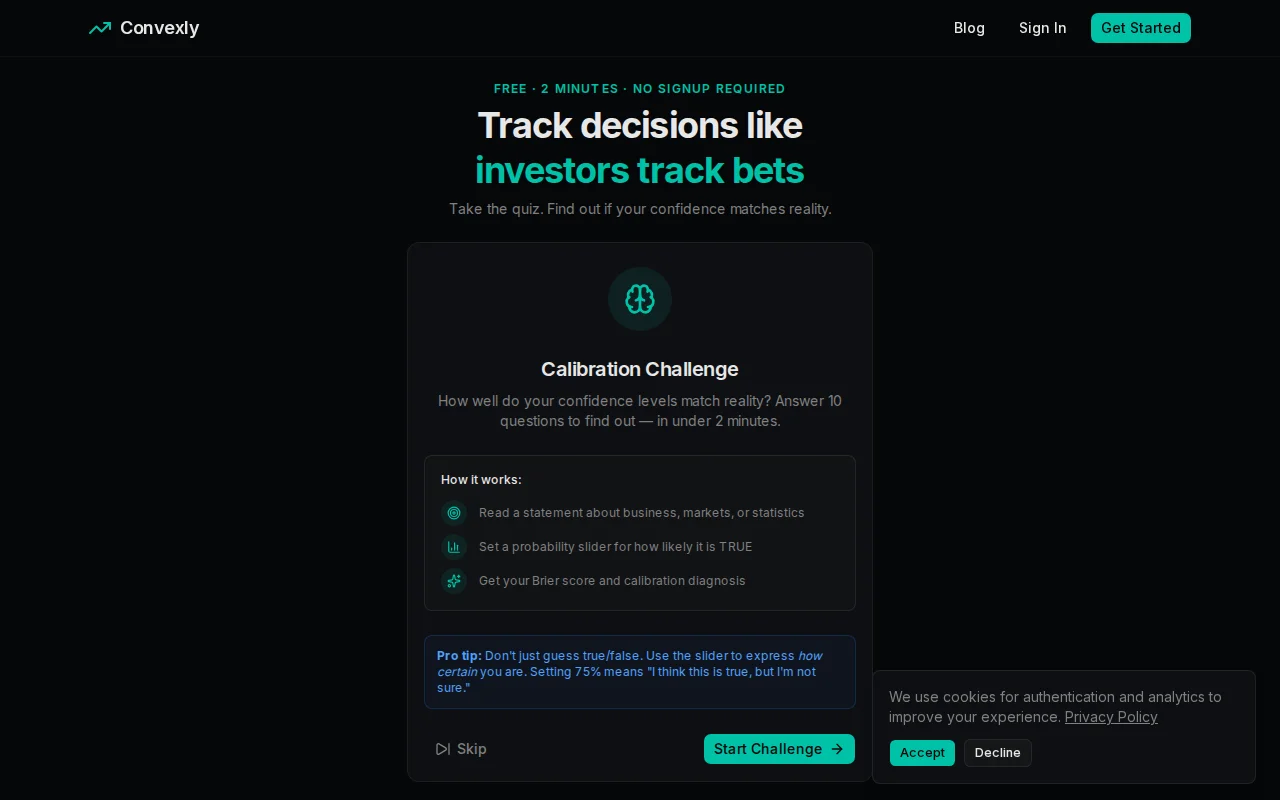
Brier score calibration quiz is solid but prediction tracking tools already exist.
Executives, investors, and professionals making high-stakes decisions
Forecaster · Metaculus · Good Judgment Open
Did some research, read some books, and realized I should get in the habit of tracking my decision process. That quickly turned into the idea that formed Convexly.
The landing page is a 10-question calibration quiz where you assign a confidence level to statements drawn from a rotating pool of 100 (working on making the pool larger) and you get a Brier score back instantly. No signup required, and you can share your scores right away.
If you find it interesting, you can create a free account where you can track your decisions with probability estimates, resolve them over time, and get calibration curves that show if you are over/underconfident. From what I've seen so far, users are overconfident when they say they're between 70-90% sure about something.
For the math: Beta-PERT distributions for the payoff modeling, Kelly criterion for the position sizing, signal detection theory for separating skill from randomness.
On the coding side: FastAPI with NumPy/SciPy, frontend in Next.js and Supabase.
So far this has been a solo project of mine. If you want to see all the features use code SHOWHN for 30 days of full access, no credit card required.
Curious if anything about your score surprised you after taking the quiz.
Trivia game measuring confidence calibration, but calibration training already exists (Metaculus, Good Judgment).
Calibration game feeds behavioral dataset on human perception blind spots.
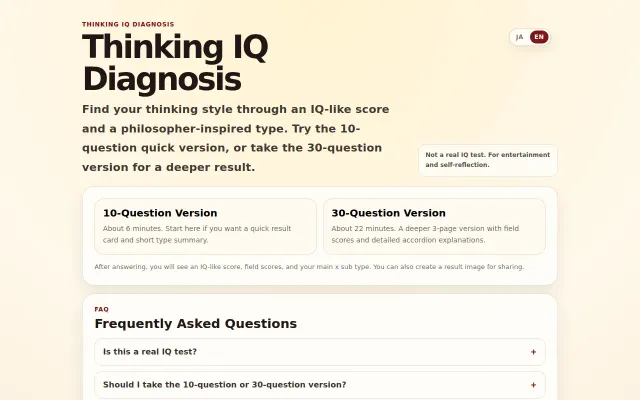
Philosophy-themed personality quiz, but it's entertainment not a real assessment tool.
ESLint for your thinking: Claude plugin that scores decision assumptions.
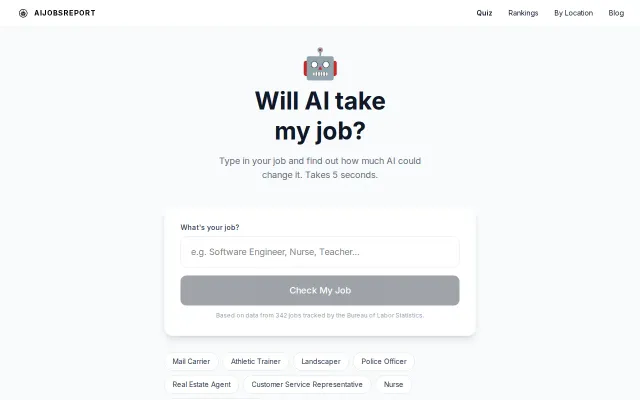
Job risk quiz using BLS data when similar calculators already exist.
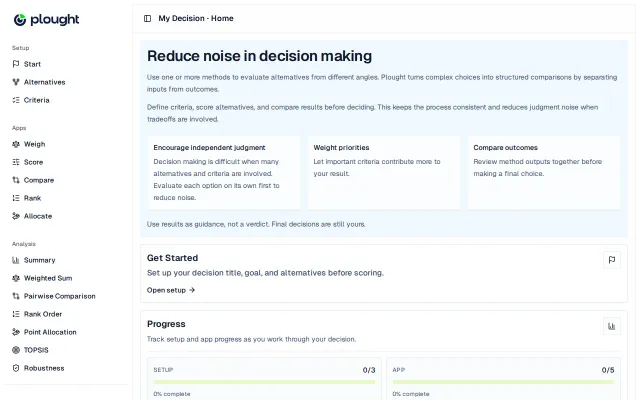
Multi-method decision framework, but spreadsheets and Notion templates already do this.