Developer Tools●●●Banger
Pq – Simple, durable background tasks in Python using Postgres
Replaces Redis+RQ with just Postgres—fork isolation, transactional enqueueing, zero broker.
Solve My ProblemBig Brain
ricwo
503mo ago
Temporal alternative with function decorators instead of workflow DSLs.
Backend developers building AI agents and data pipelines
Temporal · AWS Step Functions · Inngest
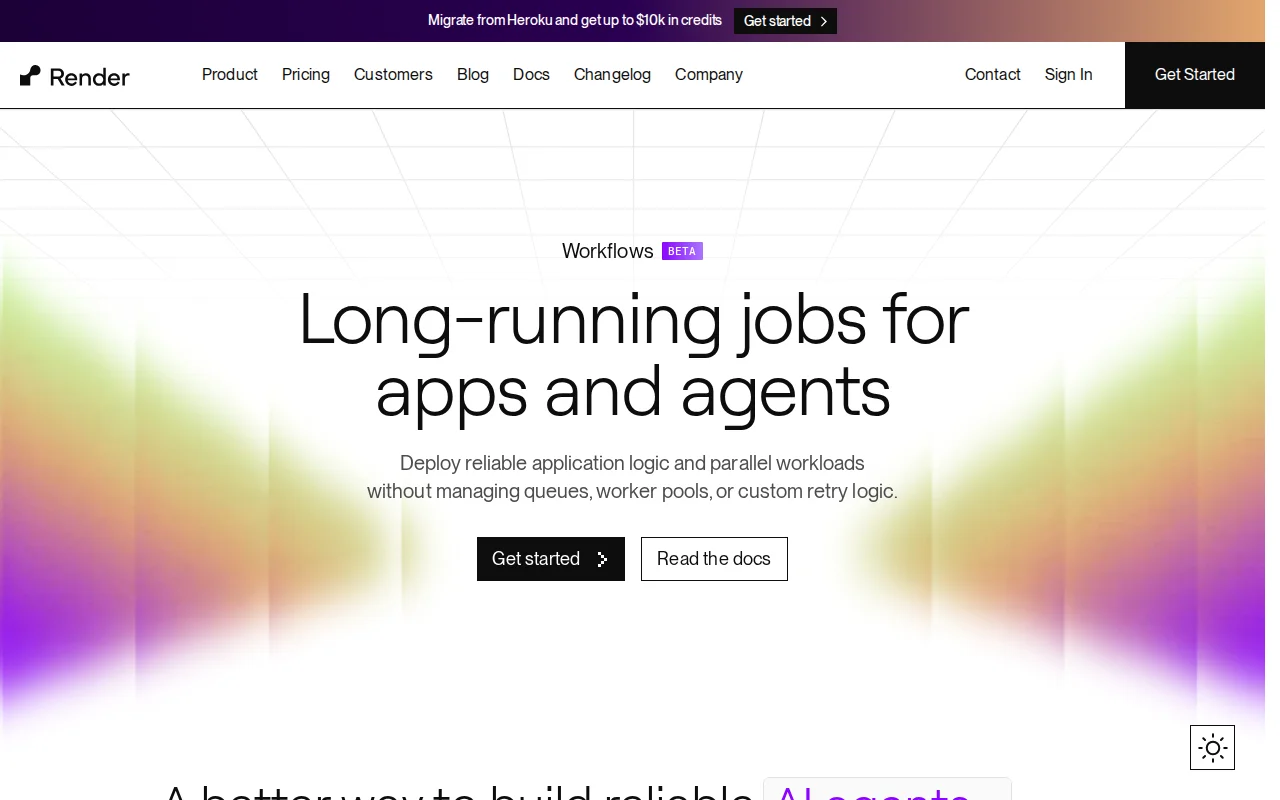
The use cases we have in mind include agent loops, ETL/data pipelines, billing flows, and other long-running jobs. The model is simple: mark an existing function as a Task, deploy the repo as a Workflow, then trigger runs from your application code or via our API.
Each task can run continuously for up to 24 hours and set its own retry policy, timeout, and compute instance type. Tasks can call other tasks like normal functions, and fan out in parallel with `Promise.all` or `asyncio.gather`. Each task run gets its own isolated container, and Render handles the queuing, orchestration, and observability.
You can inspect logs, traces, and metrics for each run in the Render dashboard. If you're running other services on Render, you can connect to them from your tasks using built-in private networking. Billing is based on task instance type and run duration, prorated to the second.
This is a public beta, so rough edges are possible. Today, task definitions are TypeScript and Python only, and built-in cron schedules aren't available yet. You can still trigger tasks from the SDK/API, or use a Render Cron Job for scheduled entry points. We're also working on pause/resume, checkpointing, vertical autoscaling, and support for more languages.
We're not claiming this replaces every task orchestration system (yet). The goal is to make the common cases much simpler to use and troubleshoot, especially for Render users.
Docs and examples: https://render.com/docs/workflows
I'd especially love feedback from folks who have built similar systems with Celery, BullMQ, Temporal, or other queues and workers. What would you want to see before GA?
[1] ---- TS example ----
import { task } from '@renderinc/sdk/workflows' import { Render } from '@renderinc/sdk' const chargeCard = task( { name: 'chargeCard', retry: { maxRetries: 5, waitDurationMs: 1000, backoffScaling: 2 }, timeoutSeconds: 300, plan: 'standard', }, async function chargeCard(invoiceId: string) { // call Stripe or your payment provider here return { invoiceId, chargeId: `ch_${invoiceId}` } } ) const writeLedger = task( { name: 'writeLedger' }, async function writeLedger(invoiceId: string, chargeId: string) { // persist accounting entry } ) const sendReceipt = task( { name: 'sendReceipt' }, async function sendReceipt(invoiceId: string, chargeId: string) { // email customer } ) const processInvoice = task( { name: 'processInvoice' }, async function processInvoice(invoiceId: string) { const charge = await chargeCard(invoiceId) await Promise.all([ writeLedger(invoiceId, charge.chargeId), sendReceipt(invoiceId, charge.chargeId), ]) return { chargeId: charge.chargeId } } ) // from your app: const render = new Render() const startedRun = await render.workflows.startTask( 'billing/processInvoice', ['inv_123'] ) const finishedRun = await startedRun.get() console.log(finishedRun.results)
Replaces Redis+RQ with just Postgres—fork isolation, transactional enqueueing, zero broker.
Smart local‑first routing that only escalates to expensive cloud planners when necessary is the standout idea — combined with per‑run cost accounting and full Ollama offline support it solves a real operational itch. The repo is a pragmatic, CLI/TUI-focused toolkit (scraping + cache, MCP server mode) that feels useful for teams wanting a no‑friction orchestrator, but it’s playing in a crowded space of agent frameworks so the novelty is incremental rather than revolutionary.
Keyboard-driven UI for local agents, but depends entirely on the Knots backend.
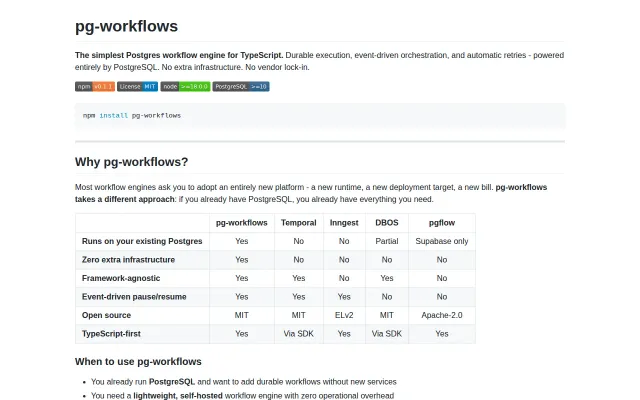
Durable workflows on Postgres tables beats Temporal and Inngest for zero-ops deployments.
K8s scraper framework with built-in physics-based mouse curves and fingerprint spoofing, finally.
IoT platform running on Cloudflare Workers eliminates infrastructure management entirely.