Infrastructure●Mid
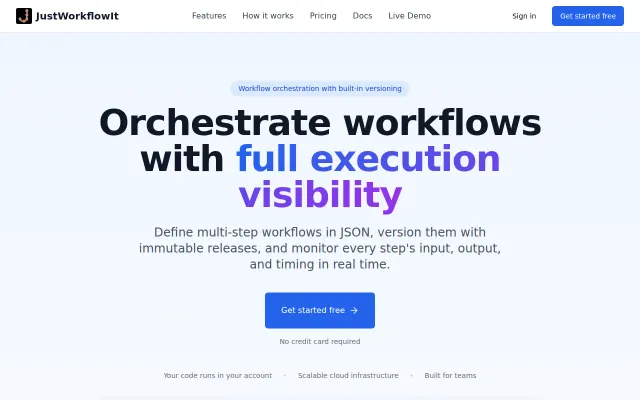
JustWorkflowIt, workflow orchestration platform plus code marketplace
Yet another workflow orchestrator competing against Temporal and Prefect.
Ship It
nkorai
202mo ago
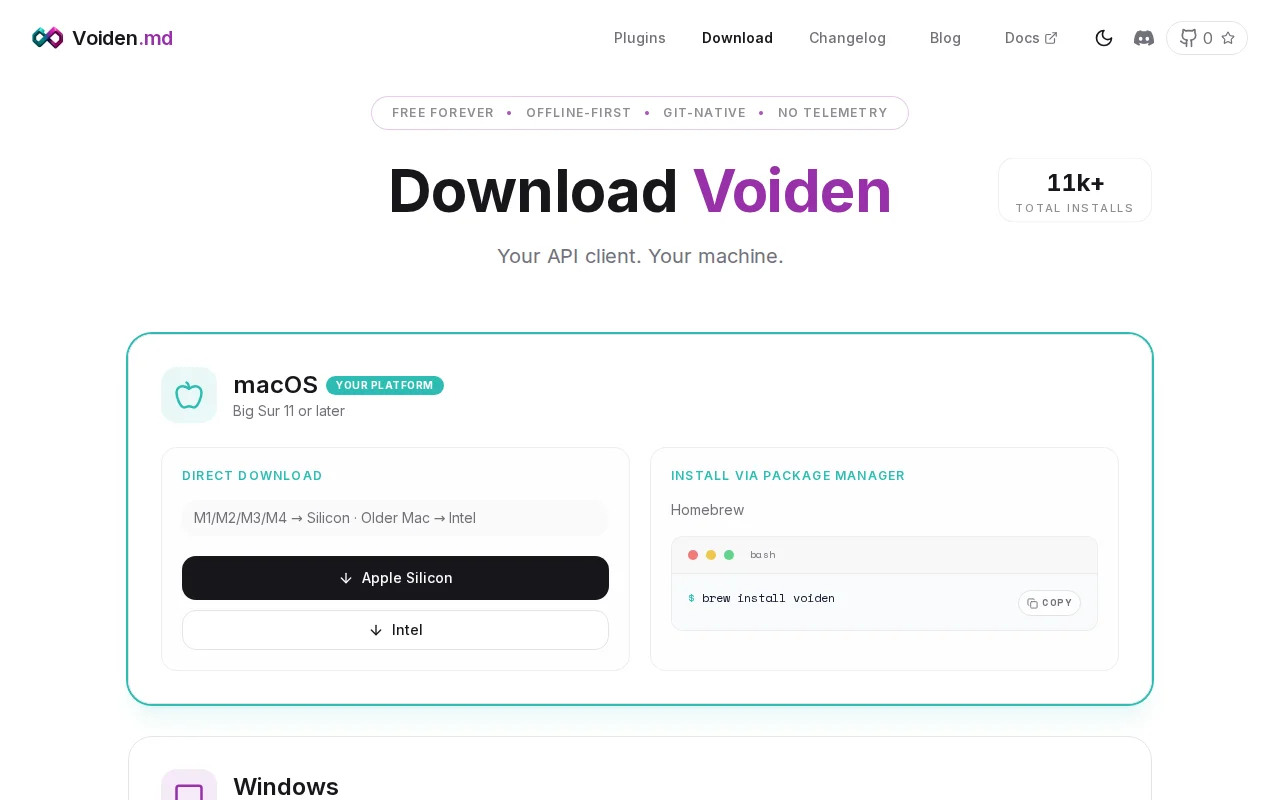
Git-native API workflows in Markdown when Postman collections live in proprietary JSON.
Backend developers, API engineers, DevOps teams
Bruno · Postman · Insomnia
The goal, when we set out to build Voiden, was simple - to combine the power and flexibility of Obsidian-style files with the simplicity of curl. Instead of static forms, requests are composed with blocks (endpoint, auth, params, body) that you can reuse, override, and stitch together across files (more like functions than requests).
Since open sourcing, most of what we have built has come directly from how people actually use it (11K installs). Most of the feedback, requests and contributions were around defining workflows, chaining requests, scripting them, and structuring everything in reusable .void files.
- Real scripting, not sandboxes: In most API tools scripting lives in a constrained JS sandbox, an environment that doesn't take advantage of powerful runtimes that might be available locally for a developer. The biggest limitation here is the assumption that the tool should define the runtime. Voiden runs fully locally, so this allows you to just run your scripts with actual runtimes (JS, Python, shell, with support for others being added).
- Multiple requests per file (mini workflows): Allowing multiple requests in a single .void file turned out to be surprisingly useful. Instead of scattering related requests, you can group them naturally: an order flow (create - pay - confirm), or a full CRUD cycle in one place. The file effectively becomes an executable flow: run one request, or the entire sequence end-to-end. And since Voiden is executable Markdown, docs and tests are in the same `.void` file that can be organised better, preventing duplication and drift.
- Stitch (composable workflows across files): Instead of a single large collection, workflows (“Stitch”) are built from .void files that you can combine across scenarios. You define small flows (auth, setup, CRUD, etc.) and stitch them together into larger workflows, without duplication. This is just the first version of this capability, we still have a lot to do here.
- Agents :The file-based, local-first model also works well with agents. Since Voiden has a built-in terminal and uses Markdown, we added “skills” so that Claude and Codex agents can work directly with .void files (using your own subscriptions).
We also published an SDK for community plugins, and made improvements to performance, reliability, and DX (keyboard-first), with careful attention to performance given the Electron base
Looking for feedback and suggestions.
Github : https://github.com/VoidenHQ/voiden
Download : https://voiden.md/download
Yet another workflow orchestrator competing against Temporal and Prefect.
Widget execution in notes sounds interesting, but Obsidian plugins already do this better.
Multi-stage pipeline with review gates before PR publication.
Bulk export Perplexity conversations to Obsidian Markdown with Spaces organization and deduplication.
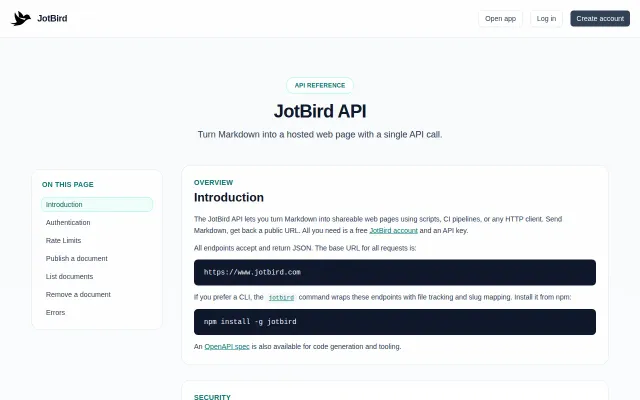
POST raw Markdown and you get a hosted URL back — plus a CLI that does file tracking and slug mapping and an OpenAPI spec for automation. Free links expire after 90 days while Pro makes URLs permanent, which is a neat, pragmatic pricing knob for CI use-cases. Useful and tidy, but it needs theming/privacy/analytics features to feel like a true alternative to GitHub Pages or Vercel.
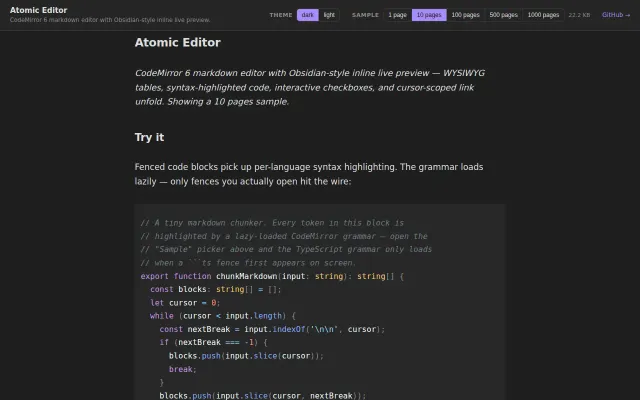
Lazy-loading CodeMirror grammars is clever, but Obsidian already does inline preview better.