Infrastructure●●Solid
Verifying AWS Costs Deterministically with Z3 SMT Solver (WASM)
Z3 solver in WASM proves idle resources mathematically without sending data to servers.
Big BrainDark Horse
marcosjunior
101mo ago
Central hub of the GSL Engine: Extreme-scale, deterministic VRP optimization (CVRP, VRPTW, MDVRP, MDVRPTW) executed entirely on mobile architecture.
Runs 10k-node VRP solves in seconds on a $100 Android phone, beating legacy systems.
Logistics companies, operations researchers
Google OR-Tools · VROOM · OptaPlanner
The Journey of an Outsider: I have no CS background. I hold a vocational diploma in Goldsmithing from 20 years ago. Before this, I was unemployed and had no PC. My only tool was a $100 Android smartphone (3,000 THB).
I spent 16 hours a day architecting the logic via Pydroid 3. Because I didn't know standard optimization libraries existed, I designed my own deterministic logic architecture from the ground up. I just thought that was how software was built.
The Technical Skepticism: When I shared my work locally, the skepticism was purely technical. People couldn't believe a standard Snapdragon environment could solve 10,000-node VRP instances without runtime explosions, doubting mobile hardware could handle an NP-hard problem of this scale.
The Result: By relying purely on deterministic, axiomatic logic rather than standard metaheuristics, the engine (GSL Solver) now handles up to 10,000 nodes with stable execution across standard benchmarks (CVRP, VRPTW, MDVRP).
I’ve kept the benchmark outputs transparent for inspection: https://github.com/CT1-deMo-goG/CT1-deMo-goG
You can run the live deterministic engine here: https://gsl-solver.com
P.S. Even the front-end website was built entirely on that same smartphone using Acode. I'd love to hear your thoughts on the architectural approach of building solvers entirely from scratch without standard libraries.
Z3 solver in WASM proves idle resources mathematically without sending data to servers.
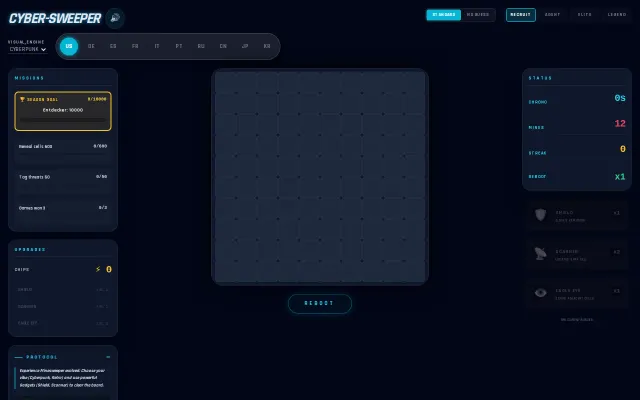
Logic-only Minesweeper with gadgets; Remove.bg-level UX polish, but concept isn't novel.
Gamified GTO poker trainer that teaches intuition against exploitable opponents before going optimal.
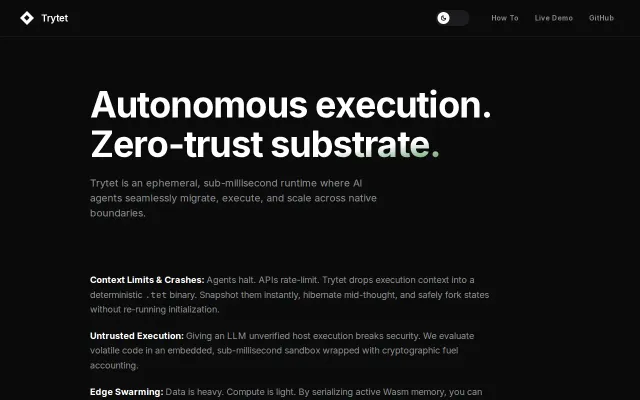
Snapshots active Wasm memory to migrate agents edge-side, cutting context latency.
Deterministic Jinja2 templates beat LLM generators, but landing page is just a login.
Pre-solved game trees matched to your stack beat clunky PioSolver for beginners.