Developer Tools●●Solid

J-RAY – A privacy-first, client-side JSON visualizer
Slick JSON-to-graph visualizer; privacy wins but Noctua, JSONCrack already exist.
Eye CandySolve My ProblemCozy
MauryWebDev
204mo ago
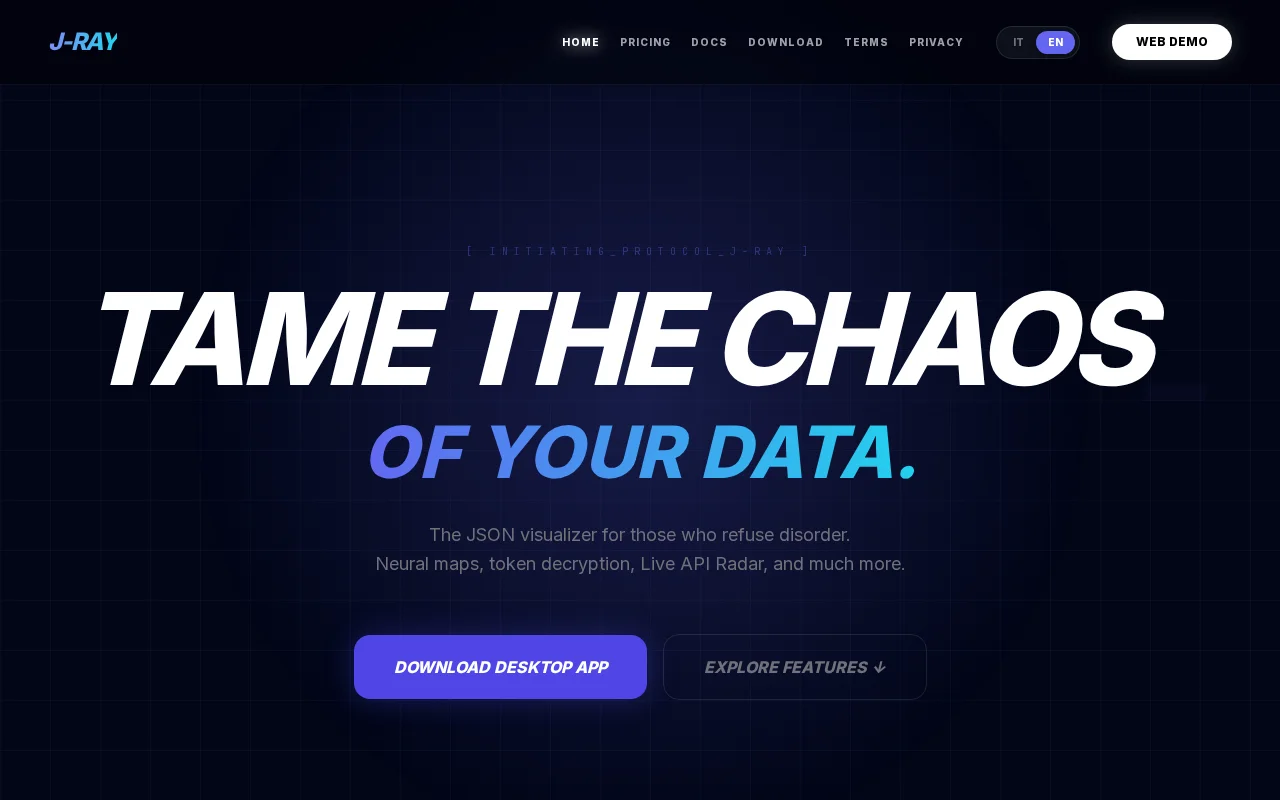
Rust-powered JSON graph viewer that handles massive files without Electron bloat or browser crashes.
Developers working with large JSON datasets and API responses
JSON Crack · JSON Viewer Pro · Dadroit JSON Viewer
Opening a massive JSON dump from a database or a heavy API response usually means watching your IDE freeze or your browser tab crash. Furthermore, pasting sensitive company payloads into online formatters is a huge privacy risk.
To solve this, I built J-RAY PRO. It's a native desktop engine written in Rust designed specifically to tame huge datasets locally.
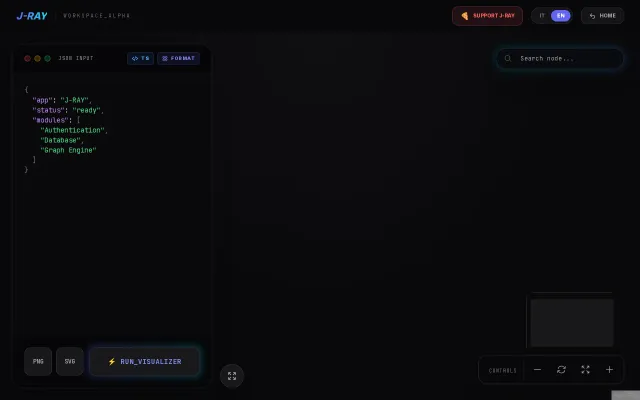
Instead of a flat text wall, it generates an interactive node-based visual graph. Thanks to Rust and egui, it opens and parses files instantly without the typical Electron bloat (the binary is ~12MB). It also includes a Visual Diff engine and local API testing.
There is a 7-day free trial available for Windows, macOS (Silicon), and Linux so you can throw your biggest JSON files at it and see if it holds up.
I'm here to answer any questions about the tech stack, rendering massive graphs, or Rust in general. Feedback is highly appreciated!
Slick JSON-to-graph visualizer; privacy wins but Noctua, JSONCrack already exist.
Turning nested JSON into a live node graph with bidirectional edits actually pays off — double‑click a node to change a value and the raw JSON updates instantly (and vice versa). It’s entirely client‑side for privacy, generates TypeScript interfaces on the fly, and is MIT‑licensed; next steps should focus on UX and performance for massive payloads and clearer import/export flows.
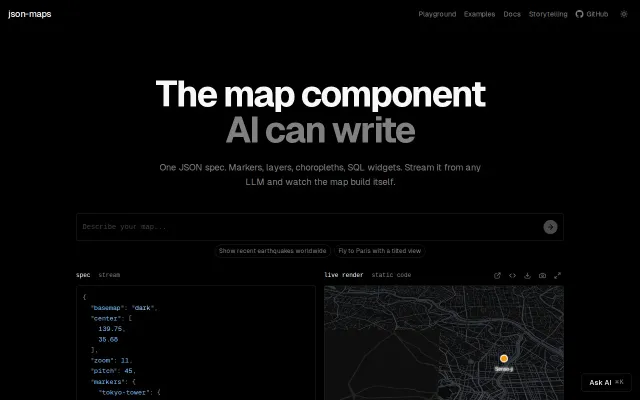
MapLibre spec layer with DuckDB widgets, but Mapbox GL JS + alternatives already solve this.
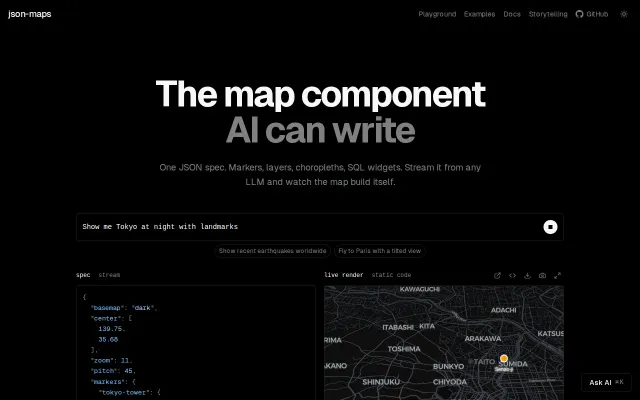
JSON-to-map compiler with LLM streaming, but Mapbox/Maplibre already own this space.
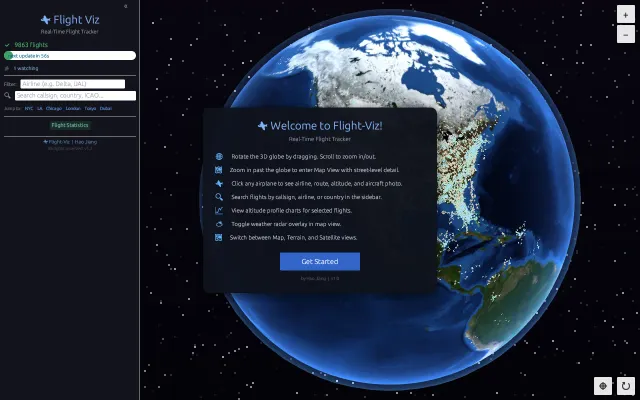
10K flights in 3.5MB WASM bundle is impressive constraint engineering for browser rendering.
Kernel audit interception builds Landlock profiles iteratively when manual policy writing is painful.