Developer Tools●Mid
Open-Source, Local First, GitHub Stars Management and Search
GitHub stars organizer when GitHub's own UI already handles this.
CozySlick
alonronin
2010d ago
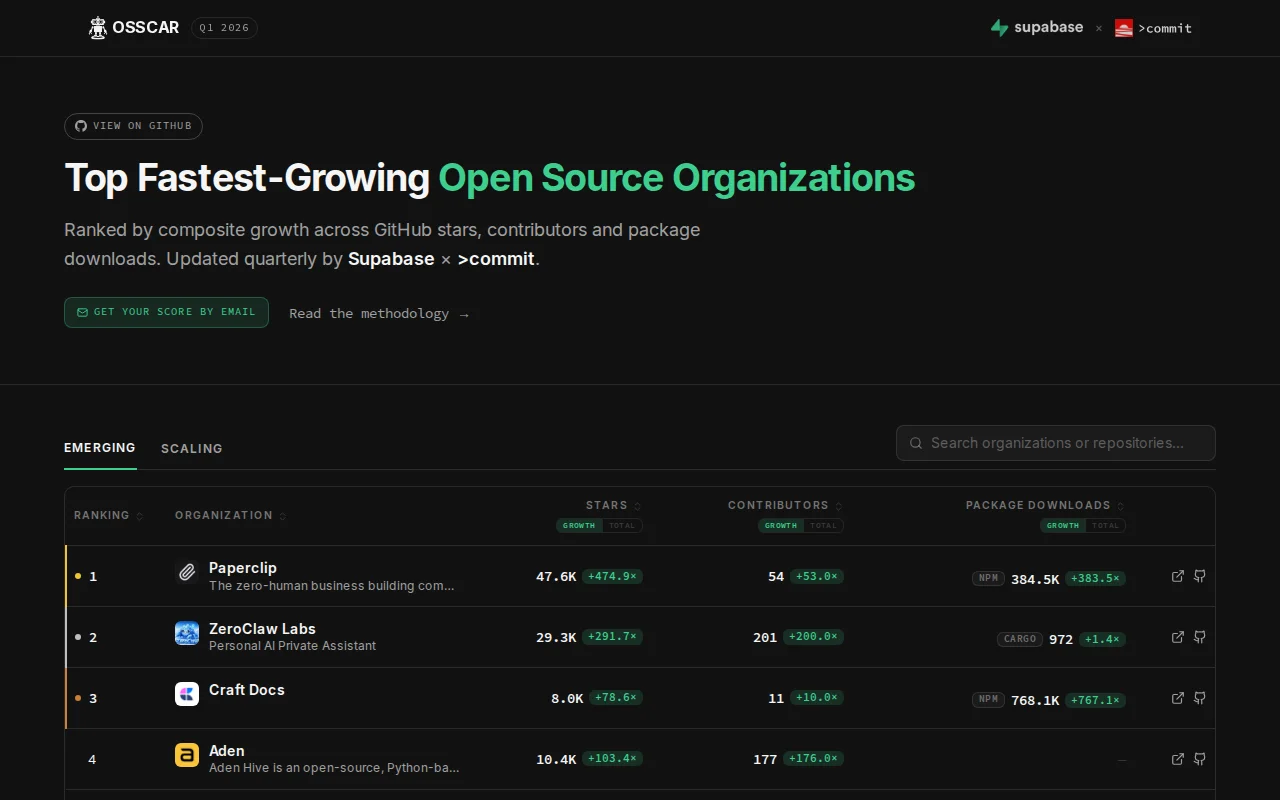
Nice dashboard, but just another metrics site in a sea of OSS analytics.
Open source maintainers and VC investors
OSS Insight · Star-history · LibHunt
A few notes about the methodology: we focus on organization accounts (excluding personal accounts and forks), split them into two divisions by starting star count so smaller and larger ecosystems are evaluated among peers, measure growth across three signals (GitHub stars, contributors, and package downloads from npm, PyPI, and Cargo), normalize each signal within its division using a log–minmax transform, and combine the resulting scores into a single composite via the L² norm. Organizations are then ranked by this composite within their division. Full methodology is on the site.
This is v1 of the ranking, so there’s a lot of room for improvement. In future versions we want to add other package managers, new signals and refine the methodology. Things we'd love opinions on:
1. What do you think about the signals we are using? Which important ones are we missing? 2. Is log-minmax a robust scaler in this setting, or is there something better? 3. Is L^2 norm the right aggregation strategy for sparse, heterogeneous signals?
Everything's open: the website, the data and the scoring pipeline. We'd love your feedback on the methodology, the rankings, signals we're missing, or anything that looks wrong. Issues and PRs very welcome.
GitHub stars organizer when GitHub's own UI already handles this.
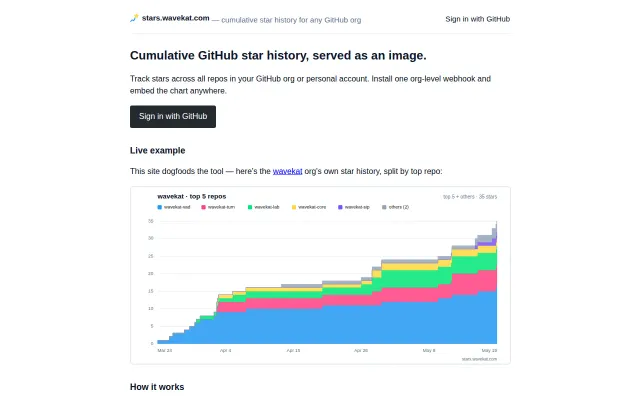
Embeddable SVG star history charts via webhook when Shields.io only shows current counts.
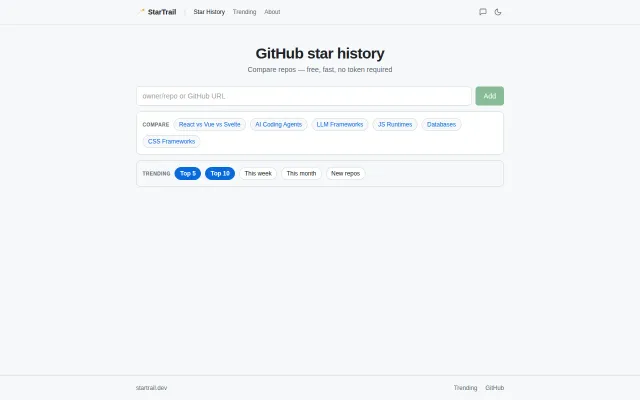
No-token GitHub star charts are nice, but Star History already does this.
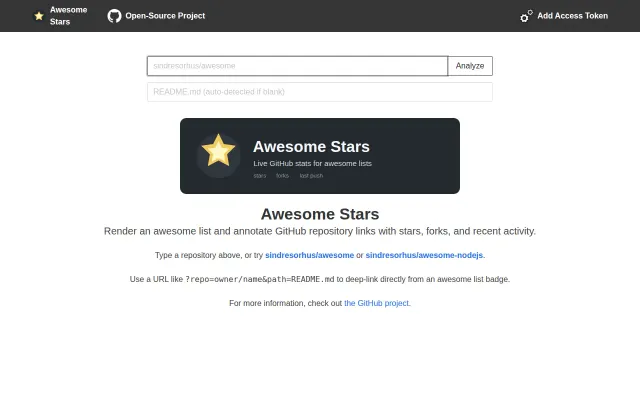
Useful Forks adapted for awesome lists, but GitHub API rate limits will hurt heavy users.
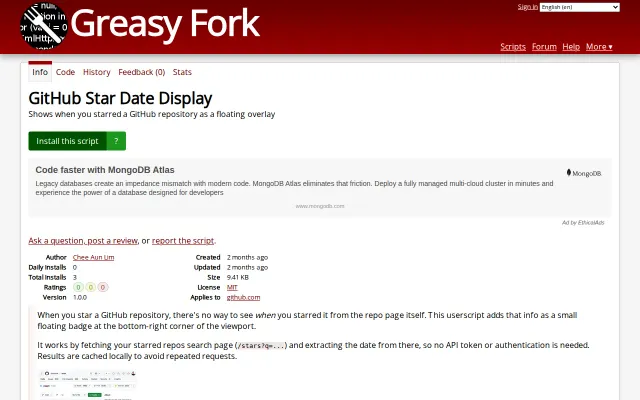
Solves a real friction point, but browser storage query already exists on GitHub.
CMU research backing fake star detection — novel application of academic work.