Developer Tools●Mid
Git Web Manager
Laravel-specific deployment dashboard when Coolify already does this.
Cozy
wallabydesigns
312mo ago
Renovatebot for everything, not just dependencies—docs, configs, and release orchestration.
DevOps engineers and platform teams
Renovatebot · Dependabot · Mergify
At the time, my problem was simple, I kept forgetting to update files across Git repositories, and none of the tools available to me could cover all my use cases without extensive scripting. So I decided to build a declarative update policy engine for crafting tailored update workflows.
I needed a way to define, what information to monitor, which files to update, the conditions required before applying changes, and finally a way to push the changes on a Git repository
Whether it was documentation, dependency management, or release orchestration, the goal was always the same: stop forgetting updates across repositories.
Back then, I received a lot of great feedback, but I also noticed that people were sometimes confused about how Updatecli differs from Renovatebot or Dependabot. So before going further, let me clarify that point.
Renovatebot and Dependabot are excellent tools, easy to use and requiring very little configuration. I still use them regularly. But they primarily focus on dependency updates, while Updatecli is designed for custom update workflows at the cost of writing and maintaining YAML manifests.
On new projects, I usually enable Renovatebot or Dependabot by default, and then use Updatecli for workflows not supported by those tools.
Here is the link to the previous discussion: https://news.ycombinator.com/item?id=30286047
A few years have passed since then, and the project evolved significantly, thanks to all contributors.
Today, Updatecli can declaratively manage updates across most Git platforms including GitHub, GitLab, Forgejo, etc.
It now ships with 30+ built-in integrations covering: * structured files like YAML, JSON, TOML, XML, HCL, CSV, Dockerfiles, and arbitrary text files * package ecosystems including Helm, NPM, PyPI, Maven, Cargo, Go modules, and Terraform * container registries and OCI artifacts * Git releases, tags, and branches * cloud resources like AWS AMIs * shell scripts and HTTP endpoints for custom workflows
More information on https://www.updatecli.io
One important feature we added is shared policy support. An Updatecli policy can now be distributed through OCI registries and reuse from different places using an Updatecli compose file.
For example, the following policy:
* ghcr.io/updatecli/policies/autodiscovery/githubaction:0.4.1
Will automatically discover repositories in a GitHub organization and update GitHub Action versions to the latest digest. One use case is enforcing pinned GitHub Action digests across repositories to help reduce supply-chain risks. The reusable policy is customized using a small values file:
— scm: enabled: true kind: githubsearch search: | org:updatecli fork:true archived:false branch: "^main$" limit: 1 —
Then:
``` export UPDATECLI_GITHUB_TOKEN=<insert GitHub PAT> export UPDATECLI_GITHUB_USERNAME=<insert username associated with PAT>
updatecli diff --values values.yaml \ ghcr.io/updatecli/policies/autodiscovery/githubaction:latest ```
Running this periodically from CI helps keep repositories compliant with the desired update policy.
Lately, I’ve also been making good progress with a monitoring UI called Udash to visualize Updatecli reports across repositories. You can take a look at https://app.uda.sh/updatecli/ for a public endpoint.
My goal is to quickly assess the update state of projects and understand how automation behaves across repositories.
It’s still very early, but fully open source.
Update automation is a surprisingly broad topic, and difficult to summarize in a single post, so feel free to ask any questions. I’d also be curious to hear how others here handle large-scale repository maintenance and update orchestration.
Laravel-specific deployment dashboard when Coolify already does this.
Apple Shortcuts automation for daily wallpapers, but $1/month for auto-updates feels steep.
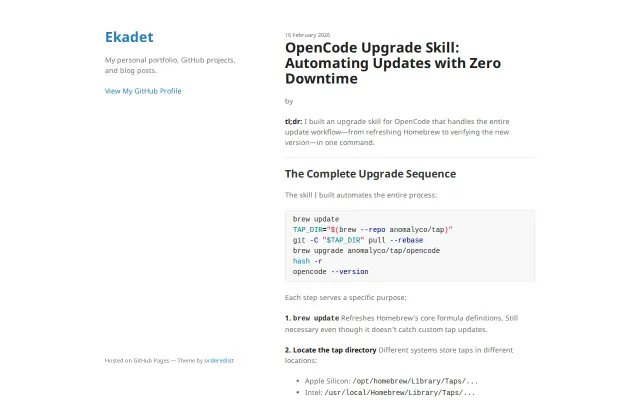
This is a focused, practical wrapper that encodes the right sequence of commands — brew --repo to find the tap, git -C ... pull --rebase to force-update a custom tap, brew upgrade, hash -r, then opencode --version — and exposes it as a single OpenCode skill. Not revolutionary, but the attention to real pain points (correct tap path across architectures, forcing a tap git pull, refreshing the shell hash and verifying the binary) makes it a handy, low-friction tool for anyone maintaining or using a Homebrew-distributed CLI.
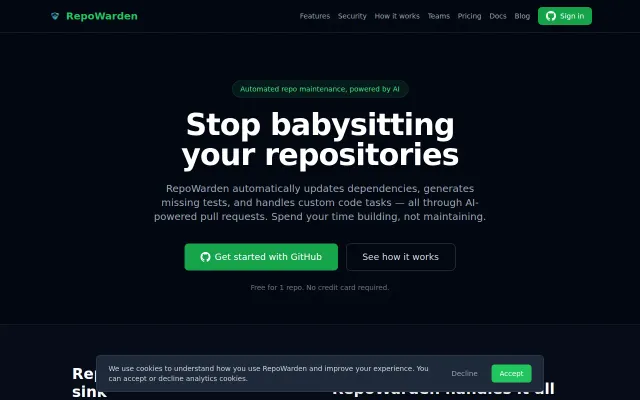
Dependabot alternative with AI test generation and supply chain poisoning checks.
Local git hooks mean zero repo access, unlike GitHub-native commit tools.
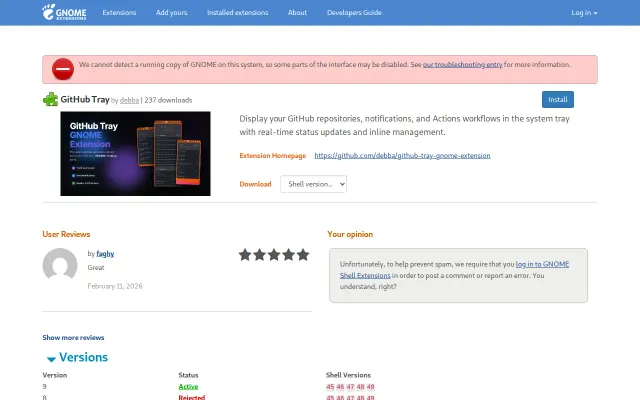
GitHub system tray for GNOME with notifications and CI/CD status — tight fit for its audience.