Developer Tools●●●Banger
Ant-design/CLI – Offline CLI for Ant Design docs, lint and migration
Offline version-accurate API queries beat fetching docs from remote servers.
Solve My ProblemBig Brain
afc163
3013d ago
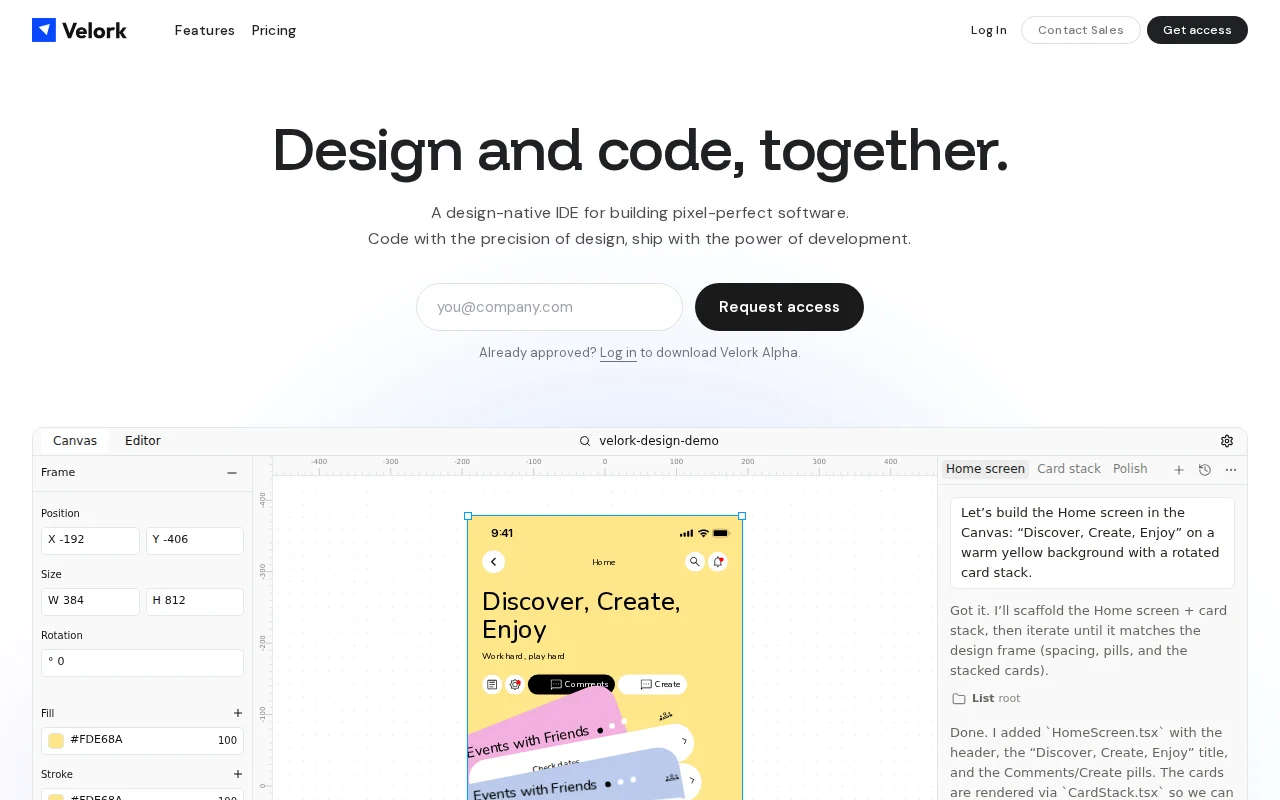
Design canvas inside VS Code beats Figma plugin export workflows.
Frontend developers and designer-developers who work with Figma
Cursor · v0.dev · Builder.io
Velork is a full IDE built on VS Code. It combines design directly into the editor through a new tab called Canvas, so you never have to leave your coding environment.
It lets you copy Figma designs directly into it and build clean code based on them. You can also take inspiration from existing sites and build a new UI that remixes and combines them into something new.
AI has full access to your design canvas and can read every layer, element, and structure inside it. So instead of describing your UI to the AI, you just point at it and it understands the full context.
I need about 10 to 15 people to try out the alpha version. I already have 3 to 4 people testing so there are about 11 spots remaining. This will be an early stage version and you'll be contributing to the product directly based on your feedback.
If you're interested, add your email at velork.com and I'll reach out with access :)
Offline version-accurate API queries beat fetching docs from remote servers.
Playwright-driven crawling + deterministic token extraction plus an LLM for semantic labeling is a clever pipeline — it doesn’t just scrape CSS, it produces an AI-optimized .design-memory folder with tokens, component recipes, and multi-page merge/diff capabilities. Expect variable fidelity on highly dynamic or framework-heavy sites since the approach depends on selector heuristics and an API key, but the CLI commands (learn, install, diff) and docs show this is more than a research sketch.
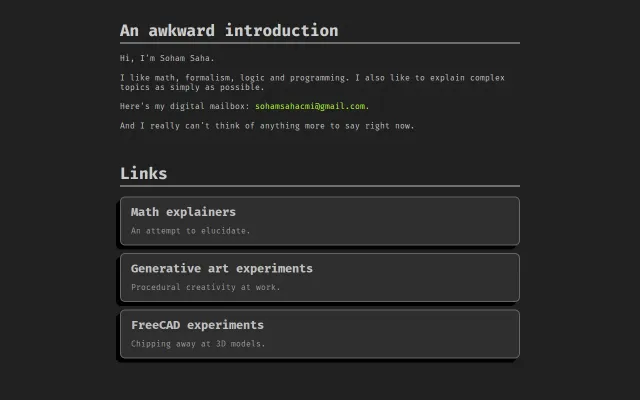
Minimalist terminal-style portfolio hosting math explainers and generative art experiments.
Quantifies AI design homogeneity with 16 deterministic DOM rules anyone can run locally.
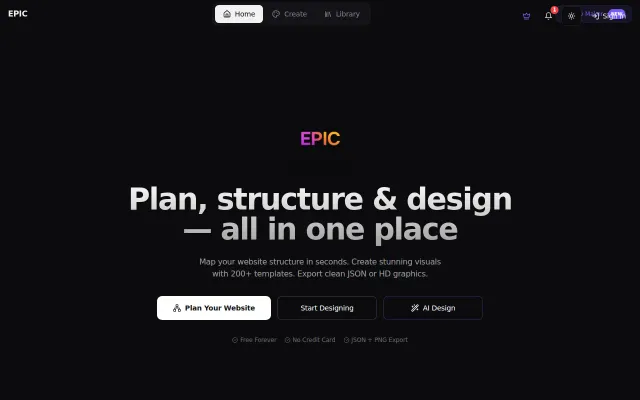
Canva alternative that ranked #4 organically in 30 days, but mostly manual editing.
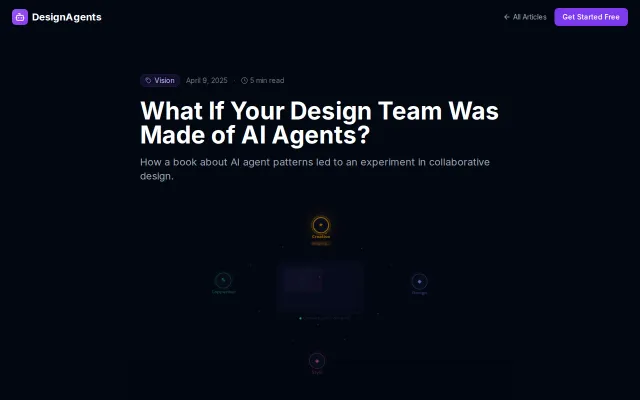
Multi-agent design canvas where AI roles collaborate instead of single prompts.