AI/ML●●●Banger
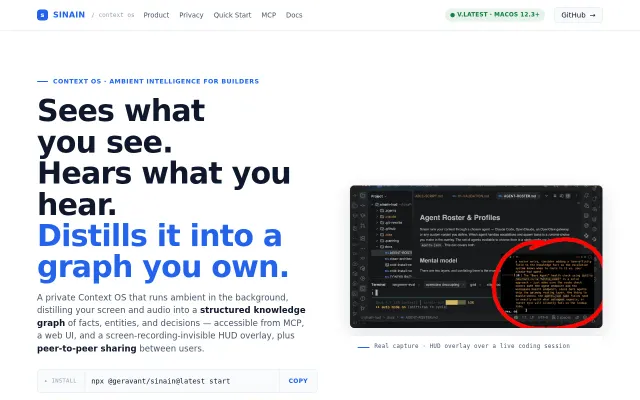
Sinain captures screen and audio in KG, shares it with agents/peers
Invisible HUD overlay that never appears in screenshots or recordings is genuinely clever.
WizardryBig BrainSlick
geravant
201mo ago

Structured pattern library beats noisy memory for LLM agents.
Developers using AI coding agents like Claude Code or Cursor
Cursor Rules · Claude Project Context · Mem0
My number one frustration with LLM agents is that every session starts blank and I have to re-explain my patterns and conventions every time.
I often find myself doing things like "look at X repo and copy the patterns used for Y", which requires the repo to be on the local machine.
A couple big ones for me personally: - Auth flows - Terraform patterns for AWS
Rules and skills help to some extent, but they are difficult to synchronize across multiple agents, projects, and machines. Memory is interesting, but too noisy since it is unstructured.
So, I built AI Boost to act as a personal library with an MCP server. You tell your agent what to save (text file or public github repo at the moment. I'm working on other options including private github repos.). It packages it as a "booster", indexes it with keywords and embeddings, and next time you start a task that matches, the agent surfaces it.
At the moment: - Boosters are private by default. They are only accessible to your account. - You can publish to a community marketplace if you want, and earn credits per injection (this isn't completely ready yet, but it's coming soon). - It's an MCP server, so it should work in Cursor, Claude Code, and any client with MCP support.
Link: https://ai-boost.io (and the MCP URL is just https://mcp.ai-boost.io/mcp)
I'd love to know what you think. Especially whether the "auto-suggest before starting a task" behaviour feels useful or intrusive in practice.
Invisible HUD overlay that never appears in screenshots or recordings is genuinely clever.
Finally remembers your architecture decisions between Claude Code sessions — CLAUDE.md couldn't do this.
50k lines shipped in a week, but team knowledge bases are a crowded category.
AI memory layer with audit trails, but pre-1.0 and lacks live integrations.
Local memory for AI agents that actually learns from your last 50 sessions, not just context window tricks.
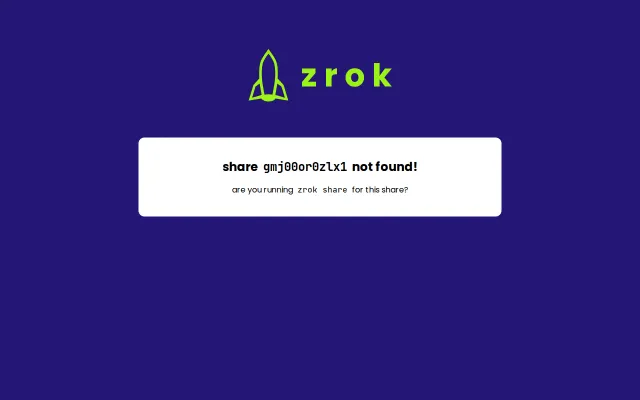
Packages common web automation tasks — screenshots, scrapes, SEO checks and PDFs — into APIs, which is convenient but very crowded territory. The live share is broken (the page shows 'zrok share ... not found'), so you can't test reliability or AI value‑adds; unless it provides robust semantic SEO insights, evasion/anti-bot handling, or superior extraction accuracy, it's another Puppeteer/Playwright wrapper.