Developer Tools●●Solid
AISH, a shell with natural-language ops workflows
Full PTY support beats Claude Code's limited terminal integration for interactive programs.
Ship ItNiche Gem
GeekUses9527
102mo ago
The fastest high-accuracy natural language detector. Written in C.
C implementation beats CLD2 by 2x and FastText by 6x in language detection benchmarks.
Backend developers needing fast language detection at scale
CLD2 · FastText · Lingua
ELDC is the latest iteration of the ELD software I made years ago. This version is available as an executable, a library, and a Python package.
This is my first C software, or anything compiled for that matter, I previously built this in pure PHP, JavaScript, and Python.
Highlights: - Performance: In my benchmarks, it runs faster than CLD2 and much faster than FastText. I believe the results are reproducible for any workload. - Accuracy: Within its supported language set, the benchmarks show it to be more accurate than Lingua, CLD3, CLD2, FastText, and etc. Accuracy is very benchmark dependent, so I will make no claim other than ELDC is highly accurate. - It supports 60 languages. Its architecture is highly efficient with database size scaling, I can add more n-grams or languages with a relatively low impact. - Memory usage: The compiled software is about 26MB, and it also builds a 32MB hashtable on load.
Notes: - Database size: I do have other database sizes (featured in the PHP version), but I went for simplicity and used the optimal size. But more sizes could be added. - Single Detection: I optimized for multi-detection. For single, a B-tree would offer faster loading and lower memory usage than the current hashtable. I haven't anticipated to be the most common use case, but it could be optimized for.
I would like to get some feedback, I'm curious to see if my speed claims hold true against your own tests. :)
Full PTY support beats Claude Code's limited terminal integration for interactive programs.
Natural language test generation via Claude; OpenAPI scanner auto-detects specs from source.
90x faster zsh replacement with optional AI—Rust native, not just a wrapper.
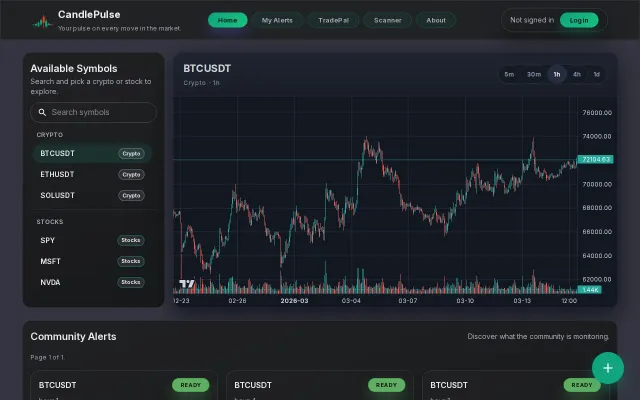
Natural language to trading logic beats manual indicator configuration.
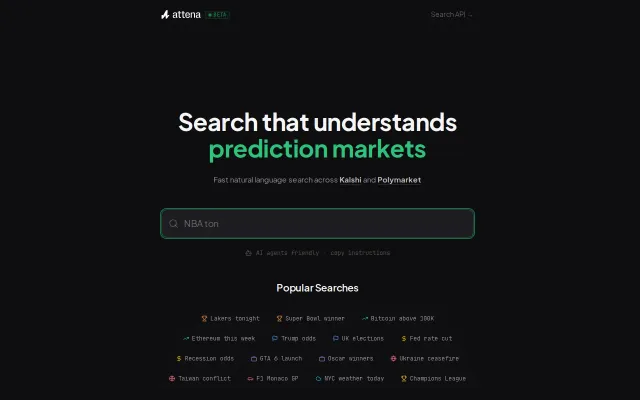
Unified NL search across fragmented prediction market APIs; AI-agent-friendly, real-time odds.
LLM-to-GDSII pipeline, but semiconductor CAD is niche and validation unclear.