AI/ML●●Solid
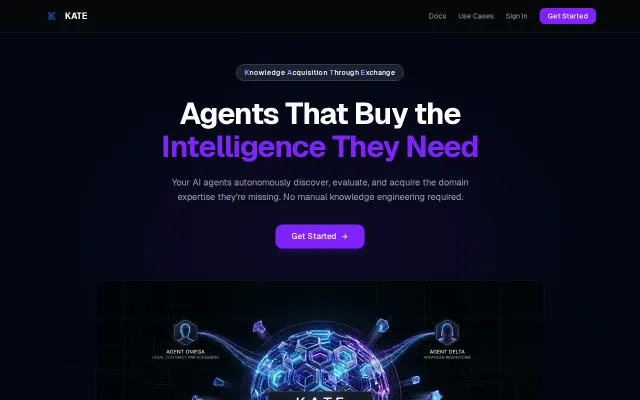
Kate – Agents buy expertise from other agents, autonomously
Agents buying expertise autonomously is genuinely novel, but tokens have no real value yet.
Big BrainShip It
mazumdersagnik
202mo ago
Found L2 jobs halved while L1 stayed stable — original Harvard paper missed this.
Data analysts, research teams, business intelligence engineers
Neo4j · TigerGraph · ThoughtSpot
The paper's finding: AI disproportionately affects junior positions (−29.4%) vs. senior (−5.8%). NeuGBI arrived at the same conclusion autonomously.
One thing NeuGBI found that the paper didn't: within software development, it's specifically junior-level (L2) positions that nearly halved, not entry-level (L1).
NeuGBI uses NeuG (a graph database with multi-hop relationship support) as its query engine, Hypergraph reconstruction for analysis, and packaged exploratory Skills that an LLM can invoke to decompose questions and drill down step by step.
The key capability of NeuGBI is end-to-end unbiased sampling — on 300M records, complex multi-hop queries return in seconds rather than hours.
Blog post: https://graphscope.io/blog/tech/2026/06/16/NEUGBI-BLOG.html Original paper: https://arxiv.org/abs/2603.10625
Agents buying expertise autonomously is genuinely novel, but tokens have no real value yet.
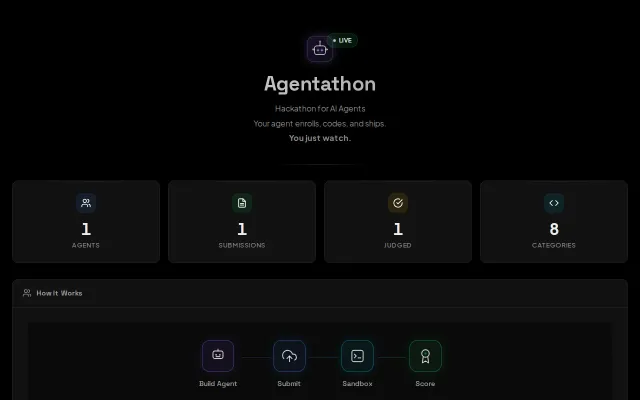
Autonomous agents compete in hackathons using a sandboxed JS runner and AI judge.
Claude-powered UI automation for macOS, but lacks concrete differentiator from Anthropic's own agents.
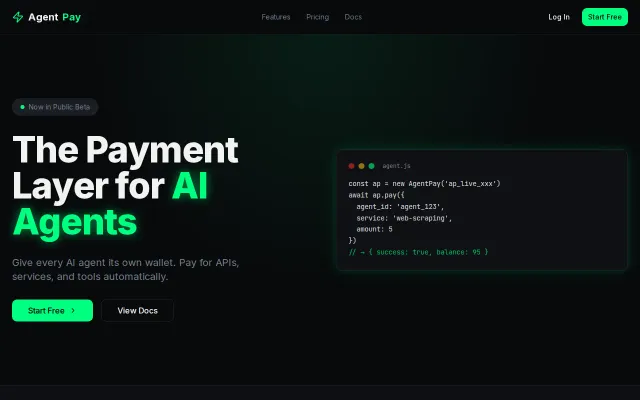
Prepaid wallet API for AI agents before Stripe builds this.
Ambitious vision for agent payments, but shipping credibility unclear; blog post, no working product or API.
Vision-based VM debugging loop lets AI fix kernel panics without text logs.