Productivity●●●Banger
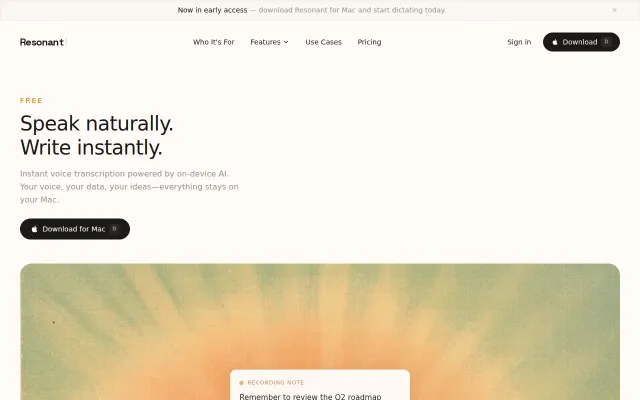
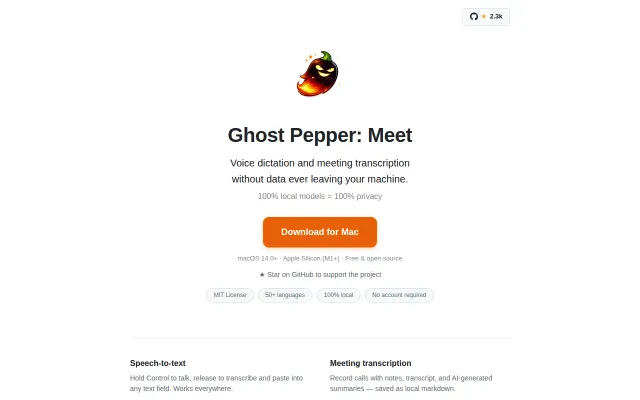
Resonant – Local-only speech-to-text for macOS (no cloud)
Local dictation with 420ms latency and sub-Whisper accuracy—actually ships, privacy-first.
Solve My ProblemSlickZero to One
sourcetms
204mo ago
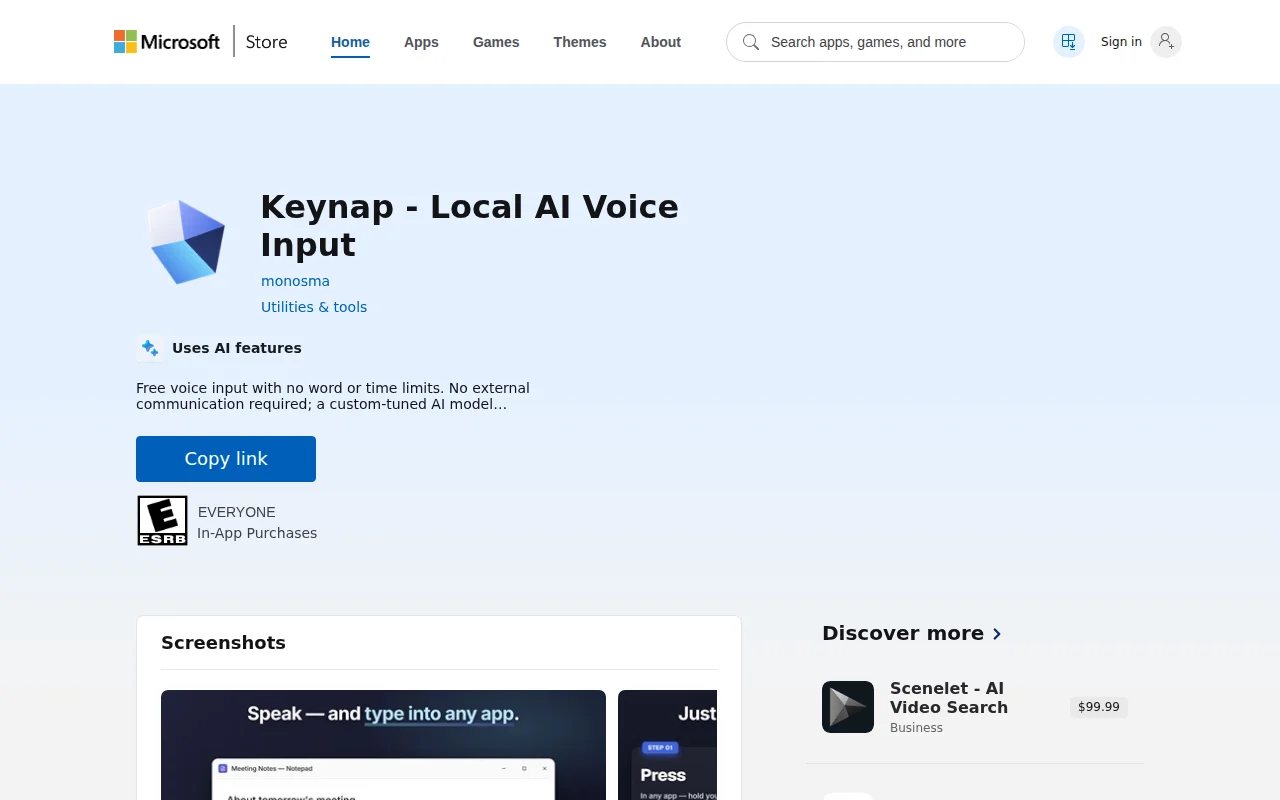
Local AI voice typing for Windows—no cloud, no subscription, finally.
Windows users, privacy-conscious professionals, developers avoiding cloud APIs
Dragon NaturallySpeaking · Windows Voice Typing · Mac Voice Control
The reasons I developed this app are:
1. While Mac has both standard voice input and plenty of good voice input apps, I couldn't find one for Windows that had the feel I wanted.
2. I did not want to send all the audio input on my PC to the cloud.
3. I wanted to avoid paying ongoing subscriptions for input tools.
Main features: - Supports English, Spanish, French, German, Japanese, Chinese, Korean, and more.
- Runs fast on CPUs (even faster with a GPU).
- Completely local, on-device processing.
- Distributed via Microsoft Store with automatic updates.
- Voice input is free and unlimited (some premium features are one-time purchases).
As I am a native Japanese speaker, I would appreciate your feedback on whether it works comfortably in languages other than Japanese.
As a thank you for trying it out, I will give away perpetual licenses for premium features to the first few people who respond→ http://go.microsoft.com/fwlink/?LinkId=532540&mstoken=JGVTF-...
Store page: https://apps.microsoft.com/detail/9n7kdlcxvjxt
Website: https://keynap.monosma.com/
Local dictation with 420ms latency and sub-Whisper accuracy—actually ships, privacy-first.
Local Whisper + Qwen cleanup beats cloud transcription when privacy matters.
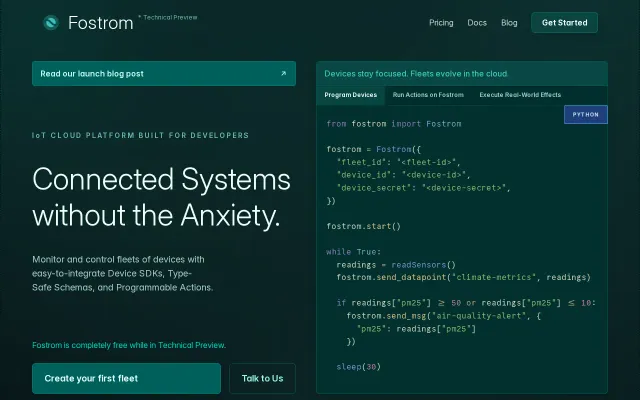
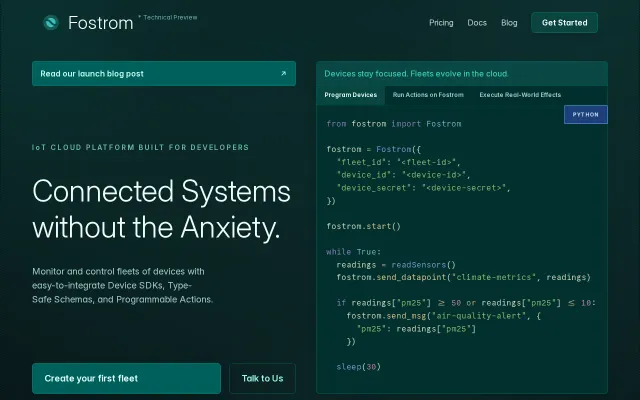
Solves IoT infrastructure friction, but Firebase IoT Core and AWS IoT already own this space.
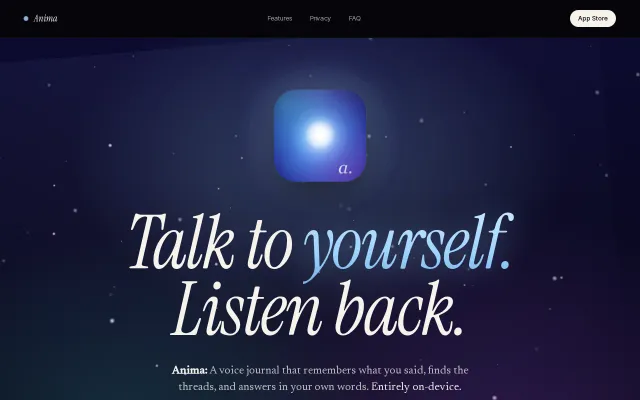
FoundationModels clustering finds thought threads entirely on-device with no cloud round-trip.
They combined typed payload validation, per-device sequential mailboxes and JS Actions running inside a WASM sandbox — a practical feature set that actually improves predictability for fleet code. The tiny Rust agent plus Python/JS/Elixir SDKs and an Elixir+DuckDB backend signal thoughtful infra choices rather than vaporware. Nice UX on the landing page, but the space is crowded; integrations and real-world scale will determine whether this stands out.
Comprehensive list, but static curation—dozens similar repos exist on GitHub.