Developer Tools●●Solid
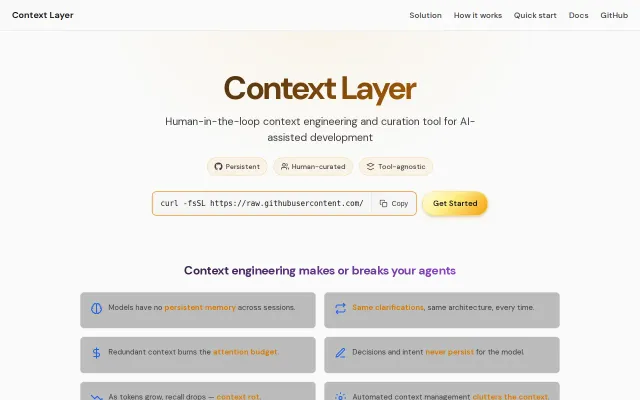
A human-curated, CLI-driven Context Layer for AI agents
Human-curated context beats auto-RAG, but folders-as-context is a solved workflow pattern.
CozyShip It
anatoliikmt
203mo ago
A structured UI context layer for AI agents. Makes existing user interfaces understandable and actionable for AI agents.
The describe → plan → act split is an elegant, accessibility-inspired way to give LLM agents actionable UI context: annotate with data-ai-* attributes or use the Marker component, call describe(), send it to a planner, then client.act() executes DOM instructions. It's a clever middle layer that turns messy DOM state into structured inputs for server-side planning, though adoption will hinge on robust selector semantics and out-of-the-box integrations with popular LLMs and automation backends.
Frontend developers, AI/agent integrators, accessibility engineers interested in automating or augmenting UIs
Human-curated context beats auto-RAG, but folders-as-context is a solved workflow pattern.
Unified MCP toolkit shipping in Python and TypeScript, but MCP server scaffolding is already crowded.
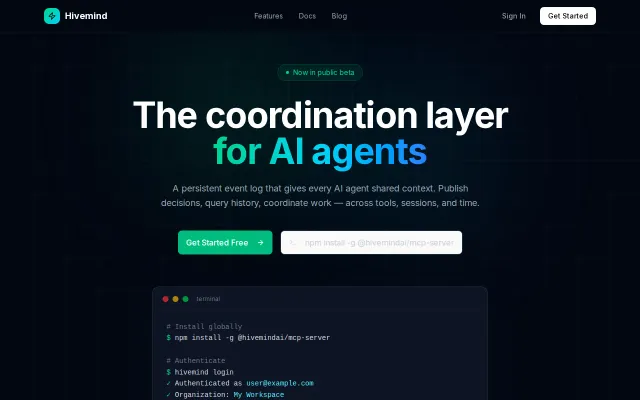
Shared state for AI agents that actually prevents duplicate work and token waste.
Read-only Kubernetes context engine with health, explain, trace, and graph commands for SREs.
Git for the 'why': intent DAG alongside code DAG, built for AI agents.
Auto-ingests wikis to fix agent SQL accuracy when Claude Code hallucinates metrics.