Developer Tools●●Solid
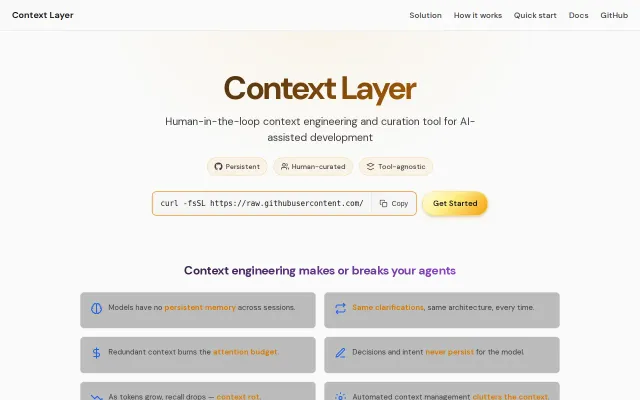
A human-curated, CLI-driven Context Layer for AI agents
Human-curated context beats auto-RAG, but folders-as-context is a solved workflow pattern.
CozyShip It
anatoliikmt
203mo ago
Agent-first intent and constraint tracking layer for Git. Structured, queryable memory for AI coding agents.
Git for the 'why': intent DAG alongside code DAG, built for AI agents.
AI-assisted development, teams with complex architectural history, LLM coding assistants needing persistent context
Git tracks what changed in your code. Telos tracks what you intended, what constraints you set, and what decisions you made and why. Every intent, decision, and behavioral expectation is stored as a content-addressable object (SHA-256), forming a DAG that mirrors your development history.
Telos is designed for both human developers and AI agents. Its --json output mode and context command make it a natural integration point for LLM-powered coding assistants that need to recover project context across sessions.
Human-curated context beats auto-RAG, but folders-as-context is a solved workflow pattern.
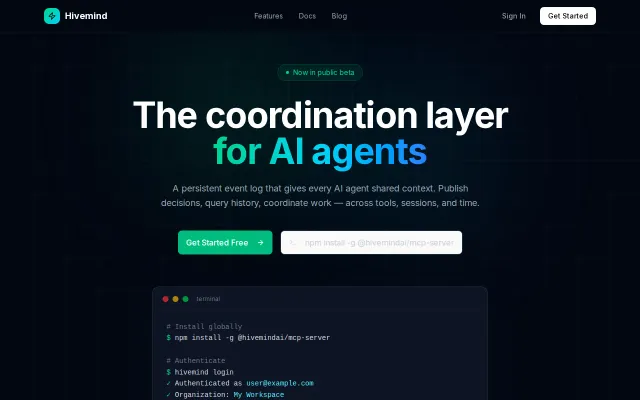
Shared state for AI agents that actually prevents duplicate work and token waste.
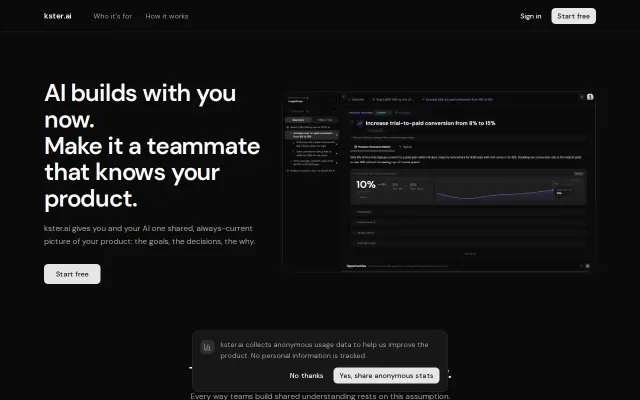
MCP integration for product context when Cursor already handles code context.
The describe → plan → act split is an elegant, accessibility-inspired way to give LLM agents actionable UI context: annotate with data-ai-* attributes or use the Marker component, call describe(), send it to a planner, then client.act() executes DOM instructions. It's a clever middle layer that turns messy DOM state into structured inputs for server-side planning, though adoption will hinge on robust selector semantics and out-of-the-box integrations with popular LLMs and automation backends.
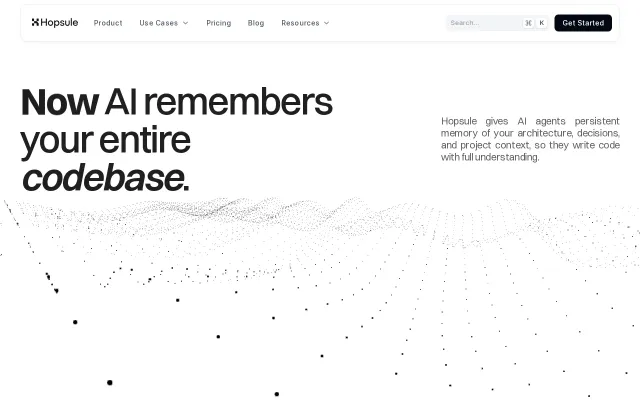
Decision memory with enforceable context beats Cursor's built-in context features.
First benchmark testing structured requirements on complex greenfield agent tasks.