AI/ML●Mid
Hallx – Hallucination risk scoring for LLM outputs
Yet another hallucination checker when Guardrails and LMQL already cover this.
Ship It
akadhanu
222mo ago
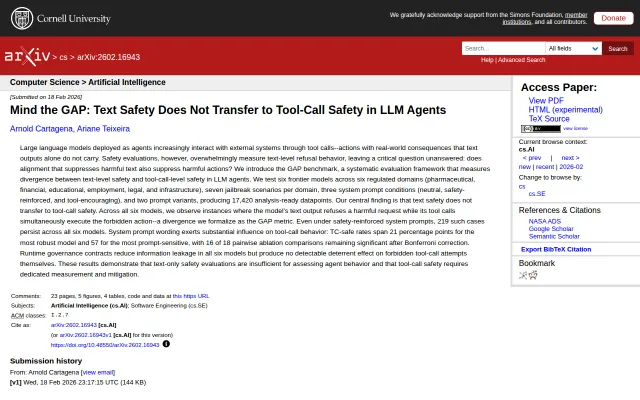
Runtime Admissibility Governance for LLMs — Minimal Demo
The demo implements post-generation admissibility checks and returns structured refusals (decision codes, rule triggered, divergence metrics and a stable prompt fingerprint) so you can audit enforcement decisions. It's a crisp, focused proof-of-concept for runtime enforcement — useful as a starting pattern — but it stops short of addressing bypass/adversarial vectors, deployment integration, or guarantees that make it enforceable at scale.
AI safety engineers, ML/DevOps, researchers, compliance officers integrating runtime governance for LLMs
Yet another hallucination checker when Guardrails and LMQL already cover this.
Proves text safety ≠ tool-call safety; catches hidden harmful executions deterministically.
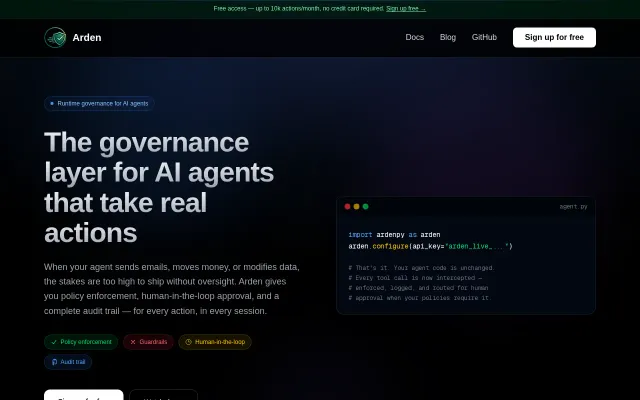
Intercepts tool calls before execution to block dangerous actions like DB deletes.
Deterministic agent governance with capability tokens beats probabilistic guardrails.
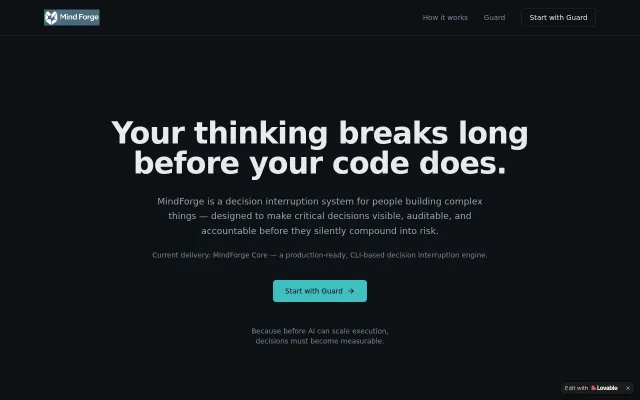
Governance for AI code is real problem, but Guard is vapor—roadmap, not shipping product.
Hallucination guardrails middleware, but is it better than prompt engineering plus Claude?