Productivity●Mid
Scryptian – Run Local AI Skills via Ctrl and Alt (Python and Ollama)
Hotkey-triggered local AI when Raycast already has AI plugins.
Ship It
bonsuaq
211mo ago
Wiredigg is a comprehensive network analysis tool with advanced security features designed for network administrators, security professionals, and IT enthusiasts. It provides real-time packet capture, protocol analysis, anomaly detection, and threat identification capabilities in a modern, user-friendly interface.
Local network sniffer with Ollama anomaly validation; competes with Suricata, Zeek.
Network administrators, security researchers, IT professionals
Suricata · Zeek · Wireshark + manual ML scripts
The goal is to provide interactive network visibility with AI-assisted threat interpretation, while remaining local-first and easy to run. A Windows executable build is also available.
Repo: https://github.com/JustVugg/Wiredigg
⸻
What it does
Real-time packet capture • Live traffic sniffing • Protocol analysis (TCP, UDP, ICMP, HTTP, etc.) • Filtering by IP, port, and protocol • Promiscuous mode support
Machine learning anomaly detection • Detection of unusual traffic patterns • Threat classification with severity levels • False-positive marking and incremental retraining • User-assisted model refinement
Ollama integration (local LLM) • Sends flagged anomalies to a locally running model via Ollama • Generates contextual, human-readable explanations • Adds reasoning on top of statistical detections • Fully offline if Ollama is local
Threat intelligence & dashboards • Malicious IP/domain checks • Interactive tables and traffic statistics • Graph-based visualizations • Exportable reports (HTML, JSON, text)
IoT & device analysis • Device identification and classification • Behavioral pattern analysis • Risk evaluation based on traffic activity
Custom packet tools • Manual packet crafting for testing • Control over IP, port, protocol, and payload
Running it
From source:
git clone https://github.com/JustVugg/Wiredigg pip install -r requirements.txt python wiredigg.py
Administrator/root privileges are required for packet capture.
Alternatively, you can use the provided Windows .exe build.
⸻
Why I built it
Many packet analyzers are either: • CLI-heavy and technical • Or large enterprise systems
I wanted something: • Visual • AI-augmented • Local-first • Extensible in Python • Usable for labs, small networks, and learning
Happy to get feedback, especially on the ML and Ollama integration approach.
Hotkey-triggered local AI when Raycast already has AI plugins.
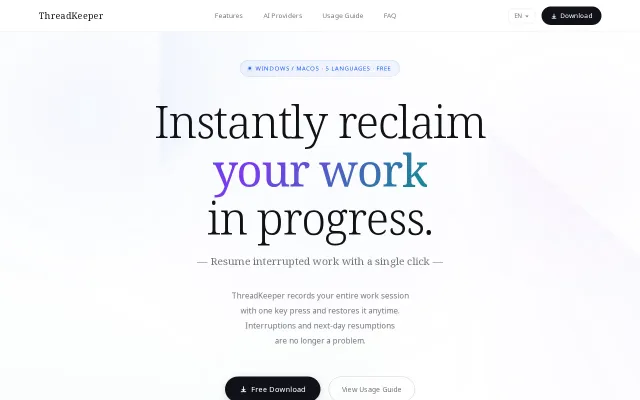
Ctrl+Shift+S snapshots your whole context, LLM summarizes it, one-click restore.
Reverse-engineered USB protocol in 24hrs; $30 BLE sniffer now works on Linux.
Mycelium-style bus lets parallel Claude sessions share context without a central orchestrator.
Turns chat history into structured 'belief' and 'cognitive pattern' blocks you can inject into prompts, with simple APIs like run_reflection and run_synthesis that read like a research prototype. It's smart about separating V1 (domain beliefs) from V2 (transferable cognitive patterns), but it's clearly early-stage — tiny repo, Ollama-only workflow, and few commits mean you should treat it as an experimental MVP rather than a drop-in production memory system.
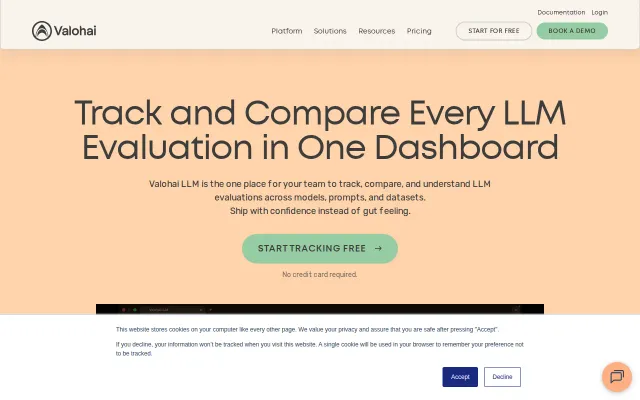
Streams evals from a tiny Python client into a shared dashboard and lets you run parameter sweeps and compare up to six configurations with radar/bar charts and scorecards — exactly the sort of tooling that stops results getting lost in notebooks. Useful, pragmatic product for teams who repeatedly evaluate models, but it's competing with general observability/experiment trackers (W&B, Neptune) and will need strong integrations and metric flexibility to stand out.