Security●●●Banger
Agent Vault – A HTTP credential proxy and vault for AI agents
Agents never see credentials — brokered access beats retrieval for prompt injection safety.
Zero to OneSolve My Problem
dangtony98
156561mo ago
Zero-knowledge secrets infrastructure built for AI agents to operate, not just consume.
Agent credential proxy using OS keychain injection—credentials never touch agent memory.
AI agent developers, enterprises running LLM-based automation in private networks
The core insight: AI agents are users, not applications. Applications need credential values to authenticate. Agents just need to make authenticated calls. Those are different things.
AgentSecrets sits between the agent and the upstream API. The agent says "use STRIPE_KEY". The proxy resolves the real value from the OS keychain, injects it into the request at the transport layer, and returns only the response. The key never enters agent memory.
Technical details: -Local HTTP proxy on localhost:8765 with session token (blocks rogue processes on same machine) -OS keychain backed — macOS Keychain, Linux Secret Service, Windows Credential Manager -6 injection styles: bearer, basic, custom header, query param, JSON body, form field -SSRF protection blocking private IPs and non-HTTPS targets -Redirect stripping — auth headers not forwarded on redirects -JSONL audit log — key names only, no value field in the struct, structurally impossible to log values -MCP server for Claude Desktop and Cursor -Native OpenClaw skill -Global storage mode config — set keychain-only once during init, applies everywhere
Honest limitations: if a malicious skill has independent network access outside AgentSecrets it can still make its own calls. This removes credentials as an attack surface specifically, not every attack surface.
For the specific attack that just hit 30,000 OpenClaw users — a malicious skill exfiltrating plaintext credentials — it is structurally prevented. The keys were never on the filesystem. MIT, open source.
Agents never see credentials — brokered access beats retrieval for prompt injection safety.
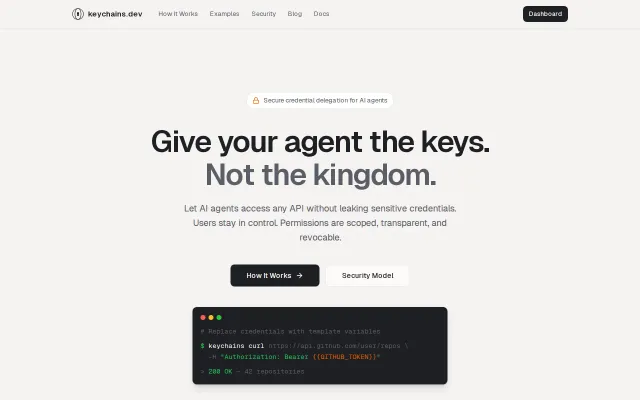
Agents never touch raw tokens — you swap literal credentials for template variables and a proxy injects scoped secrets server-side while surfacing one‑click approval links to humans. It also fingerprints machines, uses SSH key auth, and tries to infer minimal OAuth scopes per request, which is a neat user-in-the-loop model. The obvious trade-off is centralizing trust in the proxy and the integration work for every provider, but the UX for human approvals and instant revocation is compelling.
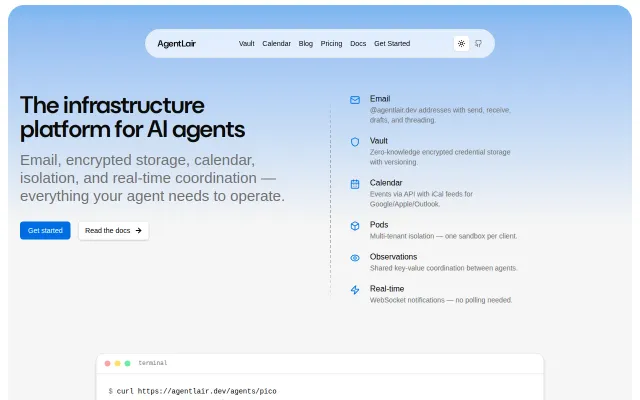
Zero-knowledge vault keeps credentials out of environment variables where supply chain attacks steal them.
Host-side credential enforcement for containerized agents before they leak your AWS keys.
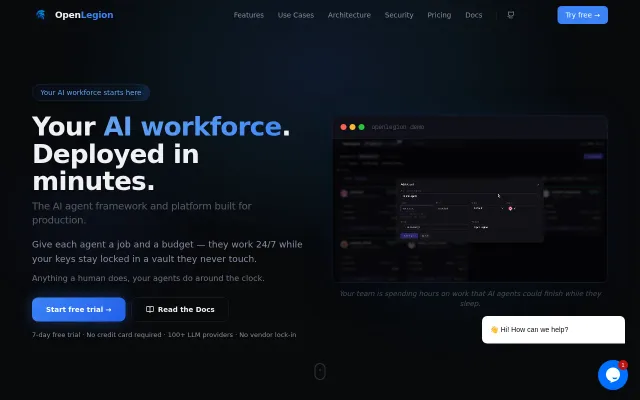
Vault proxy injects credentials at the network layer so agents never touch your keys.
Agents never see real keys, but Vault already does secret injection.