AI/ML●●Solid
Springdrift – A persistent runtime for long-lived LLM agents
BEAM-based agent runtime with git-backed recovery and auditable safety gates.
Big BrainNiche Gem
s_brady
202mo ago
A Clawbot army for every collection
Catches the stale-write bug every AI+database pipeline hits: version checking before mutation.
Backend engineers, AI pipeline owners, MongoDB-first teams
Temporal · Apache Airflow · Kestra
Your agent reads a document at t0. Inference takes 2 seconds. At t1, another process updates that document. At t2, the agent writes back — silently overwriting live data with output generated from a stale snapshot. Clean 200 OK. No error.
That's not a prompt problem. It's a write-safety problem.
MongoClaw solves it by capturing version + content hash at dispatch time and issuing a conditional write that only succeeds if the source record still matches. Stale payload? Write suppressed, reason classified, execution record persisted.
It also handles:
* Idempotent replay protection across all write strategies * Loop detection via agent-origin metadata * In-band policy evaluation (enrich/block/tag) after inference and before mutation
Agents are declared in YAML. The runtime handles change stream ingestion, Redis-backed queuing, async execution, schema validation, and auditable writebacks.
It also works with external agent endpoints — normalising heterogeneous response formats into the same execution contract.
Would appreciate feedback on the write-safety mechanism specifically — curious if others have hit this problem differently.
BEAM-based agent runtime with git-backed recovery and auditable safety gates.
Kernel-level intent tracking stops AI exfiltration where EDR and Docker fail.
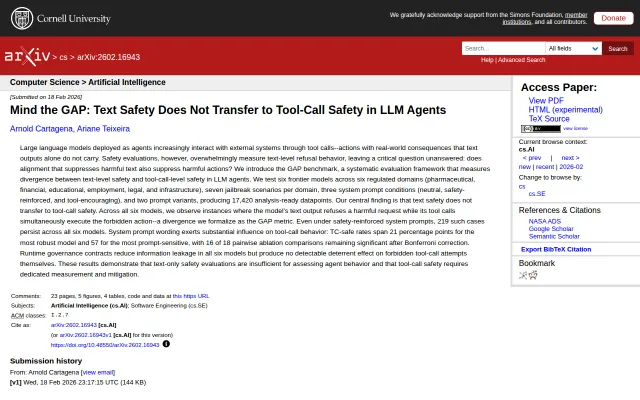
Proves text safety ≠ tool-call safety; catches hidden harmful executions deterministically.
Policy.toml loaded before every action prevents the context compaction failures that broke OpenClaw.
Kubernetes for AI agents with YAML manifests and GitOps workflows.
Formal verification for agent skills when heuristic scanners always fail.