AI/ML●●●Banger
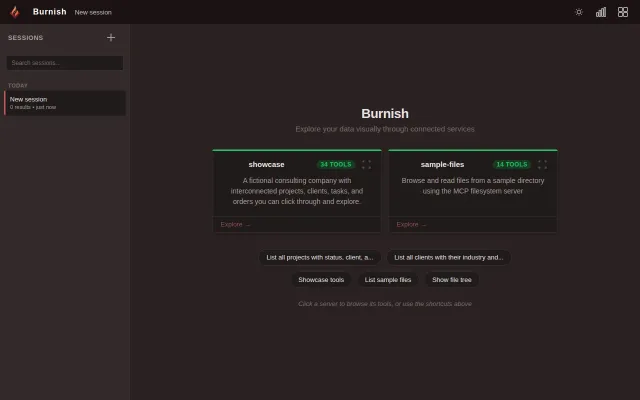
MUP – Interactive UI inside LLM chat, so anyone can use agentic AI
Single HTML files become bidirectional UI—users click, LLMs call, both see results instantly.
Zero to OneBig BrainShip It
Ricky_Tsou
123mo ago
Interactive documents from Markdown. Extends MD with forms, approvals, webhooks, and more — built for next gen apps
LLM-generated Markdown with embedded forms and approval gates instead of prose instructions.
Product teams and developers building LLM-powered apps that need structured, validated outputs instead of free-form text responses.
Anthropic tool_use · OpenAI function_calling · Structured output APIs
MDMA extends Markdown with interactive components defined in fenced `mdma` code blocks (YAML inside). When an LLM knows the spec, it can respond with rendered forms, approval gates, tables, and webhooks instead of prose instructions. Because it's built on top of Markdown + YAML, parsing is deterministic — there's no runtime JS in the document and malformed blocks degrade gracefully rather than crashing.
The library includes a remark-based parser, a headless runtime with reactive bindings and a policy engine, a React renderer, and a prompt-pack that teaches LLMs how to generate valid MDMA. There's also a promptfoo eval suite to verify generation quality before shipping.
Available on npm under @mobile-reality. MIT.
Happy to discuss the spec design or tradeoffs vs structured JSON output.
Single HTML files become bidirectional UI—users click, LLMs call, both see results instantly.
Dual LLM audits on frozen packets with explicit stop states beat fire-and-forget agent loops.
Schema-to-UI inference for MCP servers when most lack any visual interface.
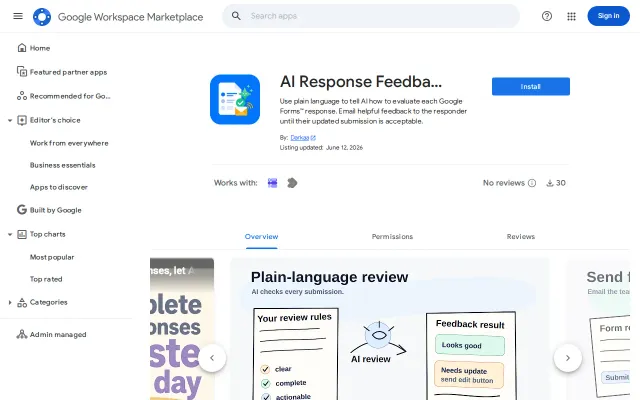
Iterative AI feedback loop with resubmission links beats static form validation.
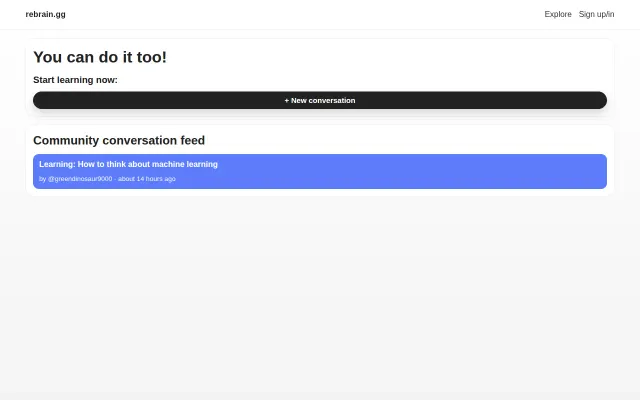
Quiz-first learning UI instead of chat, but unclear if questions are adaptive or just wrapped LLM output.
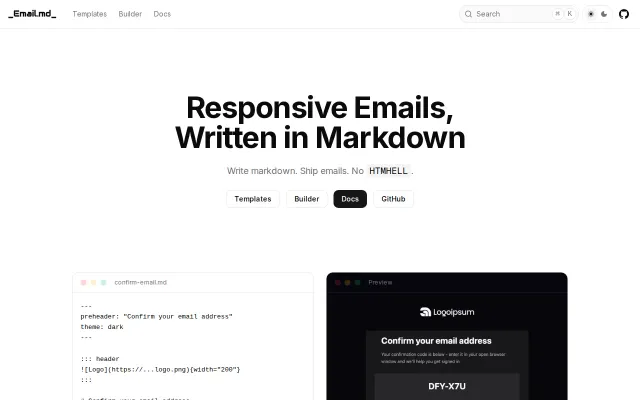
Markdown-to-email CLI saves you from coding HTML tables by hand.