Developer Tools●●Solid
I adapted codex-plugin-cc's design for Gemini CLI's ACP
Session-oriented ACP runtime differs from codex-plugin-cc's app-server approach.
Niche GemBig Brain
abiswas97
102mo ago
Gemini plugin for Claude Code - reviews, and adversarial reviews to Google's Gemini CLI
Yet another LLM orchestrator when MCP already enables this natively.
Developers using both Claude Code and Gemini CLI in their workflow
openai/codex-plugin-cc · Continue.dev · Cursor
I started this after finding myself reaching for Gemini more often on long context repo work. I have been especially liking Gemini’s codebaseinvestigator for long context.
This is inspired by openai/codex-plugin-cc.
Code Review, adversarial review. Under the hood its Gemini CLI over ACP
Would love feedback from people using Claude Code, Gemini CLI, or ACP. I am especially curious whether this feels useful outside my own workflow.
Its a great combo with Opus 4.7 + Gemini 3.1 workflows
Session-oriented ACP runtime differs from codex-plugin-cc's app-server approach.
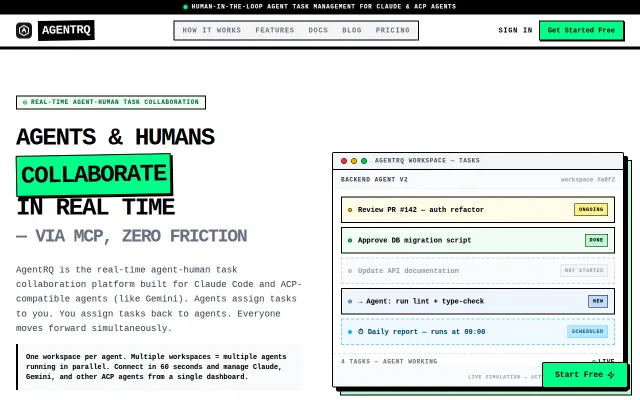
MCP-based dashboard for Claude Code agents, but agent management tools are multiplying weekly.
Resumable Claude Code sessions with ACP server, but depends on Anthropic's tool direction.
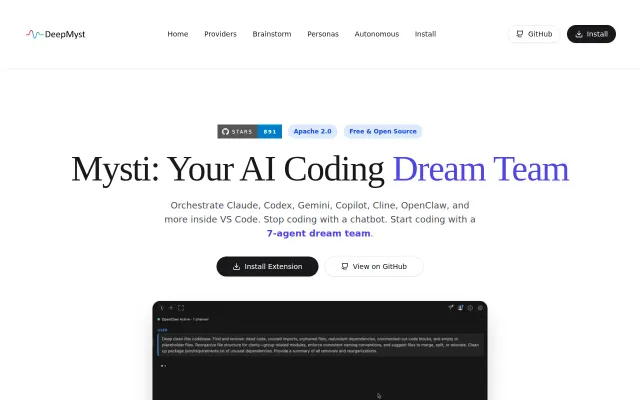
Mysti makes multi-model coding workflows tangible: you can inline-route tasks with @-mentions and have agents execute a pipeline where each one gets the previous output, plus auto-retries for failures. The OpenClaw daemon, WebSocket streaming, status-bar provider switching, and autonomous/semi-autonomous modes show this is more than a toy — it aims to make cross-model review and debate a practical part of your edit loop. The real test will be subscription/config friction and whether multi-agent noise actually improves real-world code quality, but the feature set is a smart, ambitious bet.
Adversarial plan review via hook injection—clever constraint on existing tools.
Hook-enforced multi-model delegation, but still early and depends on unstable AI API availability.