AI/ML●●●Banger
Granite Switch - compose multiple LoRA adapters to one deployable model
Composing multiple LoRA adapters into one checkpoint solves the model sprawl nightmare.
Big BrainSolve My Problem
bignet
301mo ago
Your smart assistant to manage and maintain your home.
Four task-specific LoRA adapters for Home Assistant when cloud LLMs raise privacy concerns.
Home Assistant users, smart home enthusiasts
Home Assistant Cloud · Nabu Casa · Ollama
Specs: Qwen3 1.7B base model (Q6 quantized~1.6GB) Four Home Assistant-specific LoRA adapters: - Answers - Clarifications - Automations - Commands ~3.5 GB total download size Runs locally via llama.cpp
We chose a Qwen-based architecture because of a paper on Arxiv (link below) which applied a Qwen based model for local LLM configuration, and showed promising results. We took it a step further in application by training LoRA adapters specialized in Home Assistant configuration.
This alpha release ships our base model with four specialist LoRA adapters preloaded for faster response: answers, clarifications, automations, and commands. The Q6 quantized base model is 1.6GB and the adapters are less than 100MB running either on self-hosted llama.cpp, or on Selora Hub devices, where everything is preconfigured and plug-and-play for you.
We started working on this because the existing options for local LLMs in Home Assistant lack knowledge to run anything useful, so users opt for very large LLMs, typically a cloud model that’s too expensive and not optimized for the kind of high-frequency, always-on smart home use we care about. We think there's a need for open-source models that are small and specialized enough to run on the kind of hardware people actually have at home.
Would love any feedback, questions, or ideas. Thanks for checking it out!
Hugging Face: https://huggingface.co/selorahomes/Selora-AI Arxiv: https://arxiv.org/abs/2502.12923 More details: https://selorahomes.com/selora-ai/
Composing multiple LoRA adapters into one checkpoint solves the model sprawl nightmare.
Unified memory trick lets a 2B model beat 12B; trains on MacBook with zero cloud costs.
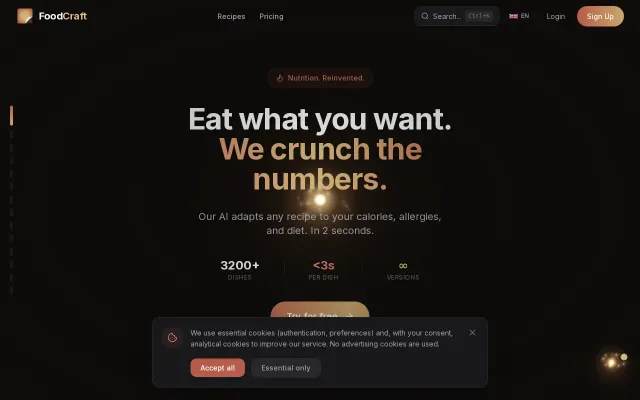
The site sells a clear, useful promise: drop any recipe in and get tailored ingredient/portion swaps in under three seconds, with 3,200+ dishes and unlimited versions. The landing page shows real UI craft — dramatic dark theme, strong hierarchy and CTAs — but the core idea is incremental in a crowded meal-planning market; I'd want to see how substitutions are scored, provenance of nutrition data, and integrations (shopping lists, trackers, or an API) before I’d call it a standout.
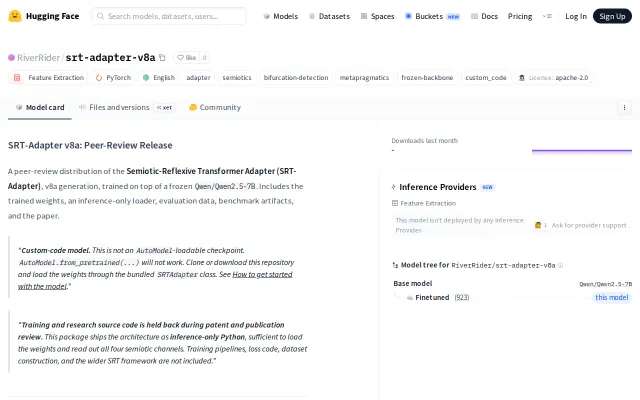
Training code withheld during patent review limits reproducibility and community adoption.
3.59ms for 100 LoRA adapters with zero HBM writes—genuine GPU wizardry.
Finally, a debug card for Home Assistant's Assist pipeline with timing breakdowns.