AI/ML●●●Banger
Sipsa Inference – lossless serving at 50% off
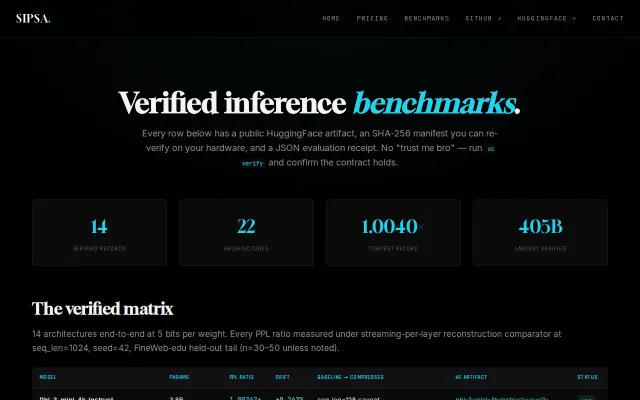
SHA-256 verifiable manifests prove lossless compression mathematically, not just statistically.
WizardryBig BrainZero to One
mounnar
201mo ago
A Rust application providing S3-compatible object storage backed by local filesystem and SQLite metadata.
S3 API for local files makes duplicate detection a simple GROUP BY query.
Developers managing large local file collections, photo archivists
MinIO · rclone serve · SeaweedFS
Then I realized: if an object store knows every file's content hash, duplicates are just a GROUP BY.
Built a tool that serves local files via S3 API:
docker run -it -v ~/Photos:/data -p 9000:9000 ghcr.io/deepjoy/shoebox /data
Credentials auto-generated and printed on startup. Works with rclone, AWS CLI, any S3 SDK. Files stay exactly where they are.The duplicate detection I wanted is one query. But the real surprise: every S3 tool just works. I set out to find duplicate photos and accidentally built a local S3 server.
What it is: S3-compatible object store for local filesystems. Rust, axum, SQLite for metadata. MIT licensed. Or build from source with `cargo install`.
What it isn't: not distributed, not for petabyte scale, not a MinIO replacement. MinIO is built for production clusters. This is built for the NAS in your closet. Single node, single process. If you need multi-machine replication, use MinIO or SeaweedFS.
Tested on real hardware this past week. A few early users ran it against their own NAS setups on btrfs, ext4, and ZFS. Built a companion webapp to browse duplicates visually (duplicate detection is non-standard S3, so terminal demos weren't compelling).
GitHub: https://github.com/deepjoy/shoebox Companion webapp: https://deepjoy.github.io/shoebox-webapp/
SHA-256 verifiable manifests prove lossless compression mathematically, not just statistically.
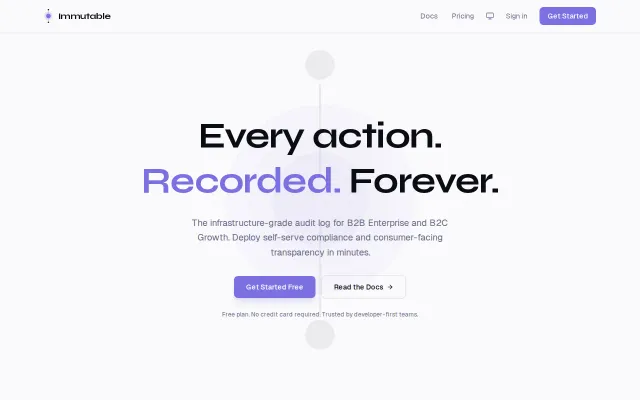
SHA-256 chained audit logs with embeddable activity feed for customer trust.
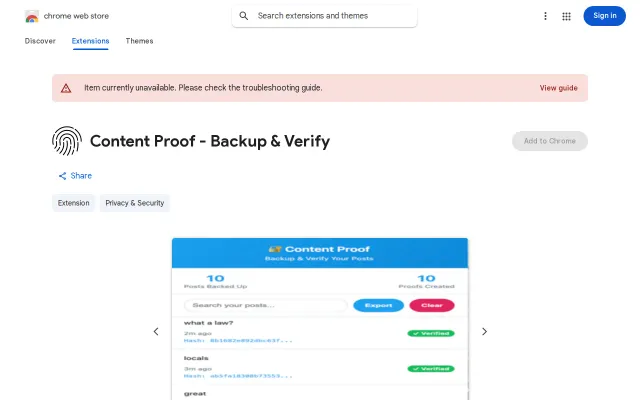
SHA-256 tweet verification for skeptics; solves screenshot-faking with deterministic hashing.
Cryptographic proof bundles for AI agent browser actions—screenshots can be faked, hash chains can't.
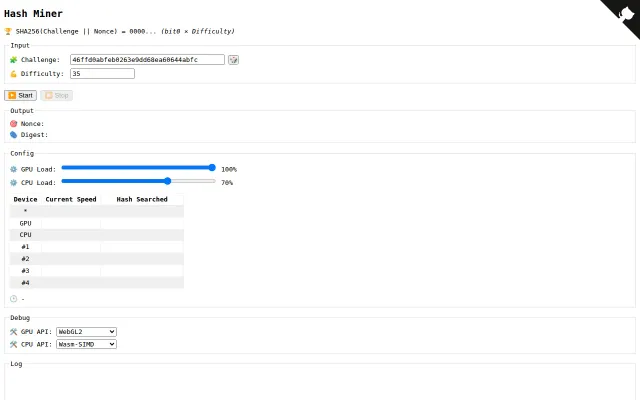
WebGPU and WASM-SIMD hash mining in browser with per-device load controls.